Monday, August 20, 2007

UN Considers Top Darfur Post for Controversial Rwandan

UNITED NATIONS Sat 18 Aug 2007 (Reuters) - The United Nations is seriously considering allegations of human rights violations against a Rwandan general, nominated as deputy commander for the new U.N.-African Union force in Darfur, a U.N. official said Saturday. The African Union has approved Rwandan Maj. Gen. Karenzi Karake for the post but the United Nations has not yet confirmed it, despite pressure from Rwanda, which fields some 2,000 of the 7,000 AU troops now in Darfur. "We are aware of these allegations and we take them seriously," the U.N. official said, speaking on condition of anonymity. "We are consulting with the African Union and the government of Rwanda on the matter."

The joint U.N.-African Union operation aims to protect civilians in Sudan's western Darfur region, where more than 2.5 million people have lost their homes and an estimated 200,000 have died in the past four years. The Brussels-based United Democratic Forces, an opposition group, has accused Karake of supervising extra judicial killings of civilians before and after the Tutsi-led Rwanda Patriotic Front rebels took power in Kigali following the genocide. In 1994 militant Hutus killed some 800,000 Rwandans, mainly Tutsis. Rwanda's U.N. ambassador, Joseph Nsengimana, was quoted on the allAfrica.com Web site as saying that those raising the allegations had simply run out of ideas to complain about. "The whole world and the diplomats at the U.N., the Sudanese government and people of Darfur have appreciated the role that our troops in Darfur have played," Nsengimana said. "Why can't these people develop in their thinking because they seem to be out of touch with the way Rwanda is changing?" he was quoted as telling the BBC's Great Lakes service. No immediate comment from Kigali was available.

The U.N. official stressed that rules and regulations require that all U.N. personnel, especially those in leadership roles, "must embody the highest levels of professionalism, integrity, respect for diversity and accountability." "The United Nations depends on member states to vet all candidates, presumably including with regard to allegations of human rights abuses," he said. The official said the United Nations also welcomed "any information that organizations or individuals may have regarding such allegations against candidates for U.N. appointments."

Amnesty Ends Abortion Neutrality

Amnesty International has confirmed its controversial decision to back abortion in some circumstances, replacing its previous policy of neutrality.

The human rights group will campaign for women to have access to abortion in cases including rape and incest. The initial decision was taken in April, but Amnesty delegates meeting in Mexico gave it overwhelming support. Christian organisations, including the Roman Catholic Church, have threatened to withdraw support from the group.

The decision in April by Amnesty's executive committee to support access to abortion for women in cases of rape, incest or violence, or where the pregnancy jeopardises a mother's life or health was greeted with an outcry by churches. Roman Catholic leaders in particular accused Amnesty of betraying its commitment to human rights, and a senior Vatican official called on Catholics to stop funding it.

But Amnesty's international council - meeting in Mexico - has overwhelmingly supported the decision, insisting it was upholding the ability of women to exercise their sexual and reproductive rights free from coercion and violence. Amnesty has been working in countries where widespread rape has been used as a weapon of war, and others in which women seeking abortions can be severely punished.
By Robert Pigott Religious affairs correspondent, BBC News
+++++++++++++++++++++++++++++++++++++++++++++++++++
Disclaimer
No responsibility or liability shall attach itself to either myself or to the blogspot ‘Mozlink’ for any or all of the articles/images placed here. The placing of an article does not necessarily imply that I agree or accept the contents of the article as being necessarily factual in theology, dogma or otherwise.
Mozlink

Sunday, August 19, 2007

A New Breed of Hero

UNITED NATIONS, Aug 11 (IPS) - In September 2000, at the United Nations Millennium Summit, world leaders came together and agreed to a set of time-bound and measurable goals and targets for combating poverty, hunger, disease, illiteracy, environmental degradation and discrimination against women. Called the Millennium Development Goals (MDGs), the Summit's Millennium Declaration also outlined a wide range of commitments in human rights, good governance and democracy.

There is now a group of teens from the United States who are looking to take the initiatives of the MDGs into their own hands. Labeled the HERO Youth Ambassador Program, the United Nations Association of the United States of America (UNA-USA), in partnership with the United States Agency for International Development (USAID), started HERO as an awareness-building and fundraising initiative. Supporting children living in HIV/AIDS-affected communities in sub-Saharan Africa, the programme strives to better the lives of children who have been orphaned or made vulnerable by HIV/AIDS using comprehensive, holistic school-based support. The HERO programme is currently run in Namibia and South Africa.

The programme is still in its infancy, having had its pilot launch in the summer of 2006. Gabrielle Armand, the executive director of communications and marketing for UNA-USA, told IPS: "This was the first year the programme officially had a full application process behind it." According to Armand, they worked with media partners Hearst Corporation and Cosmo Girl Magazine to go through the countless applications they received for the 2007 programme. "We were pleasantly surprised that a tonne of young adults actually wanted to do this and we got hundreds of submissions...We were really looking for young people who were well rounded, who had community service in their past, who had an interest in doing this beyond themselves and were willing to go on an experimental journey with us," said Armand.

Dayna-Joy Chin of Scarsdale, New York (known as DJ amongst the group), who went to Namibia, first watched her older brother Christian prepare for his trip to Africa as a HERO Youth Ambassador in the pilot programme. "I wanted to do this because I learned from my brother and the youth ambassadors from last year just how amazing it was to be there. Based on the stories they told me and the pictures I saw, I wanted to make a small difference," Chin said. According to Chin, Namibia was different because the youth ambassadors were stationed in one location for the entire month. They worked at three different schools, helping with maintenance projects, such as building fences and laying bricks, and then having afternoon camp days with the children and forming a close bond with them. "There was this one little boy who was a little troublemaker but everyone's favourite, who sat on my lap. That day we made peanut butter and jelly sandwiches and he offered me a bite of his sandwich. For him to share that with me, even though having food there is important, was really touching," said Chin.

UNA-USA hopes to expand the HERO programme to include students from around the world as well. There are plans for next year to bring in students from Canada, Mexico and Britain. The goal going forward is to eventually have some students representing each of the African nations, Eastern and Western Europe and Asia. As an added bonus to past participants, UNA-USA has created job opportunities for them to come back and help ease the new groups into the experience and also to keep them connected.
+++++++++++++++++++++++++++++++++++++++++++++++++++
Disclaimer
No responsibility or liability shall attach itself to either myself or to the blogspot ‘Mozlink’ for any or all of the articles/images placed here. The placing of an article does not necessarily imply that I agree or accept the contents of the article as being necessarily factual in theology, dogma or otherwise.
Mozlink

Saturday, August 18, 2007

Africa's Problems Blamed on Africans

Aug 18, 2007: Faced with complex problems, there is a perverse human desire to seek simple solutions. Part of the simple solution usually involves blaming someone or something, and arguing that if only this person, political party, government, nation, whatever, would change its ways, the problem would disappear, or at least stop being so troublesome. The long slump in economic development in Africa, and its accompanying poverty and misery, is one such problem. And Robert Calderisi, a long-time World Bank official, knows who to blame. Africans. Not just any Africans, of course. Some of Calderisi's best friends are Africans. But he has a low opinion of African leaders, and reservations about some aspects of African culture, such as family and tribal loyalty, which he sees as being responsible for such negative phenomena as corruption and dictatorship.

Well-meaning foreign friends have made the situation worse by tolerating financial and political malfeasance, and in fact have encouraged it by showering dictators with aid money without demanding anything much in the way of social improvement in return. Having constructed this simple analytical framework, Calderisi offers a 10-point plan, which boils down to encouraging democracy and transparency by cutting aid to the worst offenders – in fact, halving direct aid to most African countries. In a controversial nod to neo-colonialism, he says "international personnel" should supervise the running of schools and HIV/AIDS programs to prevent the siphoning off of funds. He also recommends merging the three main international aid bodies: the World Bank, the International Monetary Fund and the United Nations Development Programme.

Before outlining his approach, Calderisi rejects, often in just a few paragraphs, some of the usual explanations for Africa's development failure. The slave trade, the legacy of colonialism, globalization and debt, the Cold War, daunting geography and climate – to Calderisi, these are just "excuses." Curiously, some factors he does not mention at all, such as the arbitrary construction of most African states and the fact that traditional African societies have been completely unhinged by the process of modernization. The past bores him. The old explanations, the old excuses, he says, are "beginning to grow stale" half a century after independence. He appears to feel that 50 years has been enough time for Africa to get over its past. Perhaps that is the banker in him speaking, thinking always in terms of 10-year loans. But a historian knows that 50 years is nothing when it comes to addressing basic social structures.

This is not to say that Calderisi is all wrong. It is true that societies can paralyze themselves by becoming mired in debates over historical slights. And Africa does have to look forward; governments do have to address the issues of corruption and repression; foreign supporters do have a responsibility to see that the funds they provide are used responsibly. But to say that a few fixes to local governance and how aid is distributed will lead to a "new day" in Africa is far-fetched. The intersection of history, culture, geography and modernization is a deadly one. China, a far more cohesive socio-political entity than sub-Saharan Africa, and the current posterboy for rapid economic development, floundered around for the better part of a century and a half before finally finding a practical way forward. Friends of Africa will require patience, good will and, yes, a degree of tough love. But spare us lectures from bankers.
Fred Edwards is a member of the Toronto Star's editorial board.
+++++++++++++++++++++++++++++++++++++++++++++++++++
Disclaimer
No responsibility or liability shall attach itself to either myself or to the blogspot ‘Mozlink’ for any or all of the articles/images placed here. The placing of an article does not necessarily imply that I agree or accept the contents of the article as being necessarily factual in theology, dogma or otherwise.
Mozlink

In Search of Africa's True Leaders

August 13th. - And the winner is ... maybe no one.

There was no shortage of excitement when Sudanese telecom billionaire Mo Ibrahim announced his Prize for Achievement in African Leadership late last year. Everyone from Nelson Mandela to Bill Clinton praised the idea, suggesting that by recognizing honourable former heads of state, the lucrative lifetime award could discourage current leaders from the rampant corruption that has plagued Africa for so long.

But now that we are passed the halfway point of the year-long selection process, one important thing seems to be missing – suitable candidates. While the Mo Ibrahim Foundation remains tight-lipped about their deliberations, it's clear that finding retired African leaders who served their country with distinction is no easy task. The criteria are rigorous. To win the award, a leader will have had to deliver security, health, education, human rights and economic development, while also entering and leaving office democratically. That eliminates a good portion of former heads of state, whose corruption is well documented, leading to speculation that the award may not be given out at all. If presented in October as scheduled, the prize would be the largest award of its kind in the world. The winner receives $5 million (U.S.) over 10 years and an additional $200,000 every year after that. But Ibrahim, who is putting up the money himself, has said he will not award the prize if no one deserving can be found. So while Nelson Mandela is clearly the frontrunner, it remains to be seen how many other former African leaders are truly qualified enough for an award of achievement.

It's no secret that poor leadership has long been a reality in modern African history. The World Bank estimates that corruption costs the continent $148 billion every year, raising prices by as much as 20 per cent. Ibrahim explains that while most Western leaders can look forward to lucrative corporate directorships and speaking tours once they retire – Bill Clinton has earned upwards of $40 million from his speeches since leaving office – those in Africa have no such opportunities. To make matters worse, many former leaders were autocratic and egotistical, with spending habits as big as their flamboyant personalities. Some would cling to power for decades, often with the support of the old Cold War powers. That's led to a trickle-down culture of corruption where people working in social services are so poorly paid that they begin demanding bribes from citizens just to support themselves.

In Kenya, this became known as kitu kidogo, "something small" in Swahili. The 2001 Kenyan Urban Bribery Index found that bribes made up a third of the average household budget, and that ordinary citizens paid as many as 16 bribes per month to everyone from doctors, teachers and the police. Since then, the heavily corrupt presidency of Daniel arap Moi has come to an end. His successor Mwai Kibaki has vowed to clean the country up. Throughout the continent, a new generation of leaders is slowly taking over, promising transparency and good governance. In places from Rwanda to Liberia, leaders are trying to turn over a new leaf. And perhaps even putting themselves in line for future Mo Ibrahim awards. (Craig and Marc Kielburger)
+++++++++++++++++++++++++++++++++++++++++++++++++++
Disclaimer
No responsibility or liability shall attach itself to either myself or to the blogspot ‘Mozlink’ for any or all of the articles/images placed here. The placing of an article does not necessarily imply that I agree or accept the contents of the article as being necessarily factual in theology, dogma or otherwise.
Mozlink

Iraq - New Power Bloc without Sunnis

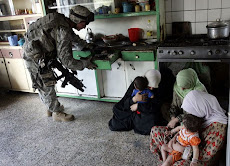
BAGHDAD August 17, 2007 -- Iraq's political leaders emerged yesterday from three days of crisis talks with a new alliance that seeks to save the crumbling US-backed government. But the reshaped power bloc included no Sunnis and immediately raised questions about its legitimacy as a unifying force. The political gambit came as teams in northern Iraq tallied the grim figures from the deadliest wave of suicide attacks of the war and -- in a rare moment of joy since Tuesday's devastation -- pulled four children alive from the rubble. "We didn't hear them calling out for help until moments before a bulldozer would have killed them as it cleared the rubble," said Saad Muhanad, a municipal council member in the Qahtaniya region, where four bomb-laden trucks turned clay and stone homes into tombs for hundreds belonging to a small religious group considered as infidels by hard-line Muslims. Interior Ministry spokesman Brigadier General Abdul-Karim Khalaf said yesterday that at least 400 were dead, apparently all members of the ancient Yazidi sect that mixes elements of Islam, Christianity, and other faiths. Some authorities outside the central government had said at least 500 people died and have not revised that figure downward. The four young survivors were related, Muhanad said, but he did not know if they were siblings. No other details about the children were known. The freed youngsters began running through the streets begging for food and water. "In a while, some of their families came and took them away," said Muhanad.

The mayor of the region pleaded for help, saying an even larger tragedy loomed if the shattered communities did not get food, water, and medicine soon. "People are in shock. Hospitals here are running out of medicine. The pharmacies are empty. We need food, medicine, and water otherwise there will be an even greater catastrophe," said Abdul-Rahim al-Shimari, mayor of the Baaj district, which includes the Kurdish-speaking Yazidi villages hit by the suicide blasts blamed on Al Qaeda in Iraq.

The region is in northwest Iraq, near the Syrian border, suggesting that the extremist group could be pushing into new areas in northern Iraq after being driven from strongholds by US-led offensives. Qassim Khalaf, a 40-year-old government worker, was crying while he spoke by telephone from Qahtaniya. "We call upon the United Nations to protect the Yazidis because the Iraqi government is in hibernation. Right now, I can see some bodies still partially buried under the rubble. Hundreds of local volunteers are still working in the rescue operations," he sobbed. "Eighty percent of the village was destroyed or damaged." Barham Saleh, a Kurd and deputy prime minister, toured the area and ordered the Health and Defense ministries to immediately send tents, medicine and other aid. He also allocated $800,000 to provincial officials to distribute to the victims and relatives. The UN Security Council condemned the bombings "in the strongest terms," saying they were aimed at widening the sectarian and ethnic divide in Iraq. Council members called for an end to sectarian violence.

+++++++++++++++++++++++++++++++++++++++++++++++++++ Disclaimer No responsibility or liability shall attach itself to either myself or to the blogspot ‘Mozlink’ for any or all of the articles/images placed here. The placing of an article does not necessarily imply that I agree or accept the contents of the article as being necessarily factual in theology, dogma or otherwise. Mozlink

Nigeria - Prison Conditions Appaling

NEW YORK, August 17, 2007 (CISA) - Amnesty International researchers, recently returned from Nigeria, have expressed shock at the prison conditions they witnessed and the protracted delays in the justice system. "The circumstances under which the Nigerian government locks up its inmates are appalling. Many inmates are left for years awaiting trial in filthy overcrowded cells with children and adults often held together," said Aster van Kregten, Nigeria researcher for Amnesty International. "Some prisoners are called 'forgotten inmates' as they never go to court and nobody knows how much longer their detention will last, simply because their case files are lost." Of Nigeria’s 40,000 or so prisoners, 25,000 have never been convicted of a crime, and remain in prison up to 14 years without going to court, according to the United Nations humanitarian news agency IRIN.

The Amnesty International delegation spent two weeks in Nigeria, visiting 10 prisons in the states of Enugu, Kano and Lagos, and in the Federal Capital Territory. In the wake of its findings, the organisation called on the Nigerian government to properly fund urgent prison improvements and ensure all inmates are tried within reasonable time. Inmates in many prisons routinely sleep two to a bed or on the floor in squalid cells. Toilets, often little more than holes in the floor, are generally overflowing by the end of each day. Disease is rampant in the filth and close quarters. Three out of every five people in Nigeria’s prisons are awaiting trial, often for years. Amnesty International researchers spoke to several detainees who reported that they had each spent eight years or more waiting for their cases to conclude. Protracted pre-trial detention is so commonplace in Nigeria that periodic presidential and gubernatorial amnesties are routinely extended to those who have spent more time in prison awaiting trial than the maximum sentence they could receive if eventually convicted.

Children under the age of eighteen were held together with adults in four of the largest prisons Amnesty International visited. In Kuje Prison, located in the Federal Capital Territory, 30 boys­some as young as 11 and 12­shared a dormitory with over 175 adult men. By law, Nigeria’s prisons are tasked with inmate’s rehabilitation. Some facilities visited by Amnesty International offered schooling or work opportunities to a limited number of prisoners, but even these centers lacked sufficient books, instructional supplies and vocational training materials. All facilities had medical staff and welfare officers, personnel charged with safeguarding the well-being of inmates, but prisoners commonly reported that access to staff or medication was available only to those who could afford bribes.
+++++++++++++++++++++++++++++++++++++++++++++++++++
Disclaimer
No responsibility or liability shall attach itself to either myself or to the blogspot ‘Mozlink’ for any or all of the articles/images placed here. The placing of an article does not necessarily imply that I agree or accept the contents of the article as being necessarily factual in theology, dogma or otherwise.
Mozlink

Friday, August 17, 2007

KOUDJIWAI, Chad — The small plane flew in low over a scorched, peppercorn scrubland, following a broad, muddy river that was all elbows on its run to the southeast. A young man selling expensive imported gasoline in Ndjamena, Chad’s capital, where little oil revenue has reached the people. The first hint of humanity came with the appearance of an immense grid for seismic testing, laboriously traced through the brush. Finally, a lonely, hulking steel drilling platform popped into view. Chad is as geographically isolated as places come in Africa. It is also among the continent’s poorest and least stable countries, the scene of recurrent civil wars and foreign invasions since it gained independence from France in 1960. None of that has put off the Chinese, though. In January, they bought the rights to a vast exploration zone that surrounds this rural village, making the baked wilderness here, without roads, electricity or telephones, the latest frontier for their thirsty oil industry and increasingly global ambitions. The same is happening in one African country after another. In large oil-exporting countries like Angola and Nigeria, China is building or fixing railroads, and landing giant exploration contracts in Congo and Guinea.

In mineral-rich countries that had been all but abandoned by foreign investors because of unrest and corruption, Chinese companies are reviving output of cobalt and bauxite. China has even become the new mover and shaker in agricultural countries like Ivory Coast, once the crown jewel in France’s postcolonial African empire, where Chinese companies are building a new capital, in Yamoussoukro, paid for by Chinese loans. Surging Chinese interest in this continent has helped bring about what many Africans believe is the most important moment since the end of the cold war, when democracy was spreading in Africa and Western nations spoke of a “peace dividend” that might ease African poverty. That blush of interest in Africa quickly faded, though, as did several of the new democracies, and Africans and Westerners have regarded each other warily ever since. Westerners complain about chronic corruption and ineffective government, while Africans lament broken promises on aid and a hostile international economic system. The Chinese have stepped into this picture, coming to struggling countries like Chad with deep pockets, fewer demands on how African governments should behave and an avowed faith in everyone’s ability to prosper. As Beijing’s ambassador to this country, Wang Yingwu, said at his residence in Ndjamena, Chad’s capital, where the electricity repeatedly failed, “We are exempting Chadian goods from import duties.” When the interviewer noted that Chad produced almost nothing besides oil, Mr. Wang was undaunted, saying, “If they don’t produce things today, they will tomorrow.”

To help make that happen, China plans to build the country’s first oil refinery, lay new roads, provide irrigation and erect a mobile telephone network, for starters. With such intensive efforts across the continent, China’s trade with Africa topped $55 billion in 2006, up from less than $10 million in the 1980s. To achieve this growth, it has bypassed multinational institutions like the World Bank and the International Monetary Fund and flouted many of their lending criteria, including minimum standards of transparency, open bidding for contracts, environmental impact studies and assessments of overall debt and fiscal policies. In some ways, the new Chinese model of doing business in Africa is a throwback to an earlier era of Western involvement that is now widely seen as disastrous. In that era, borrowing countries typically had to work with companies from the lending nation, limiting competition and giving priority to business over development. Today, China takes things even further, signing long-term deals for rights to natural resources that allow countries otherwise unworthy of credit to repay their debt in oil or mineral output. “In what manner has Africa progressed, in what sector?” said the Chadian president, Idriss Déby, referring to decades of close ties to the West. “Whatever the good will of Africa’s old friends and the old partners in its development, it has not progressed at all.” Still, major doubts hang heavily in the air. Will China’s hunger for raw materials enable this continent to take off? Or will Beijing’s willingness to spend whatever it needs in Africa, without regard to fiscal prudence, democracy, honest business practices and human rights, produce a replay of booms past, enriching local elites but leaving the continent poorer, its environment despoiled and its natural resources depleted?

+++++++++++++++++++++++++++++++++++++++++++++++++++
Disclaimer
No responsibility or liability shall attach itself to either myself or to the blogspot ‘Mozlink’ for any or all of the articles/images placed here. The placing of an article does not necessarily imply that I agree or accept the contents of the article as being necessarily factual in theology, dogma or otherwise. Mozlink

Peru Earthquake Disaster – Rapid Response Initiative

Irish Aid Press Release - Dublin August 17th.
Ministers order dispatch of emergency supplies of tents, blankets & cooking equipment. The Minister for Foreign Affairs, Mr. Dermot Ahern, T.D. and the Minister of State for Overseas Development, Mr. Michael Kitt T.D., this morning (Friday) ordered the dispatch of emergency supplies from the Irish Aid relief stocks held at the UN humanitarian base in Brindisi, Italy.

In a joint operation with the Italian Government, a special aircraft has been chartered to airlift emergency supplies overnight to Lima, Peru. The shipment will include emergency supplies from both the Italian and Irish stocks being held in Brindisi. The Irish supplies will consist of 60 All Weather tents; 500 kitchen sets; and 1,000 blankets. Authorising the dispatch of this material Minister Ahern said, “Once again the Rapid Response Initiative has proved its worth and I am pleased that Ireland has been able to respond so quickly to this tragedy in Peru. It is particularly gratifying that we were able to do so in conjunction with one of our EU partners.” Minister Kitt added, “Along with this material, the members of our Rapid Response Corps are on stand-by to respond if their particular skills are called for by any of our UN partner agencies. I am delighted to see this new Irish Aid response mechanism to natural disasters working so effectively”.

Note for Editors: Under the first element of the Rapid Response Initiative, Ireland has pre-positioned humanitarian supplies at the United Nations Humanitarian Response Depot (UNHRD) in Brindisi and at the Defence Forces Curragh Camp, Co. Kildare. Further information on Irish Aid’s Rapid Response Initiative is available at: www.irishaid.gov.ie

+++++++++++++++++++++++++++++++++++++++++++++++++++
Disclaimer
No responsibility or liability shall attach itself to either myself or to the blogspot ‘Mozlink’ for any or all of the articles/images placed here. The placing of an article does not necessarily imply that I agree or accept the contents of the article as being necessarily factual in theology, dogma or otherwise.
Mozlink

Wednesday, August 8, 2007

Climate Change Threatens Poor World's Agriculture

NEW DELHI, Aug. 7 — As exceptionally heavy rains continued to cut a wide swath of ruin across northern India, a top UN official warned Tuesday that the vagaries of climate change could destroy vast swaths of farmland in this country, ultimately affecting food production and adding to the woes of already desperate peasants who live off of the land.

A villager in Bogiajan, Assam State, which has been hit hard by flooding, wading past submerged houses to get drinking water. Even a small increase in temperatures, said Jacques Diouf, director general of the United Nations Food and Agricultural Organization, could push down crop yields in southern regions of the world, even as agricultural productivity goes up in northern climes like Europe. A greater frequency of droughts and floods, the agency added, could be particularly bad for agriculture. “Rain-fed agriculture in marginal areas in semiarid and subhumid regions is mostly at risk,” Mr. Diouf said on a visit to the southern Indian city of Chennai. “India could lose 125 million tons of its rain-fed cereal production, equivalent to 18 percent of its total production.”

That is a signal of the steep human and economic impact of extreme weather in India, where a majority of peasants still rely on the rains to irrigate their fields and where a bad flood can be nearly as devastating as a bad drought. The latest floods have affected an estimated 20 million people in India alone, 8 million in neighboring Bangladesh and 300,000 in Nepal, according to the United Nations children’s agency. The World Meteorological Organization said in a statement on Tuesday that the region experienced double the normal number of monsoon depressions in the first half of the four-month rainy season that started in June, causing heavy rainfall and flooding across South Asia.

Nearly a third of India’s meteorological districts received higher-than-average rains, according to government figures. The latest tally released by the Home Ministry reads like an inventory of ruin: nearly 8,000 square miles of agricultural land inundated since the start of the monsoon two months ago, more than 130,000 houses destroyed, 1,428 people killed. Government relief teams have fanned out across northern Assam, Bihar and Uttar Pradesh States, dropping relief packets by air. Even as the rains stopped over the last couple of days, stagnant water raised the risks of water-borne disease, from diarrhea to dengue fever, in areas that are already among the nation’s poorest and least healthy. There have been no reports of disease outbreaks yet. India stands to bear the brunt of some of the worst effects of climate change, in large measure because it is ill-prepared. When the rivers swell, fragile embankments burst. Mud and thatch houses easily crumble. When the water rises, as it does year after year to varying degrees, Indian peasants are ritually stranded. “These floods are a curse to us,” Ganesh Acharya, 40, said by telephone from a marooned part of Bihar State. “Our lives comes to a standstill.” In his village, he said, the rice crop had washed away, and people have had to paddle to a nearby village to buy basic goods, at far higher prices than normal. Shiv Shankar Acharya, 58, a local college lecturer, said he did not recall when so much water had accumulated, and had refused to subside for more than 10 days.
+++++++++++++++++++++++++++++++++++++++++++++++++++
Disclaimer
No responsibility or liability shall attach itself to either myself or to the blogspot ‘Mozlink’ for any or all of the articles/images placed here. The placing of an article does not necessarily imply that I agree or accept the contents of the article as being necessarily factual in theology, dogma or otherwise.
Mozlink

Pontiff Wants Peaceful Use of Nuclear Energy

CASTEL GANDOLFO, Italy, JULY 29, 2007 (Zenit.org).- Benedict XVI urged nuclear disarmament, suggesting that resources thus saved could be used to help the poor. The Pope said this today before praying the midday Angelus with crowds gathered at Castel Gandolfo, the papal summer residence 30 kilometers (18 miles) south of Rome. His address recalled the 50th anniversary of the founding of the International Atomic Energy Agency. Recalling the second article of the agency's statutes, the Holy Father observed that among its objectives, this U.N. agency seeks "to accelerate and enlarge the contribution of atomic energy to peace, health, and prosperity throughout the world."

"The Holy See, fully approving of the IAEA's goal, has been a member from the organization's foundation and continues to support its activity," the Pontiff explained to the pilgrims, many of whom remained in the piazza in front of the palace because of the lack of space in the courtyard. Benedict XVI continued, "The epochal changes of the last 50 years are evidence of how, in the difficult crossroads at which humanity finds itself, the commitment to encourage the nonproliferation of nuclear arms, to promote a progressive and agreed-upon nuclear disarmament, and to favor the peaceful and safe use of nuclear technology for authentic development -- respectful of the environment and always attentive to the most disadvantaged populations -- is always relevant and urgent." The Bishop of Rome desired "the success of the efforts of those who work to pursue the three objectives with determination and the intention to make things such that the resources which would be saved could then be employed in projects of development capable of benefiting all their people, especially the poor."

Citing the Catechism of the Catholic Church, he re-emphasized how in the place of "the arms race there must be substituted a common effort to mobilize resources toward objectives of moral, cultural and economic development, redefining the priorities and hierarchies of values." The Pope asked that "scientific and technological knowledge be used with a sense of responsibility and for the common good, in complete respect for international law." He concluded his address praying "that men live in peace and all feel as brothers, sons of one Father: God."
+++++++++++++++++++++++++++++++++++++++++++++++++++
Disclaimer
No responsibility or liability shall attach itself to either myself or to the blogspot ‘Mozlink’ for any or all of the articles/images placed here. The placing of an article does not necessarily imply that I agree or accept the contents of the article as being necessarily factual in theology, dogma or otherwise. Mozlink

Tuesday, August 7, 2007

Questions Raised at Slain Fr Kaiser’s Public Inquest

NAIROBI, August 7, 2007 (CISA) -The 4-year inquest into the death of Mill Hill missionary Fr John Kaiser concluded last week that he did not commit suicide, but was in fact murdered. Here are 24 hard questions gleaned from the ruling:
  1. In 1999 Fr Kaiser testified before a commission of inquiry, adversely mentioning then President Daniel Moi in connection with ethnic clashes in the Rift Valley. The reference to President Moi was deleted from the record. Who did that and why?
  2. After Fr Kaiser’s death, why did respected Kenyan psychiatrist Dr Frank Njenga issue a report that the priest suffered from a clearly diagnosable mental illness, when he had never treated the priest? Njenga neither interviewed the priest’s personal doctors nor perused any medical records. Why?
  3. Why did the American Federal Bureau of Investigations (FBI) invent the story that Fr Kaiser was once admitted to a mental hospital after shooting a neighbour?
  4. Catechist Francis Kantai of Lolgorian, a close friend of Fr Kaiser’s, claimed he was approached to kill the priest by poisoning him. Who was behind this plot?
  5. Why did the FBI, who presented the suicide theory, refuse to attend the inquest to defend their claim? Did they fear cross-examination?
  6. Why was the report by top FBI experts on Fr Kaiser’s “suicide” not signed? Was it because no one was prepared to take responsibility for its conclusions?
  7. After the FBI finished their investigations and filed a report, why did they still keep Fr Kaiser’s gun, which he allegedly had used to kill himself? They only produced it following a court order.
  8. Police claimed Fr Kaiser used his own gun to kill himself, yet they did not do a ballistic analysis of the weapon. Isn’t it possible the fatal shot was fired from another gun?
  9. There was no trace of gun powder on Fr Kaiser’s body, or any blood on his gun which lay beside him. Was the fatal shot really fired from that gun, at the scene where the body was found?
  10. Fr Kaiser’s gun was about 3ft long. Could it be possible for a 68-year-old man suffering from arthritis to hold such a long gun to the back of his right ear and still manage to reach and pull the trigger?
  11. There were bruises on Fr Kaiser’s knees. How and when did these occur, yet his body lay serenely on the ground?
  12. Fr Kaiser’s body was found lying neatly on its left side with one hand neatly placed on the other. How could that be possible if he had shot himself? The heavy impact would have left the body sprawled.
  13. A senior policeman who transferred Fr Kaiser’s body to the mortuary never handed it in with brain matter in a polythene bag? Yet there was brain matter purported to be Fr Kaiser’s? Where did the stuff come from and with what motive?
  14. Fr Kaiser was a man of great courage, fearlessness and fortitude who had taken on the high and mighty in defense of justice. He had refused to leave the country for his safety. Why would he kill himself?
  15. The day before he died, Fr Kaiser delivered a note to then papal envoy in Nairobi, Archbishop Giovani Tonnuci. What was in the note? Why did the Catholic Church decline to make the note public at the inquest?
  16. Fr Kaiser’s vehicle was found lying in a culvert by the road, with a ring of green paint around the left front tyre. Did a mysterious green vehicle collide with the priest’s?
  17. The driver’s right widow was found smashed. Some pieces of glass were on Fr Kaiser’s clothing, but not outside the broken window or near the car. Why?
  18. Was then Minister for internal security, Julius Sunkuli, who had bad relations with Fr Kaiser a co-conspirator in the priest’s murder? The court exonerated Sunkuli for lack of evidence.
  19. Why did Florence Mpayei who had made serious rape allegations against Sunkuli later withdraw the charge? She was one of the two alleged rape victims Fr Kaiser was assisting to find justice.
  20. Why did catechist Francis Kantai, a close companion of Fr Kaiser’s, not attend his friend’s funeral? The court found his testimony “unreliable, evasive and contradictory.”
  21. Why was Kantai never arrested and charged even after admitting that he lied to the court in his earlier evidence and engaged in acts of arson against victims of ethnic clashes whom Fr Kaiser was protecting?
  22. Shortly before Fr Kaiser’s death, a rifle similar to his disappeared from Maasai Mara National Park and has not been traced to date. Could it be the gun used to shoot him?
  23. Two rangers from the Mara, relatives of Sunkuli’s who had illegally detained an alleged rape victim, gave “clearly rehearsed” evidence at the inquest. They had beaten up a man badly on suspicion that he was close to Fr Kaiser. Who helped them rehearse their tale and why?
  24. Why did Kenya Police fail to investigate Fr Kaiser’ death “with the seriousness and diligence that it deserved?” The court found that they did “no meaningful investigations.” Were they obeying some sinister instructions? +++++++++++++++++++++++++++++++++++++++++++++++++++ Disclaimer No responsibility or liability shall attach itself to either myself or to the blogspot ‘Mozlink’ for any or all of the articles/images placed here. The placing of an article does not necessarily imply that I agree or accept the contents of the article as being necessarily factual in theology, dogma or otherwise. Mozlink

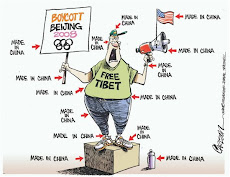
China Violates Olympic Rights Promises

Monday, August 6, 2007

Sri Lanka Accused of Abuses

COLOMBO, Aug 6: (Reuters) - Sri Lanka's government is responsible for unlawful killings and disappearances, Human Rights Watch said on Monday -- the anniversary of the discovery of the massacre of 17 aid workers blamed on security forces. Issuing a report entitled 'Return to war: Human rights under siege', the U.S.-based group said President Mahinda Rajapaksa's government is resorting to abuses to fight a new chapter in a two-decade civil war against Tamil Tiger rebels. "The Sri Lankan government has apparently given its security forces a green light to use 'dirty war' tactics," Brad Adams, Asia director at Human Rights Watch, said in a statement. "Abuses by the LTTE (Tigers) are no excuse for the government's campaign of killings, disappearances and forced returns of the displaced," he added. "The government has repeatedly promised to end and investigate abuses, but has shown a lack of political will to take effective steps."

About 70,000 people have been killed in the conflict between Liberation Tigers of Tamil Eelam, fighting for a separate state for minority ethnic Tamils, and security forces since 1983. Rights groups say hundreds of people, many of them minority Tamils, have been reported abducted or disappeared this year and 1,000 more in 2006. Rebels, paramilitaries, elements of the security forces, and underworld gangs have all been blamed. The Sri Lankan government says numbers of disappearances are overblown and many cases are fakes to discredit the administration. The publication of the Human Rights report coincides with the commemoration of the murder of 17 local staff members of Paris-based aid group Action Contre la Faim, who were shot dead in their compound in the northeastern town of Muttur last August after they were trapped by fighting between troops and rebels. Nordic truce monitors blamed the killings on the security forces and international observers say an inquiry into the massacre, the worst attack on aid workers since the 2003 bomb attack on the United Nations office in Baghdad, fails to meet international standards.

Action Contre La Faim are not pointing fingers, and are waiting for answers in a case that remains unsolved a year on. "We want to know who has done this," said Loan Tran-Thanh, head of the group's Sri Lanka mission. "It's very slow, but that's normal." "We cannot make any judgements ... because we are not the experts. We don't have enough data for us even to give an opinion," she added. "There have been so many contradictions." The island's human rights minister demanded that journalists be barred from the commemoration ceremony.

The Tigers are also blamed for serial abuses, including killing civilians and troops with roadside bombs and forcibly recruiting people, including children, to fight in the war. Human Rights Watch is lobbying for a United Nations human rights mission to be sent to Sri Lanka in the name of transparency and to discourage further abuses, but the government has refused. It says western governments are bullying it on human rights and are hypocritical, citing abuses in Iraq and Afghanistan. "I understand that they are going to commemorate ... these 17 people, but they have forgotten 35 people from the Muslim community butchered in the same place by the LTTE," said government defence spokesman Keheliya Rambukwella. "How do these human rights work with 17 and not work for 35?" he added. "As far as the government is concerned, it is doing everything possible in relation to human rights."
+++++++++++++++++++++++++++++++++++++++++++++++++++
Disclaimer
No responsibility or liability shall attach itself to either myself or to the blogspot ‘Mozlink’ for any or all of the articles/images placed here. The placing of an article does not necessarily imply that I agree or accept the contents of the article as being necessarily factual in theology, dogma or otherwise.
Mozlink

2007 Report - Human Development and Climate Change

Human development is about putting people at the centre of development. It is about people realizing their potential, increasing choice and enjoying the freedom to lead the lives they value. Created in 1990, the Human Development Report has explored themes including gender equity, democracy, human rights, globalization, cultural liberty and water scarcity. Climate change is the greatest challenge facing humanity at the start of the 21st Century. Failure to meet that challenge raises the spectre of unprecedented reversals in human development. The world’s poorest countries and poorest people will bear the brunt.

The past years have witnessed the emergence of a growing consensus on climate change. Governments across the world have seen the warning signs. The science linking global warming to human activity is unequivocal. The economic case for action is compelling: the costs of inaction will heavily outweigh the costs of action. Yet the politics lags behind the science and the economics. Collectively, the world’s governments are failing to act with the urgency demanded by the scale of the threat.

The window of opportunity for avoiding dangerous climate change is closing fast. This year’s Human Development Report explains why we have less than a decade to change course and start living within our global carbon budget. It explains how climate change will create long-run low human development traps, pushing vulnerable people into a downward spiral of deprivation. Because climate change is a global problem with global causes and effects, it demands a global response with countries acting on the basis of their historic responsibility and capabilities. The Human Development Report 2007 will be launched in November.
+++++++++++++++++++++++++++++++++++++++++++++++++++
Disclaimer
No responsibility or liability shall attach itself to either myself or to the blogspot ‘Mozlink’ for any or all of the articles/images placed here. The placing of an article does not necessarily imply that I agree or accept the contents of the article as being necessarily factual in theology, dogma or otherwise.
Mozlink

China says 'Living Bhuddas' Must Apply for Reincarnation

August 3, 2007: The Chinese government has told Tibet's "living Bhuddas" that they must have permission to be reincarnated. The new regulations, which come into force on September 1, are to "regulate the management of the reincarnation of living Buddhas", the State Administration for Religious Affairs said in a statement on its website (www.sara.gov.cn). "Temples which apply for reincarnations of living Buddhas must be legally registered venues for Tibetan Buddhism activities and capable of fostering and offering proper means of support to the living Buddha," it said.

The regulations are to "guarantee citizens freedom of religion and respect Tibetans' tradition of living Buddha succession", it added. In March, Tibet's Communist Party chief said the party was the remote, mountainous region's real "living Buddha" because, he said, it had brought an improvement in living conditions. Tibetans still chafe under Beijing's yoke, though. Radio Free Asia said scores of Tibetans had been arrested in the Sichuan town of Litang after demonstrating for greater religious freedom and the Dalai Lama's return.

The official Xinhua news agency said only one person had been detained, a villager called Runggye Adak, "for inciting separation of nationalities". "More than 200 villagers, who were unaware of the facts, gathered outside a detention centre on Wednesday evening and called for the release of Runggye Adak," the report said, citing unnamed sources. "All the villagers had left by Thursday after local government officials and police explained that Runggye Adak had breached the law," it said, adding that nobody had been injured. In 2002, a Tibetan lama was sentenced to death for a series of explosions in Litang and Chengdu, the Sichuan provincial capital.
+++++++++++++++++++++++++++++++++++++++++++++++++++
Disclaimer
No responsibility or liability shall attach itself to either myself or to the blogspot ‘Mozlink’ for any or all of the articles/images placed here. The placing of an article does not necessarily imply that I agree or accept the contents of the article as being necessarily factual in theology, dogma or otherwise.
Mozlink

Sunday, August 5, 2007

A 200,000 Zim Dollar Bill

HARARE, Zimbabwe August 1st: The central bank unveiled a new 200,000 Zimbabwe dollar note yesterday, double the face value of what had been the highest denomination bill in a country where bundles of notes are needed for the simplest transactions. The Reserve Bank said in a statement that circulation of the new bill was for "convenience" in business and individual transactions. The bill is worth $13 at the official exchange rate or $1 at the dominant illegal black market rate. With five bills a Zimbabwean millionaire can buy a handful of scarce food items.

Runaway inflation has led to bundles of bills being needed for routine purchases. Few businesses or even government departments, including the tax office, accept checks. They demand cash or same-day bank-to-bank transfers, for fear the value of the currency will plummet even further before checks can clear. Zimbabwe is in its worst economic crisis since independence from Britain in 1980, blamed largely on disruptions in the agriculture-based economy in the former regional breadbasket after the often violent seizures of thousands of white-owned commercial farms began in 2000. Last August, the central bank slashed three zeros from the currency and issued new notes, saying the old cash had become unmanageable and computerized accounting and regular electronic calculators were unable to cope with the number of digits in routine transactions. Since then, official inflation has trebled to 4,500 percent, the highest in the world. Independent finance houses estimate real inflation closer to 9,000 percent.

A government edict to slash all prices last month in a bid to curb inflation has left shelves across the country bare of cornmeal, meat, eggs, milk, and other staples. Acute gasoline shortages have crippled transport and commuter services. The price of gas has been slashed to half the cost of importing it.
+++++++++++++++++++++++++++++++++++++++++++++++++++
Disclaimer
No responsibility or liability shall attach itself to either myself or to the blogspot ‘Mozlink’ for any or all of the articles/images placed here. The placing of an article does not necessarily imply that I agree or accept the contents of the article as being necessarily factual in theology, dogma or otherwise.
Mozlink

What if we were a Village of 100 people?

If the Earth was represented as a small village of 100 people, it would be something thus:

Sex
50 men
50 women

Population by continents
61 Asians
12 Europeans
14 Americans
13 Africans
1 Australian

Religion
33 are Christian
18 are Muslim
14 are Hindus
16 are not religious
6 are Buddhist
13 people practice other religions

Economy
41 live without basic cleaning
47 live in an urban area
6 people have 59% of the total fortune
18 live without a potable water source
18 people fight to survive with less than $1 or per day
53 people fight to survive with less than $2 or per day

Feeding
13 are hungry

Education
14 cannot read
7 have secondary education
12 have a computer
3 have connection to Internet

Health
1 adult between 15 and 49 years has AIDS
9 are incapacitated people

More data
The village uses more than $1,12 trillions in military expenses
The village uses only $100 billions in aids to the development
If you have food in your refrigerator, clothes in your locker, ceiling on your head, and have a bed for sleeping, you are richer than 75% of the whole population of the world
If you have a banking account you are one of the 30 richer people in the world

This it is an interesting summary of a presentation at TheMiniatureEarth

The message that it give us is that we must value what we have; the person who is reading this message is because she is one of the 3 people in this village that has connection to Internet and would bet that also they have a house and in his great majority they have an account in a bank. We must value what we have!
+++++++++++++++++++++++++++++++++++++++++++++++++++
Disclaimer
No responsibility or liability shall attach itself to either myself or to the blogspot ‘Mozlink’ for any or all of the articles/images placed here. The placing of an article does not necessarily imply that I agree or accept the contents of the article as being necessarily factual in theology, dogma or otherwise.
Mozlink

Saturday, August 4, 2007

Monsoon Floods Displace 19 Million

[Photo] People wade through a flooded road in Mumbai, India. Photograph: Gautam Singh/AP

August 3rd: Monsoon rains whipped the Indian subcontinent yesterday, flooding a wide swathe south of the Himalayas and bringing the death toll over recent weeks to more than 1,100, with 19 million people displaced. Hundreds of kilometres of land from the Gangetic plains to the Bangladeshi delta are under water as rivers burst their banks, although most of the deaths have happened in central India. Parts of the Indian states of Assam, Bihar and Uttar Pradesh have seen almost three weeks of rain, swelling rivers and flooding fields.

The country's financial capital, Mumbai, saw water levels rise to knee level in the streets, forcing train services to be closed down and flights to be cancelled.In recent days, 60 people have lost their lives in Bangladesh, while flooding and landslides have caused 84 deaths in Nepal. Farming, the lifeline of rural India, has been severely affected, and relief workers have warned that food stocks, as well as drinking water supplies, are perilously low. Millions of people have been cut off from the rest of the country, and the floods have destroyed crops worth millions of rupees. More than 14 million people in India, and another five million in Bangladesh, have been affected.

Aid agencies say health issues are of particular concern, with reports of fever, acute respiratory infections, diarrhoea and snake bites among refugees.With the fertile plains south of the Himalayas now covered with water, the Indian army has been deployed to evacuate people from affected regions. In many remote areas, hundreds of thousands have scrambled to find shelter on higher ground, setting up temporary dwellings.In Uttar Pradesh, India's most populous state, more than 500 villages are below the water line, and 100,000 displaced people are living in relief camps in Assam. In Bangladesh, at least one third of the country's 64 districts have been partly submerged by the flooding.Farmer Rahmat Sheikh and his family were among the 2,000 villagers who fled their flooded village in Sirajganj district, Bangladesh. "The floods have taken away all I had," 40-year-old Mr Sheikh told the Associated Press. "Rice paddies in the field, two cows and my house all are gone. I don't know how we will now survive." Aid agencies were gearing up for a huge rescue operation. Unicef, the UN's chidren's fund, said in a statement that the "sheer size and scale of flooding and massive numbers of people affected poses an unprecedented challenge to the delivery of desperately needed humanitarian assistance by governments".

The torrential rains began last month, and last until September. The monsoon is vital to the region's rural economy, bringing both hope and fear. Despite being a regular event, hundreds lose their lives every year in landslides and by drowning.With swollen rivers bursting their banks after days of rain, that danger is again being made clear on the fertile plans of India, which provide food for hundreds of millions of people. In New Delhi, India's meteorological department told Reuters that unusual monsoon patterns this year had led to heavier rains than normal. "We've been getting constant rainfall in these areas for nearly 20 days," BP Yadav, a spokesman for the department, said. Some blame India for worsening the situation because it has released water building up in its river system. However, politicians in India say countries such as Nepal have a responsibility to regulate water flow.Experts argue that such finger-pointing allows officials to dodge the truth that bad management and poor planning have led to avoidable death and damage.

Himanshu Thakkar, the co-ordinator of the South Asia Network of Dams, Rivers and People, said water levels in dams in India were too high, with no room to capture rainfall. Mr Thakkar also pointed out that embankments burst after just a few days of heavy rainfall, suggesting poor maintenance. "There's no effective water catchment management in place," he said. "You need systems in place like a proper drainage network to flush this water away - especially in cities. But nowhere in the region has bothered. "Now climate change models predict heavier rainfall events happening more frequently. Has there been a change in attitude? No."
+++++++++++++++++++++++++++++++++++++++++++++++++++
Disclaimer
No responsibility or liability shall attach itself to either myself or to the blogspot ‘Mozlink’ for any or all of the articles/images placed here. The placing of an article does not necessarily imply that I agree or accept the contents of the article as being necessarily factual in theology, dogma or otherwise.
Mozlink

Philippine Church Leaders Request Prayers for Rain

Manila August 3rd: (ENI). An unusually dry spell on the main Philippine island of Luzon, which may lead to a water crisis and even famine, has prompted Roman Catholic and Protestant church leaders to request prayers for rain. "Our relief comes from nature, so we implore the Master of all creation, God, our Father, at whose command the winds and the seas obey, to send us rain," Catholic Archbishop of Manila Gaudencio Rosales wrote in a 1 August circular sent to Manila parishes. The archbishop asked people to begin praying for rain on 3 August.
+++++++++++++++++++++++++++++++++++++++++++++++++++
Disclaimer
No responsibility or liability shall attach itself to either myself or to the blogspot ‘Mozlink’ for any or all of the articles/images placed here. The placing of an article does not necessarily imply that I agree or accept the contents of the article as being necessarily factual in theology, dogma or otherwise.
Mozlink