Saturday, October 11, 2008

Indian archbishop pleas for prime minister to pay attention to attacks on Christians


October 12th -With the intensification of violence against Christians in India, the chairman of the Catholic Council of Bishops in India, Archbishop Leo Cornelio, called upon the country’s Prime Minister to not only focus on the attacks in the states of Orissa and Karnataka, but also the increasing violence in Madhya Pradesh.

The archbishop’s letter, dated Wednesday, opens by commending the Prime Minister’s decision to convene a meeting to discuss “the grave situation in Orissa and Karnataka” due to a “series of murderous attacks on Christian communities and their Churches.”

While the prelate notes that the attacks in those particular states are violent, he requests that the head of state pay attention to the “happenings” in Madhya Pradesh that “are also equally serious.”

“From the day the [Bajrang dal] BJP came into power in Madhya Pradesh in the year 2003 minorities in Madhya Pradesh have been subjected to [a] series of violent attacks on shops of Muslims and churches of Christians at many places. At many places violent attacks were made on the members of the two communities causing them grave injuries,” writes the archbishop.

The letter goes on to give examples of the violence against religion in the region. “In some cases churches more than 80 years old were set on fire. Even the Nuns at various places including Indore, Ujjain, Bhopal etc. were not spared.”

Though these incidents continue to occur, the government has not intervened.

Archbishop Cornelio explains that when the violent attacks have occurred, the “police and administration remained mute spectators” or even “helped the miscreants in their nefarious acts.”

In hope of receiving protection, Indian bishops “have been repeatedly drawing the attention of the Chief Minister, Chief Secretary and Director General of Police seeking their intervention. But our attempts did not yield any positive and effective results.”

Greater protection is needed for the security of the Christian people, Archbishop Cornelio insisted, pointing out that recently the president of VHP released a statement “hailing attacks on Orissa Christians.”

He has also warned that such attacks “will continue with greater intensity and determination.” Because of this, the archbishop concluded, “we again request you to include the incidents of Madhya Pradesh on the agenda of the forth coming meeting of the National Integration Council.”

Between April 2004 and September 2008, in the state of Madhya Pradesh, there have been nearly 111 attacks. Dozens of families have lost their homes and more than 20 churches have been burnt or desecrated.

In one instance, an 11 year-old girl was raped and murdered in the bathroom of a Catholic Church.

Several of the attacks were witnessed by the police, who stood by watching.

A larger survey of the violence within the five states of Orissa, Chhattisgarh, Madhya Pradesh, Karnataka and Kerala, reveals a devastating picture: 149 churches have been burned and 4,640 homes set ablaze, leaving 53,000 Christians homeless, 18 000 wounded and more than 50 dead.
+++++++++++++++++++++++++++++++++++++++++++++++++++
Disclaimer
No responsibility or liability shall attach itself to either myself or to the blogspot ‘Mozlink’ for any or all of the articles/images placed here. The placing of an article does not necessarily imply that I agree or accept the contents of the article as being necessarily factual in theology, dogma or otherwise.
Mozlink

Friday, September 12, 2008

Urgent Letter from Zimbabwe - August 30th.

I reckon that these are the last days of Mugabe and ZPF. The darkest hour is always before dawn. We are all terrified at what they are going to destroy next........I mean they are actually ploughing down brick and mortar houses and one family with twin boys of 10 had no chance of salvaging anything when 100 riot police came in with AK47's and bulldozers and demolished their beautiful house - 5 bedrooms and pine ceilings - because it was 'too close to the airport', so we are feeling extremely insecure right now.

You can't just be in denial and pretend/believe it's not going on. To be frank with you, it's genocide in the making and if you do not believe me, read the Genocide Report by Amnesty International which says we are - IN level 7 - (level 8 is after it's happened and everyone is in denial). If you don't want me to tell you these things-how bad it is-then it means you have not dealt with your own fear, but it does not help me to think you are turning your back on our situation. We need you, please, to get the news OUT that we are all in a fearfully dangerous situation here. Too many people turn their backs and say - oh well, that's what happens in Africa.

This Government has GONE MAD and you need to help us publicize our plight---or how can we be rescued? It's a reality! The petrol queues are a reality, the pall of smoke all around our city is a reality, the thousands of homeless people sleeping outside in 0 Celsius with no food, water, shelter and bedding are a reality. Today a family approached me, brother of the gardener's wife with two small children. Their home was trashed and they will have to sleep outside. We already support 8 adult people and a child on this property and electricity is going up next month by 250% as is water. How can I take on another family of 4 -----and yet how can I turn them away to sleep out in the open? I am not asking you for money or a ticket out of here. I am asking you to FACE the fact that we are in deep and terrible danger and want you please to pass on our news and pictures. So PLEASE don't just press the delete button! Help best in the way that you know how.

Do face the reality of what is going on here and help us SEND OUT THE WORD.. The more people who know about it, the more chance we have of the United Nations coming to our aid. Please don't ignore or deny what's happening. Some would like to be protected from the truth BUT then, if we are eliminated, how would you feel? 'If only we knew how bad it really was we could have helped in some way'. [I know we chose to stay here and that some feel we deserve what's coming to us]

For now,--- we ourselves have food, shelter, a little fuel and a bit of money for the next meal - but what is going to happen next? Will they start on our houses? All property is going to belong to the State now. I want to send out my Title Deeds to one of you because if they get a hold of those, I can't fight for my rights. Censorship!----We no longer have SW radio [which told us everything that was happening] because the Government jammed it out of existence - we don't have any reporters, and no one is allowed to photograph. If we had reporters here, they would have an absolute field day. Even the pro-Government Herald has written that people are shocked, stunned, bewildered and blown mindless by the wanton destruction of many folks homes, which are supposed to be 'illegal' but for which a huge percentage actually do have licenses.

Please! - do have some compassion and HELP by sending out the articles and personal reports so that something can/may be done. "I am one. I cannot do everything, ---but I can do something.. And because I cannot do everything, I will not refuse to do the something that I can do. What I can do, I should do. And what I should do, by the grace of God, I will do."---- Name supplied

Please send this on to everyone in your address book. We don't get told this on the news in South Africa, we only get told what they want us to hear. We all have a chance to do something, even though the something is by pressing forward to as many people as possible. Let's stop talking and let's start doing! There is power in more people knowing about this than you in my address book. This is going to America, Dubai, Australia, France, South Africans all over South Africa, the UK. By forwarding this to all in my address book I have done something. The world needs to know what is going on.
+++++++++++++++++++++++++++++++++++++++++++++++++++
Disclaimer
No responsibility or liability shall attach itself to either myself or to the blogspot ‘Mozlink’ for any or all of the articles/images placed here. The placing of an article does not necessarily imply that I agree or accept the contents of the article as being necessarily factual in theology, dogma or otherwise.
Mozlink

82 yr Old Vietnam Archbishop Travels 334 Klms to Protest

Bishop Paul Cao Dinh Thuyen, 82, travelled 334 km on Wednesday from his Vinh diocese to Thai Ha – Hanoi to show his solidarity with protestors. “The problem of Thai Ha is also a trouble of Vinh and Thanh Hoa diocese, and of the entire Church in Vietnam,” said Bishop Paul Cao on arriving. The land dispute in Thai Ha by its nature is a civil row between a Catholic parish and a state-run company. However, the government, in its efforts to keep seizing the land illegally, mobilized its system of media to falsely accuse, distort, and defame parishioners, their priests, and the Church as a whole; and then attacked them physically. For almost a month, the state media has been fabricating stories each day in an attempt to discredit the Catholic Church. False priests, false Catholics have also been employed in interviews on TV, radio, and newspapers. These things “upset extremely” Bishop Paul Cao who “has monitored all developments in Thai Ha” with great concerns.

Bishop Joseph Nguyen Chi Linh of Thai Hoa diocese concelebrated Mass for protestors with Bishop Paul Cao and Bishop Joseph Dang Duc Ngan of Lang Son who has been among the protestors since last Friday. “We are here to show our communion with you,” said Bishop Joseph Nguyen in his sermon. He asked everyone to pray intensely “for those who were arrested and for those who have been harassed somehow by the government.” Thousands of Catholics in nearby provinces had to ride bicycles to Thai Ha after their buses were forced to return by police. Correspondents in Vietnam report that plain clothed police are hunting for Catholic reporters who have informed to the outside world developments of the protest. Internet CafĂ© have been raided since Monday. “I was about to send an email,” said a source who has requested anonymity for her own safety, “when police swamped in. The person next to me had his browsing history inspected. He even was forced to log-in his Gmail account for ‘security inspection’.” Vietnam is closely monitoring reports of Catholic outlets on the protests. “VietCatholic News is completely firewalled. Other Catholic sites are still accesible. But you are in serious trouble should your browsing history include Asia-News, Catholic News Agency, Catholic World News, Independent Catholic News, Zenit...just to name a few” the source warned.

Police Crackdown

Thousands of Catholics in Hanoi are continuing their peaceful protests asking for the return of their land illegally seized by the Vietnamese government. Worried about the international exposure of their tactics, the police are engaging in a campaign against journalists and foreign media. With tensions simmering between the police and the Catholic protestors, the government has spent the better part of the past month using its influence in the state media to spread false accusations, defame parishioners, their priests, and the Church as a whole. False priests and people who aren’t even Catholics have also been trotted out for TV interviews, radio, and newspapers. The police have even gone so far as to physically attack some of the protestors, local sources report.

Realizing that their efforts to distort the Catholic protests are not succeeding when it comes to international news outlets, such as CNA, the Vietnamese police have made internet reporting a crime and have organized a manhunt for Catholic reporters. One source informed CNA that plain-clothed police are hunting for Catholic reporters who have corresponded with media outlets regarding developments of the protests. The Vietnamese government is closely monitoring reports of Catholic outlets on the protests. “You are in serious trouble should your browsing history include Asia-News, Catholic News Agency, Catholic World News, Independent Catholic News, VietCatholic News, Zenit...just to say a few names,” the source warned.
+++++++++++++++++++++++++++++++++++++++++++++++++++
Disclaimer
No responsibility or liability shall attach itself to either myself or to the blogspot ‘Mozlink’ for any or all of the articles/images placed here. The placing of an article does not necessarily imply that I agree or accept the contents of the article as being necessarily factual in theology, dogma or otherwise.
Mozlink

Thursday, September 11, 2008

Indian Government Not Doing Enough says Bishop

Bishop Alex Dias of the Diocese of Port Blair in India’s Andaman and Nicobare islands has charged that the Indian government is not doing enough to halt the anti-Christian violence in the state of Orissa. Speaking in an interview, the bishop warned that the violence could spread if it is not halted in time, saying “The world must know that these things happen in India.” “The government of Orissa and the Indian government are not doing all they should do, despite the presence of police,” Bishop Dias said in an interview with SIR News. “But if the violence against Christians is not stopped in time, it risks spreading to other Indian states that are famously anti-Christian, such as Gujarat, Madhya Pradesh, Chattisghar. There are some signs of this happening already.”

The series of anti-Christian attacks began when a Hindu leader was killed by suspected Communist militants. Hindu extremists used the leader’s death as a pretext for the violence, in which many Christians have been killed and many Christian churches and homes burned to the ground. “Even if all the world knows Christians are not responsible,” the bishop continued, “the Hindu fundamentalists want to kill a Catholic leader too. The archbishop is doing all he can to curb the violence, meeting politicians in Delhi, but that’s not enough.” Bishop Dias said the India Supreme Court’s ban of a planned procession bearing the ashes of the murdered Hindu leader is a positive development, claiming that more actions against Christians were planned to follow the event. “The world must know that these things happen in India, which boasts to be the world’s greatest democracy,” the bishop told SIR. “What is happening is ridiculous. In a democracy with a lay government, every religion should have its freedom.”

According to Bishop Dias, international diplomatic pressure is needed despite the Indian government’s condemnations of the violence and the deployment of a special police force. “They should have acted earlier,” the bishop said of the Indian government. “They took action after the pressures of the Bishops Conference, in my opinion, a bit late and not adequately.” Though it is reported that the situation in Orissa has calmed, there are still some attacks in relief camps. “People do not want to stay there, because they feel threatened,” Bishop Dias explained. There is still peace in the Andaman and Nicobare Islands, where about 40,000 Catholics make up a fraction of the archipelago’s total population of 400,000. Bishop Dias told SIR that after the violence in Orissa began, he met with the delegates of the local media. “They all condemned the incidents,” he said. “Then, on September 4, we organized a procession with other Christian leaders and 12 delegates of the other religions.” “The governor of the Andaman Islands reassured us that it will not happen here,” Bishop Dias reported.

Priest speaks of his ordeal:
Fr Edward Sequeira, one of the victims of the violence committed by Hindu radicals in Orissa, does not hesitate to call them terrorists. Hindu fundamentalists have long been conducting a campaign against conversions to Christianity, and against evangelization. For Fr Edward, 58, missionary activity is something that upholds the dignity of the person. “I have been working among lepers in Padampur in Bargarh district for the past ten years. I realized that, given the preference for a male child in rural Indian communities, parents many times have more than 4-5 daughters before a son is born - and unfortunately, these girls are rarely sent to school, they are made to graze cattle or even sent at early age as domestic workers or to the landlords, and many girls suffer from malnutrition. "So I started a very small hostel-orphanage for girls, to give them opportunity and dignity through education and vocational training. One such girl in my orphanage was Rajni Majhi. Hatred of Christianity and personal development is what drives radical Hindu groups to try to wipe out the presence of Christians and their institutions. "For more than 25 years I have worked in Orissa, and not a single person have I converted to Christianity".

Fr Edward explains what happened to him: "On Monday August 25th, around 1.30 pm, as I was having lunch, there was a knock on the door. When I opened it, a huge crowd of more than 500 people were outside and asked: 'Who is the priest?'. This is nothing strange, as often people come requesting my help, for my vehicle to drive them to a hospital or other such emergencies. As soon as I identified myself, they raised their arms holding all the weapons - axes, shovels, spades and iron rods. They took me outside in the courtyard and began hitting me, screaming abuses at Christianity and shouting 'Bajrang Bali Ki Jai; Yesu Christi Murdabada; Hail Lord Hanuman (a Hindu god with the face of a monkey), destroy, eliminate Jesus Christ', beating me on my head, back, all over my body. "They thrashed me for nearly an hour. Then they entered my room, collected all the clothes and books and whatever they laid their hands on and piled it in the centre of the room, threw some kerosene on the pile, and some crude oil, and threw some gelatin sticks which they had brought with them and lit the fire and threw me into the flames and locked the door from the outside. Somehow, I was not frightened, there was definitely the divine presence in the burning room, and I went into the bathroom and locked myself in and shut all the windows. The whole room was engulfed in thick smoke and flames. In the meanwhile, the men dragged Rajni outside with the children - some of the children escaped. They brought her outside my bathroom window. I could hear the cries of Rajni.

"These criminals tied her hands together - they made a huge bonfire in the orphanage room and threw her onto the fire. I can still hear her voice, 'Father, they are going to burn me', these were her last words to me, after this I lost consciousness. Now my concern is for helping the orphans. These children saw the fire. I can't even imagine their trauma; they will be afraid for their whole lives". It was only the arrival of fire-fighters that put an end to the tragedy. "When the Church makes the people aware of their dignity and gives them self-reliance, we are attacked. We are improving the economic status of the poor and marginalised. The international community must unequivocally condemn this terrorist attack, and also impose sanctions. The international community should question India's abuse and lack of human rights and religious freedom”.
+++++++++++++++++++++++++++++++++++++++++++++++++++
Disclaimer
No responsibility or liability shall attach itself to either myself or to the blogspot ‘Mozlink’ for any or all of the articles/images placed here. The placing of an article does not necessarily imply that I agree or accept the contents of the article as being necessarily factual in theology, dogma or otherwise.
Mozlink

Tuesday, September 9, 2008

SOUTH AFRICA: How heavy is human trafficking?


Photo: Manoocher Deghati/IRIN
Trafficking?
JOHANNESBURG, 8 September 2008 (IRIN) - A series of workshops, hosted by the South African government and the International Organisation doe Migration (IOM), are being held to enlist the support of the media in raising the public profile of human trafficking. The IOM contends that global human trafficking is worth between US$7 billion and $12 billion dollars annually, making it the third most lucrative criminal activity after the narcotics and weapons trades, although "in contrast to these other criminal activities, however, the penalties for human trafficking in most countries are much less severe, or non-existent." The workshops, Human Trafficking: Reporting on the Phenomenon in South Africa, are designed to provide the media with the tools "to combat human trafficking by raising awareness of the public through informative, effective and frequent reporting."

The clandestine nature of human trafficking makes the scale of the illicit industry difficult to assess and there are few reliable statistics on the number of persons trafficked in the southern African region, Karen Blackman, spokesperson for the IOM's Southern Africa Counter-Trafficking Assistance Program (SACTAP), told the first of three two-day workshops being held in Johannesburg, Cape Town and Durban. "South Africa is commonly regarded as the main country of destination for trafficked persons in the region," SACTAP said in its brochure. "In many cases, women and children are lured to South Africa with promises of jobs, education or marriage, only to be sold and sexually exploited in the country's major urban centres, or small towns and more rural environments."

''In many cases, women and children are lured to South Africa with promises of jobs, education, or marriage, only to be sold and sexually exploited in the country's major urban centres, or small towns and more rural environments''
On 19 April 2008 Mozambique became the first country of the 14-member regional body, the Southern African Development Community (SADC), to enact a law specifically criminalising human trafficking, although 12 SADC countries have ratified the Protocol to Prevent, Suppress and Punish Trafficking in Persons, especially Women and Children, which is also known as the Palermo Protocol. Adopted by the United Nations in Palermo, Italy in 2000, the protocol requires signatories to combat human trafficking and protect and assist victims of trafficking. South Africa is currently developing anti-trafficking legislation. Blackman told the workshop that three elements had to be present for the activity to be defined as human trafficking: recruitment, deception and exploitation.

The Palermo Protocol defines trafficking as "the recruitment, transportation, transfer, harbouring or receipt of persons by means of the threat or use of force or other forms of coercion, of abduction, of fraud, of deception, of the abuse of power or of a position of vulnerability, or of the giving of or receiving of payments or benefits to achieve the consent of a person having control over another person for the purpose of exploitation." In this context, Blackman said, exploitation included prostitution, sexual exploitation, forced labour, slavery or similar practices, and the removal of organs.

Trafficking in history
In the late 1980s the rise of HIV/AIDS and activities such as sex tourism brought the trade under scrutiny. The subject reached the UN General Assembly, and appeared on the agendas of the 1993 World Conference on Human Rights and the 1995 Beijing World Conference on Women, and governments then began to introduce counter-measures against human trafficking. However, in a 2006 paper for a think-tank, the Institute for Security Studies (ISS): Getting to grips with Trafficking, independent researcher Robyn Pharoah pointed out that "the beginning of the contemporary trafficking debate can be traced back to the late 19th century, when the British Pall Mall Gazette published a series of articles on the 'white slave trade'."

The Gazette's scoop recounted stories of abduction, gang rape, and women and children being lured into forced prostitution, creating a wave of revulsion from Europe to the United States. "It is a matter of debate as to how common the 'white slave trade' actually was, but the [Pall Mall] Gazette's articles created a moral panic and powerfully linked two arguably unrelated topics - prostitution and slavery - in a way that has influenced perceptions of human trafficking ever since."

The scale of human trafficking?
A 2004 report by South Africa's Independent Newspapers alleged that "every year nearly 900,000 people are smuggled across borders as sex slaves, child labourers and illegal organ donors, with 75 percent of them going through South Africa." Although the report did not name the source of its information, it did highlight the lack of verifiable figures in the debate on human trafficking. In her research Pharoah recognises this trend, quoting Kamala Kempadoo, Associate Professor of Latin American and Caribbean Studies at York University, Ontario, Canada, and co-author of the book, Global Sex Workers: Rights, Resistance, and Redefinition, who notes that "few eyebrows are raised and figures [on human trafficking] are easily bandied about without question."

Official statistics are not available and "reports on the trade in South Africa draw almost entirely on three pieces of primary research": two reports compiled in 2000 by the children's advocacy group, Molo Songololo, and a 2003 study by the IOM, but only the IOM study attempted to ascertain the numbers involved. "Using numbers provided by informants in the sex industry and migration figures provided by Statistics South Africa, the authors calculate that between 850 and 1,100 women and children are trafficked to South Africa for the purpose of sexual exploitation annually," Pharoah said.
''The image of human beings being sold into virtual or actual slavery creates a moral imperative to act that seems inhuman to refuse, however, it is far from clear how big an issue trafficking is, either internationally or in South Africa''
"They similarly estimate that at least 1,000 Mozambican women are trafficked into some kind of sexual exploitation in South Africa each year, earning traffickers approximately R1 million [$125,000] annually."

Pharoah acknowledged that "The image of human beings being sold into virtual or actual slavery creates a moral imperative to act that seems inhuman to refuse," however, "it is far from clear how big an issue trafficking is, either internationally or in South Africa." In an article, Cheap Lives, written in May 2006 in the wake of a South African Law Reform Commission discussion paper on proposed human trafficking legislation, ISS researcher Chandre Gould dismissed the reasoning that the hidden nature of the trade made it inaccessible, while "in the same breath" researchers claimed it generated huge profits. She said gathering data on human trafficking faced similar obstacles to those that existed in determining the extent of forced migration. "In both cases victims are hard to access and identify, may speak a language that is not native to the country in which they end up, and may be involved in hidden criminal activity. Although these constraints present researchers with a formidable challenge, particularly when doing quantitative research, they cannot be ignored when designing methodologies."
+++++++++++++++++++++++++++++++++++++++++++++++++++
Disclaimer
No responsibility or liability shall attach itself to either myself or to the blogspot ‘Mozlink’ for any or all of the articles/images placed here. The placing of an article does not necessarily imply that I agree or accept the contents of the article as being necessarily factual in theology, dogma or otherwise.
Mozlink

Updates of Kandhamal (Orissa) Violence

30 August - 7 September, 2008

Date - Police Station - Event

30.08.2008 PHIRINGIA 5 Christian of Sudam Majhi, Goutam Mahji, Samo Majhi, Baruna Majhi and Jeebardhan Majhi of Ratanga Village, Phiringia Block were Set on fire.

01.9.2008 Raikia At about 4.00 p.m, 100 years old Catholic Parish Church Mondasore was attacked, vandalized, looted and set fire.

01.9.2008 Raikia Presbytery of Catholic Priest was attacked, looted and burnt to ashes

01.9.2008 Raikia The Scorpio (Four Wheeler) car of Fr. Jugal Kishore Digal was set fire at Mondasore

01.9.2008 Raikia Mr. Rabindra Parichha, of Bhaliapada village, under Mondasore Parish said "I had called the district control room and asked for the security force and also faxed letter apprehending the danger for the Mondasore parish but, In spite of the police information my Parish church was attacked.

02. 09.2008 Raikia Christian house of Mr. Dibya Digal of Pajimaha was attacked and set fire

02.09.2008 Raikia Christian House of Mr. Samont Nayak was attacked and set fire

02.09.2008 Raikia 18 Christian people of Bhaliapada Village reached to the Bhubaneswar and they are now in the Refugee camp. It is reported that all became the destitute.

02.09.2008 Daringbadi At about 50 Christian houses of Balligada were attacked, All the house hold articles were set on fire.

02.09.2008 Daringbadi Catholic Church at Kakadabadi village was attacked and set fire

02.09.2008 Daringbadi 3 Christian house of Kakadabadi village was ransacked and set fire

01.9.2008 Daringabai Catholic Church at Balligada was ransacked and set fire

01.9.2008 Daringbadi Baptist Church at Balligada was ransacked, vandalized and set fire

02.09.2008 Tikabali 35 Christian houses were set fire ( Beheragano area)

02.09.2008 Chakapad 5 Christian houses were set fire

01.9.2008 Bhanjanagar Catholic Church at Chadiapally was ransacked and set fire

01.9.2008 Baptist Church at Durgaprasad was ransacked and set fire

02.09.2008 Sarangard Christian People of Padangi village were being forced to practice Hinduism and given warning to death, if they practice Christianity

02.09.2008 G.Udayagir The house of Mr. Gaura Chandra Nayak was attacked and set fire.
Christian families of Belghati were converted to Hinduism.

03.09.2008 Daringbadi (Mondasore Parish) At about 2a.m., Catholic Church, Padunbadi was attacked, destroyed, ransacked, demolished. It is reported that even the walls were broken.

03.09.2008 Refugee Camp at Raikia is in turmoil. The refugees had requested that no members of RSS, VHP or Bajrang Dal be allowed in to the refugee camp set up at the Block Development Office. Despite this the BDO was found in close door conversation with three members the fundamentalist group. The refugees have demanded an explanation from the officer who has now been gheraoed by the agitated refugees. One Mr. Godda from the group of three managed to flee the place. He is now threatening to bring in thousands of fundamentalists to attack the refugee camp. The destitute have made hunger strike to settle the matter.

In the evening people found tank water was in blue colour and suspected that someone might have put poison. People were in panic, it was reported to the Sub-collector and RDC, and they reached to spot and assured security and protection.

03.09.2008 Tikabali 5 Houses of the Dadarimunda Village were set ablaze.

03.09.2008 Daringabadi In Simanbadi parish at Kotasingh and Gadadi village 18 each houses are burnt by the fundamentalists.

03.09.2008 Daringbadi The fundamentalists burnt 25 houses from Katadi village which is under the Padangi parish, Sarangada P.S. On the other hand from Birangi village about 10 houses are burnt on the same day

03.09.2008 Tikabali 5 houses, Dadarimunda village were set fire and destroyed.

03.09.2008 Bhubaneswar KharvelnagarBishop's of Orissa met Chief Minster and explained the present situation of the Kandhamal. Chief minister assured to give protection and take good measure for the relief and rehabilitation. Bishops mentioned about the forceful conversion to Hinduism.

04.09.2008 VHP to go ahead with Yatra (Indian express dated 04.09.2008, front page) ( I am faxing the clip)

04.09.2008 The fear and panic have spread among Christians living relief camps in Kandhamal District in Orissa following alleged attempts by Hindu radicals to reconvert them.

05.09.2008 Raikia 12 Houses of Murudipanga Village under Raikia police station were attacked, ransacked and set on fire.

80 People of the same village have gone to the refugee .

06.09.2008 Bhubaneshwar 144 has been declared in sensitive areas, especially in the Church situated areas.

10 Platoons of Orissa armed force and 4 platoon of CRPF have been deployed.

06.09.2008 PURI Anti slogans were written against Christian on the walls of all Christian institution in Puri ( Puri parish, retreat centre, leprosy centre and MC brother's house) The wall paints portrait Padri hatao (destroy the priests), stop conversion and stop cow slaughter.

06.09.2008 PURI Fr. T.Kurian, in charge of Karunalaya Leprosy centre Puri said "Some one came by motor cycle and ordered to stop the tuition class for the students. Hence, for time being the classes are stopped".

06.09.2008 RAIKIA 3 houses of Tdahupanga village, under Raikia police station were ransacked. Inhabitants of the houses have come to the refugee camp in Raikia.

06.09.2008 RAIKIA Mr. Raju Parichha's half constructed house was demolished completely in the Raikia Town which is situated 1.5. K.M away from the Raikia police station.

06.09.2008 RAIKIA In Kanya Ashram shahi three houses of Rajkishore Digal, Santosh Nayak, and Joseph Nayak were attacked.

06.09.2008 RAIKIA The house of Mohini Parichha, Badapata village was attacked which is situated just 1.Km away from local police station.
RAIKIA 3 Christian Houses of Petamaha village were set on fire.

06.09.2008 RAIKIA The house of Sekhar Digal, Dodongia was attacked and ransacked.

06.09.2008 -TIKABALLI- Two Christian houses of Breka village, were set on fire and ransacked

06.09.2008 G. UDAYAGIRI About 6000 people are in refugee camp in G.Udayagiri

RAIKIA About 8500 destitutes are in Raikia refugee camp.

07.09.2008 TIKABALI About 3000 destitute are in Tikabali refugee camp.

07.09.2008 SARANGAD One dead body is recovered today at Sarangad
+++++++++++++++++++++++++++++++++++++++++++++++++++
Disclaimer
No responsibility or liability shall attach itself to either myself or to the blogspot ‘Mozlink’ for any or all of the articles/images placed here. The placing of an article does not necessarily imply that I agree or accept the contents of the article as being necessarily factual in theology, dogma or otherwise.
Mozlink

Saturday, August 30, 2008

Zimbabwe Power-Sharing Talks Reportedly Resume

Johannesburg, Sth Africa: Aug 29th (Voice of America) - Officials in South Africa say the stalled talks between Zimbabwe's ruling party and the opposition have resumed Friday. The announcement came as the Zimbabwean government said it was lifting a ban on humanitarian agencies working in the country. Southern Africa correspondent Scott Bobb reports from Johannesburg.

South Africa's Deputy Foreign Minister, Aziz Pahad, announced the resumption of the Zimbabwe talks more than two weeks after they stalled over power sharing between President Robert Mugabe's ZANU-PF party and two parties of the opposition Movement for Democratic Change, MDC. "Today's talks must now try to see what else can be done to get a consensus among all three parties on the way forward. So if it takes them longer, I hope they will stay longer and resolve these outstanding issues," he said.

Zimbabwe's main opposition leader Morgan Tsvangirai talks to journalists in Nairobi, 21 Aug 2008
The MDC won a majority of the parliamentary seats in general elections in March and the leader of its main faction, Morgan Tsvangirai, won the most votes in the presidential poll. But Tsvangirai did not win a 50 percent majority and withdrew from the runoff election against Mr. Mugabe, ZANU-PF supporters of waging a campaign of violence that killed more than 100 activists. Since then, the two sides have been negotiating an end to the crisis. They reportedly were close to an agreement in which Mr. Mugabe would remain as head-of-state and Tsvangirai would occupy a newly created post of prime minister. But the talks collapsed two weeks ago reportedly over the distribution of powers. Mr. Mugabe Wednesday threatened to form a Cabinet without the opposition after being heckled the day before during the opening of parliament.

Zimbabwe's President Robert Mugabe, during Southern African Development Community (SADC) summit in Johannesburg, South Africa, 16 Aug 2008
The Zimbabwean government Friday said it was lifting a three-month ban on private humanitarian organizations that had been providing food, health care and other aid to millions of Zimbabweans. The Red Cross has issued an urgent appeal for donations, saying five million Zimbabweans, or one-half of the population, were facing food shortages. South African official Aziz Pahad noted that the international community has drawn up an economic recovery plan that could help ease the humanitarian crisis in Zimbabwe. "But unless there's a political solution you don't have the necessary framework in order to implement an economic recovery program. So the talks are crucial, all talks are crucial now, in order to find a way forward," said Pahad.

Zimbabweans have been hard hit by an economic crisis characterized by hyper-inflation, 80 percent unemployment and shortages of food and fuel.

+++++++++++++++++++++++++++++++++++++++++++++++++++
Disclaimer
No responsibility or liability shall attach itself to either myself or to the blogspot ‘Mozlink’ for any or all of the articles/images placed here. The placing of an article does not necessarily imply that I agree or accept the contents of the article as being necessarily factual in theology, dogma or otherwise.
Mozlink

Wednesday, August 27, 2008

World Bank Finds More People Live in Steep Poverty

WASHINGTON Aug 26th (Reuters) — The World bank said Tuesday that more people were living in extreme poverty in developing countries than previously thought as it adjusted the recognized yardstick for measuring global poverty to $1.25 a day from $1. The bank said there were 1.4 billion people — a quarter of the developing world — living in extreme poverty on less than $1.25 a day in 2005 in the world’s 10 to 20 poorest countries. Last year, the bank said there were 1 billion people living under $1 a day.

The 2005 figures, the latest available, are likely to put fresh pressure on big donor countries to move more aggressively to combat global poverty. Even so, the new estimates, based on updated global price data, show how progress has been made in helping the poor over the past 25 years. In 1981, 1.9 billion people were living below the $1.25 a day poverty line. The data are based on 675 household surveys in 116 countries. “These new estimates are a major advance in poverty measurements because they are based on far better price data for assuring that the poverty lines are comparable across countries,” said Martin Ravallion, director of the World Bank’s Development Research Group.

While the developing world has more poor people than previously believed, the World Bank’s new chief economist, Justin Lin, said the world was still on target to meet a UN goal of halving the number of people in poverty by 2015. However, excluding China from overall calculations, the world fails to meet the United Nations poverty targets, Mr. Lin said. The World Bank data show that the portion of people living below the $1.25 a day poverty line fell over nearly 25 years to 26 percent in 2005 from 52 percent in 1981, a decline on average of about one percentage point a year, he said. Mr. Lin said the new data meant that rich donor nations needed to keep their promises of stepped-up aid to poor countries. “The sobering news that poverty is more pervasive than we thought means we must redouble our efforts, especially in sub-Saharan Africa,” Mr. Lin said.

The new figures come ahead of an updated assessment of progress in meeting the United Nations’ Millennium Development Goals, which will be released next month at a meeting of the General Assembly. While most of the developing world has managed to reduce poverty, the rate in sub-Saharan Africa, the world’s poorest region, has not changed in nearly 25 years, according to data using the new $1.25 a day poverty line. Half of the people in sub-Saharan Africa were living below the poverty line in 2005, the same as in 1981. That means about 380 million people lived under the poverty line in 2005, compared with 200 million in 1981.

Elsewhere, poverty has declined. In East Asia, which includes China, the poverty rate fell to 18 percent in 2005 from almost 80 percent in 1981, when it was the poorest region. In China, the number of people in poverty fell to 207 million in 2005 from 835 million in 1981. In India, the number of people below the $1.25 a day poverty line increased to 455 million in 2005 from 420 million people in 1981. But the share of the population in poverty fell to 42 percent from 60 percent.
+++++++++++++++++++++++++++++++++++++++++++++++++++
Disclaimer
No responsibility or liability shall attach itself to either myself or to the blogspot ‘Mozlink’ for any or all of the articles/images placed here. The placing of an article does not necessarily imply that I agree or accept the contents of the article as being necessarily factual in theology, dogma or otherwise.
Mozlink

Monday, August 25, 2008

Zimbabwe Opposition Says 2 Are Held

HARARE, Zimbabwe: August 25th (AP) -- Two Zimbabwe opposition politicians were arrested Monday as they entered parliament to be sworn in, their party said. Eliah Zembere was among seven Movement for Democratic Change activists police have said they were seeking, alleging they were involved in election violence. The other man, Sure Mudzingwa, was not on the list.

Two uniformed and three plainclothes officers who made the arrests did not say why or where the two were being taken. Police spokesman Wayne Bvudzijena said he was unaware of Monday's arrests: ''It would be illegal for anyone to be arrested while they were proceeding to parliament,'' he said. Independent human rights groups have said that President Robert mugabe's forces were responsible for most of the violence since the opposition won the most seats in March 29 legislative election. Opposition leader Morgan Tsvangirai beat Mugabe and two other candidates in presidential elections held alongside the legislative balloting, but did not gain the simple majority of votes needed to avoid a runoff. Mugabe and Tsvangirai have entered into power-sharing negotiations.

Opposition spokesman Nelson Chamisa said the Movement for Democratic Change remained determined to take up seats in parliament, which Mugabe was to open Tuesday for the first time since the elections nearly five months ago. Chamisa charged that the arrests were politically motivated -- an attempt by Mugabe's ZANU-PF party to regain control of parliament. ZANU-PF had controlled parliament since independence in 1980 until the March vote. ''ZANU-PF are in a desperate attempt to try and stop or abort our victory,'' Chamisa said. ''It's a struggle. We have to fight it out.'' Tsvangirai's party has 100 seats in the 210-seat legislature; Mugabe's party holds 99. A faction that broke away from the opposition has 10 and an independent politician who broke away from Mugabe's party has the remaining seat.

Tsvangirai had criticized the reconvening of parliament given the deadlock in power-sharing talks mediated by South African President Thabo Mbeki. Leaked documents from the talks show Tsvangirai balked at signing a deal based on an offer making him prime minister with limited powers and answerable to Mugabe, remaining as president. The documents show the prime minister would be deputy chairman of the Cabinet and the president and the prime minister would need to agree on ministerial posts. With the prime minister reporting regularly to the president, Mugabe's power would be left virtually intact. The political impasse has worsened Zimbabwe's economic meltdown. Official inflation is given as 11 million percent, but independent financial institutions say it is closer to 40 million percent amid acute shortages of food, gasoline, medicine and most basic goods.

+++++++++++++++++++++++++++++++++++++++++++++++++++
Disclaimer
No responsibility or liability shall attach itself to either myself or to the blogspot ‘Mozlink’ for any or all of the articles/images placed here. The placing of an article does not necessarily imply that I agree or accept the contents of the article as being necessarily factual in theology, dogma or otherwise.
Mozlink

Thursday, August 21, 2008

Zimbabwe Parliament to Reconvene

Morgan Tsvangirai and Robert Mugabe
Power-sharing talks have not produced any solid agreement

BBC News: August - Zimbabwe's parliament will open next week, officials say, despite no deal being reached on power-sharing. The opposition Movement for Democratic Change, which won a majority in March's parliamentary election, says it is not opposed to the opening of parliament. But it said it would oppose any move by President Robert Mugabe, leader of the Zanu-PF party, to appoint a cabinet.

The two parties have been trying to thrash out a deal to share power, but have so far failed to agree terms. Parliamentary clerk Austin Zvoma told state TV that parliament would be convened on Monday or Tuesday. "The preparations for the swearing in of members of the seventh parliament [since independence] are at an advanced stage," AFP news agency quoted him as saying.

The Zanu-PF party lost its parliamentary majority for the first time since 1980 - taking 97 seats to the MDC's 109. But the main MDC, led by Morgan Tsvangirai, will rely on the backing of an MDC breakaway faction to preserve its majority. A cabinet is usually formed shortly after parliament reopens, but the MDC is adamant Mr Mugabe should not be allowed to form a government. MDC spokesman Tapiwa Mashakada told Reuters such a move would be "against the letter and spirit" of an agreement both sides had signed to hold power-sharing talks.

Mr Tsvangirai finished ahead of Mr Mugabe in the first round of presidential elections, which were also held in March. But he pulled out of the run-off vote in June, citing a campaign of violence against his supporters. Mr Mugabe went on to win the vote unopposed, with critics and the MDC accusing him of stealing the election. The two leaders have been holding power-sharing talks since mid-July, but have so far failed to reach a deal. The negotiations appear to have stalled on the issue of who should hold executive power. Correspondents say Mr Tsvangirai agreed to take on a beefed-up prime minister's post, with Mr Mugabe in a ceremonial role as president. But Mr Mugabe is believed to have rejected the proposal.
+++++++++++++++++++++++++++++++++++++++++++++++++++
Disclaimer
No responsibility or liability shall attach itself to either myself or to the blogspot ‘Mozlink’ for any or all of the articles/images placed here. The placing of an article does not necessarily imply that I agree or accept the contents of the article as being necessarily factual in theology, dogma or otherwise.
Mozlink

Wednesday, August 20, 2008

UN approves Somalia Force for Six More Months

UNITED NATIONS Wed Aug 20th: (Reuters) - The U.N. Security Council authorized on Tuesday an African Union force in Somalia for another six months, a day after Somalia's government signed a peace agreement with some opposition figures. A unanimous resolution also asked U.N. Secretary-General Ban Ki-moon to work with the AU to strengthen U.N. logistical, political and technical support to help bring the African Union Mission in Somalia, or AMISOM, up to U.N. standards. Somalia has been mired in anarchy since warlords overthrew a dictator in 1991. The waters off the Horn of Africa country are considered among the most dangerous in the world for shipping because of rife piracy.

The peace agreement, which was initialed on June 9 in Djibouti and signed on Monday, has been rejected by hard-liners and done little to quell violence. More than 8,000 civilians have been killed and 1 million uprooted in fighting since early last year pitting President Abdullahi Yusuf's interim administration and allied Ethiopian forces against Islamist rebels. Last month the AU said it was incapable of stabilizing the situation in Somalia and urged the United Nations to take over peacekeeping operations. The world body has been cautious of stepping in in before some kind of peace is established.

AMISOM has authorized the deployment of 8,000 troops but has only 2,600 on the ground. Nigeria said last week it would deploy a battalion of 850 officers and soldiers to Somalia in the next few weeks to join existing AMISOM forces. AMISOM is made up of soldiers from Uganda and Burundi. AMISOM was meant to replace Ethiopian troops whose presence inflamed the insurgency because they helped Somalia's government dislodge an Islamist movement at the start of 2007. A shortage of funds and the violence raging in the capital Mogadishu have prompted several nations to reconsider their offers of troops. The Security Council's resolution stated a willingness to consider at an appropriate time "a peacekeeping operation to take over from AMISOM, subject to progress in the political process and improvement in the security situation on the ground."
By Daniel Bases
+++++++++++++++++++++++++++++++++++++++++++++++++++
Disclaimer
No responsibility or liability shall attach itself to either myself or to the blogspot ‘Mozlink’ for any or all of the articles/images placed here. The placing of an article does not necessarily imply that I agree or accept the contents of the article as being necessarily factual in theology, dogma or otherwise.
Mozlink

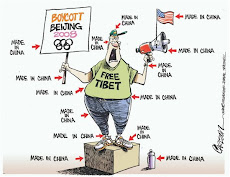
China Fails to Approve 77 Protest Applications

BEIJING: August 9th. (Associated Press) -- Chinese authorities have not approved any of the 77 applications they received from people who wanted to hold protests during the Beijing Olympics, state media reported. According to the rules governing protests, today is the last day anyone could apply for permission to demonstrate during the Olympic Games. The state-run New China News Agency said Monday that the applications received since Aug. 1, a week before the Games opened, included such things as labor disputes and inadequate welfare. But 74 of the applications were withdrawn because the problems "were properly addressed by relevant authorities or departments through consultations," the news agency said, citing an unidentified spokesman for the Public Security Bureau. Two other applications were suspended because they did not provide sufficient information and one was rejected because it violated laws against demonstrations and protests, the spokesman said.

Protests have become common in China, including workers upset about factory layoffs and farmers angry about land confiscation. But the Communist leadership remains wary about large demonstrations, fearing that they could snowball into anti-government movements. In July, China said protests would be allowed in three parks far from Games venues. But there were also rules: Applications with detailed paperwork had to be filed five days in advance and protests must not harm "national, social and collective interests." A response would be provided 48 hours before the requested rally time, officials promised. There have been no demonstrations in the designated areas since the Games started, though small unregulated protests have occurred in other parts of the city. Most have been conducted by foreigners who were swiftly deported after unfurling "Free Tibet" banners.
+++++++++++++++++++++++++++++++++++++++++++++++++++
Disclaimer
No responsibility or liability shall attach itself to either myself or to the blogspot ‘Mozlink’ for any or all of the articles/images placed here. The placing of an article does not necessarily imply that I agree or accept the contents of the article as being necessarily factual in theology, dogma or otherwise.
Mozlink

Saturday, August 9, 2008

Calls for France to Rethink its Africa Role

Bonhomie: The report breaks a spell of warmer ties between Rwanda and France. In January, President Paul Kagame (r.) hosted French Foreign Minister Bernard Kouchner (l.) in Kigali. (Riccardo Gangale/APA)
Rwandan report this week charged Paris with complicity in the 1994 genocide.

A bombshell of a report by Rwanda this week implicating high-ranking French officials in the arming and training of Hutu forces that committed genocide in Rwanda – could have been issued last November. President Paul Kagame sat on the 500-page study, approved by the Rwandan Senate, for months.

It was a time of some bonhomie with France. President Nicolas Sarkozy and Foreign Minister Bernard Kouchner, much liked in Kigali, were working on a new rapprochement policy – after Rwanda broke all ties with France in 2006 over a French judge's indictment of Mr. Kagame for allegedly ordering an assassination in 1994.

Kagame, a Tutsi, appears to have lost patience with France. He had hoped that the 2006 indictment would be renounced and that high-level Hutus still living in France would be deported to Rwanda to face genocide charges.

Still, what is likely the last major report on the 1994 Rwandan genocide that killed more than 800,000, leaves France with an embarrassing problem – one cutting to the heart of its own political elite, to a network of French unofficial "parallel structures" of commerce and intelligence in Africa, and to how a major power will deal with thorny questions of justice about its behavior in the postcolonial world.

"The French know this report is dynamite and wanted to keep it from seeing the light of day," says Andrew Wallis, author of "Silent Accomplice," a recounting of alleged French backing of the Hutu government in Rwanda in the early 1990s. "This creates a new chapter and ends an old one. The question is, where do the two sides go now? The French tried in every way to unseat Kagame, but now recognize he is here to stay. But you aren't going to get an apology from the French.... The Hutus were armed and trained by a foreign power that walked away and said 'I never did it.' "

The details in the Rwandan document – its naming of French political and military officials, its recounting of French weapons sales, French training, incidents, times, dates, and places of specific crimes – have so far been treated with scorn, and a blanket denial in Paris.

French defense minister Hervé Morin told Radio France Internationale Thursday that French investigators in 1998 found French soldiers in Rwanda were "beyond reproach" and said they saved hundreds of thousands of lives.

Whether Kagame, whose profile in Africa has been rising, will attempt to push a prosecution at a time when the West has been touting the arrest of Balkan leaders accused of war crimes, as well as an International Criminal Court indictment of Sudanese President Omar al-Bashir, is unknown.

Tom Cargill, Africa expert with the London think tank Chatham House, told Reuters, "I think it all points to a profound disturbance in international relations caused by the emergence of an international legal system.... The very idea that there might be a legal process ... quite separate from politics is causing many people in many countries to rethink how they approach international relations."

Paris and Kigali have spent years disputing France's role in the 100-day killing spree that became the last full-scale genocide of the 20th century. Some diplomatic sources in Paris say the Kagame report, produced by the Munyo Commission, is an effort at distracting attention from Tutsi crimes that took place after 800,000 Hutu moderates and Tutsis were slaughtered.

Yet the respected French daily Le Monde this week said the evidence presented in the Rwandan study means the issue can no longer be ignored. It argued that passionate back-and-forth charges between France and Rwanda has hidden the truth for more than a decade, and that "France has to reply to the accusations."

Much of the French complicity cited by the Munyo Commission has been described or published for years by authors, nongovernmental organizations, journalists, and eyewitnesses. Survie, a French NGO, has spent decades following the Rwandan question, investigated the French role exhaustively, and brought out "L'horreur qui nous prende au visage," a 600-page work in French that came out in 2005.

"Until Rwanda in 1992, we tried to work with French political parties to improve French policies in Africa," says Sharon Courtoux, a cofounder of Survie. "But the genocide, which was clear to see even before it happened, changed everything. Rwanda proved to us that there was absolutely no limit to what people were capable of doing, in defending their interests."

The 1998 French parliamentary investigation into its mission in Rwanda found that "mistakes were made," but that France was not knowingly involved in or complicit in the crimes committed by military and paramilitary forces. Yet Survie's study, and the Munyo Commission, presented compelling evidence that France trained government and paramilitary forces.

"All roads to the truth were opened up in the 1998 investigation in France," argues Ms. Courtoux, "but they did not go to the end of the road."

Mr. Wallis, reporter Chris McGreal, and Survie accounts point particularly to the French role in instances like "Operation Turquoise" – an attempt to create a safe haven for the Hutu government and peoples, which took place in the mountains of the south, a place called Bisesero. French soldiers were instructed to go into the zone. When they did, hundreds of Tutsis who were hiding in the hills thought they were coming to save them, according to Wallis. The Tutsis came out of the hills, then the French soldiers were instructed to withdraw – exposing them to the Hutu Interahamwe militia squads (who had allegedly received training from the French). "The Interahamwe just clapped their hands at that point," says Wallis. "These Tutsis had been impossible to route out, and now they were attacked and killed."

Mr. McGreal, who was in Rwanda at the time, spoke to the French colonel who was giving the orders, who identified himself as Didier Thibault. He said that he was taking orders from the "legal organization," the Hutu government.

He was actually Col. Didier Tauzin – a man who had advised the Rwandan Army and, according to a 2007 report by McGreal, had "commanded the French operation that halted the RPF [Tutsi] advance on Kigali a year earlier." That advance had been an effort by the Kagame forces to end the killing in the Hutu-run capital.
BY Robert Marquand
+++++++++++++++++++++++++++++++++++++++++++++++++++
Disclaimer
No responsibility or liability shall attach itself to either myself or to the blogspot ‘Mozlink’ for any or all of the articles/images placed here. The placing of an article does not necessarily imply that I agree or accept the contents of the article as being necessarily factual in theology, dogma or otherwise.
Mozlink

Solzhenitsyn Represented 'Freedom and Dignity', says Church

Russian Premier Vladimir Putin pays condolence to Natalya Solzhenitsyna, the widow of the famous Russian author, Soviet dissident and Nobel literature prize winner Alexander Solzhenitsyn during the farewell ceremony in the Russian Academy of Science building in Moscow, Russia 05 August 2008. Alexander Solzhenitsyn died of heart failure late Sunday at the age of 89 and will be burried on the cemetery of Donskoy Monastery in Moscow on Wednesday 06 August. (EPA/YURI KOCHETKOV)
Moscow: August 4th. (ENI) - Alexander Solzhenitsyn, the Nobel Prize-winning author who survived the Soviet gulag of labour camps under dictator Josef Stalin, will go down in history as a "model of inner freedom and human dignity," a top official of the Russian Orthodox Church has said. Solzhenitsyn died in Moscow of heart failure late on Sunday night. He was 89 years old. "He was able to speak boldly with the rulers of his country and of the West, [and] with the people, without fearing to speak the truth and without being a slave to fashion or public opinion," the Rev. Vsevolod Chaplin, deputy chairperson of the Department of External Church Relations of the Moscow Patriarchate, was quoted as saying by the Interfax-religion news agency.

A report on patriarchia.ru, the official Web site of the Moscow Patriarchate, described Solzhenitsyn as "one of the spiritual leaders of patriotic Orthodox organizations". The Rev. Vladimir Vigilyansky, director of the Moscow Patriarchate's press service, told RIA Novosti, an official Russian news agency, that the Russian Orthodox Church would be holding memorial services for Solzhenitsyn. He described the writer as a believer who was in close contact with many clerics and religious thinkers. "Without a doubt he thought within a religious framework and his views on man and society were of a clearly religious character," Vigilyansky told the news agency.

Solzhenitsyn came to fame in 1962 with his book, "One Day in the Life of Ivan Denisovich". Critics compared the short novel about prison camp life to works by Tolstoy and Dostoyevsky, and the book came to epitomise the promise, and the beginning of the end of the period of thaw, under Soviet leader Nikita Khrushchev. Solzhenitsyn was expelled from the USSR in 1974 after the publication in the West of "The Gulag Archipelago", his monumental history of the Soviet prison camp system. He soon settled in the United States, in Cavendish, Vermont but did not embrace the American way of life. He returned to Russia in 1994, and travelled across the country by train from Vladivostok to Moscow. The state of Russia depressed him and the initial triumphant response to his return soon faded. In 2001, Solzhenitsyn published "Two Hundred Years Together," a study of the relationship between Russians and Jews that fanned charges that he was anti-Semitic. David Remnick, writer and editor of the New Yorker, who has profiled Solzhenitsyn, defended Solzhenitsyn against such accusations. "Solzhenitsyn, in fact, is not anti-Semitic; his books are not anti-Semitic, and he is not in his personal relations anti-Jewish," Remnick wrote in 2001.

Solzhenitsyn did not approve of Mikhail Gorbachev, the last Soviet leader, and became disenchanted with Boris Yeltsin, the first post-Soviet president of Russia. Still, in 2007, he accepted a State prize from then-president Vladimir Putin, a former lieutenant colonel in the Soviet-era secret intelligence agency, the KGB. Solzhenitsyn told the German weekly Der Spiegel in an interview that Putin, "inherited a ransacked and bewildered country with a poor and demoralised people. And he started to do what was possible: a slow and gradual restoration."
by Sophia Kishkovsky
+++++++++++++++++++++++++++++++++++++++++++++++++++
Disclaimer
No responsibility or liability shall attach itself to either myself or to the blogspot ‘Mozlink’ for any or all of the articles/images placed here. The placing of an article does not necessarily imply that I agree or accept the contents of the article as being necessarily factual in theology, dogma or otherwise.
Mozlink

Russia and Georgia Clash Over Separatist Region

A Georgian man mourned a dead relative in the town of Gori, which was hit by Russian bombs, according to residents. (David Mdzinarishvili/Reuters)

GORI, Georgia: Aug 8th (NY Times) — Russia conducted airstrikes on Georgian targets on Friday evening, escalating the conflict in a separatist area of Georgia that is shaping into a test of the power and military reach of an emboldened Kremlin. Earlier in the day, Russian troops and armored vehicles had rolled into Sth Osseita, supporting the breakaway region in its bitter conflict with Georgia. The United States and other Western nations, joined by NATO, condemned the violence and demanded a cease-fire. Secretary of State Condoleezza went a step further, calling on Russia to withdraw its forces. But the Russian soldiers remained, and Georgian officials reported at least one airstrike, on the Black Sea port of Poti, late on Friday night. Russian military units — including tank, artillery and reconnaissance — arrived in Tskhinvali, the capital of South Ossetia, on Saturday to help Russian peacekeepers there, in response to overnight shelling by Georgian forces, state television in Russia reported, citing the Ministry of Defense. Ground assault aircraft were also mobilized, the Ministry said. Also on Saturday a senior Georgian official said by telephone that Russian bombers were flying over Georgia and that the presidential offices and residence in Tbilisi had been evacuated. The official added that Georgian forces still had control of Tskhinvali.

Neither side showed any indication of backing down. Prime Minister Vladimir Putin of Russia declared that “war has started,” and President Mikheil Saakashvili of Georgia accused Russia of a “well-planned invasion” and mobilized Georgia’s military reserves. There were signs as well of a cyberwarfare campaign, as Georgian government Web sites were crashing intermittently during the day. The escalation risked igniting a renewed and sustained conflict in the Caucasus region, an important conduit for the flow of oil from the Caspian Sea to world markets and an area where conflict has flared for years along Russia’s borders, most recently in Chechnya. The military incursion into Georgia marked a fresh sign of Kremlin confidence and resolve, and also provided a test of the capacities of the Russian military, which Mr. Putin had tried to modernize and re-equip during his two presidential terms. Frictions between Georgia and South Ossetia, which has declared de facto independence, have simmered for years, but intensified when Mr. Saakashvili came to power in Georgia and made national unification a centerpiece of his agenda. Mr. Saakashvili, a close American ally who has sought NATO membership for Georgia, is loathed at the Kremlin in part because he had positioned himself as a spokesman for democracy movements and alignment with the West. Earlier this year Russia announced that it was expanding support for the separatist regions. Georgia labeled the new support an act of annexation.

The conflict in Georgia also appeared to suggest the limits of the power of President Dmitri Medbedev, Mr. Putin’s hand-picked successor. During the day, it was Mr. Putin’s stern statements from China, where he was visiting the opening of the Olympic Games, that appeared to define Russia’s position. But Mr. Medvedev made a public statement as well, making it unclear who was directing Russia’s military operations. Officially, that authority rests with Mr. Medvedev, and foreign policy is outside Mr. Putin’s portfolio. “The war in Ossetia instantly showed the idiocy of our state management,” said a commentator on the liberal radio station, Ekho Moskvy. “Who is in charge — Putin or Medvedev?” The war between Georgia and South Ossetia, until recently labeled a “frozen conflict,” stretches back to the early 1990s, when South Ossetia and another separatist region, Abkhazia, gained de facto independence from Georgia after the collapse of the Soviet Union. The region settled into a tenuous peace monitored by Russian peacekeepers, but frictions with Georgia increased sharply in 2004, when Mr. Saakashvili was elected.

Reports conflicted throughout Friday about whether Georgian or Russian forces had won control of Tskhinvali, the capital of the mountainous rebel province. It was unclear late on Friday whether ground combat had taken place between Russian and Georgian soldiers, or had been limited to fighting between separatists and Georgian forces. Marat Kulakhmetov, commander of Russian peacekeeping forces in Tskhinvali, said early on Saturday that South Ossetian separatists still held most of the city and that Georgian forces were only present on its southern edge. That report aligned with a statement by Georgia’s ambassador to the UN, Irakli Alasania, who said that Georgian military units held eight villages at the capital’s edge. Georgian officials asserted that Russian warplanes had attacked Georgian forces and civilians in Tskhinvali, and that airports in four Georgian cities had been hit. Shota Utiashvili, an official at the Georgian Interior Ministry, said they included the Vaziany military base outside of Tbilisi, the Georgian capital, a military base in Marneuli, and airports in the cities of Delisi and Kutaisi. “We are under massive attack,” he said.

Late in the night, George Arveladze, an adviser to Mr. Saakashvili, said that Russian planes had bombed the commercial seaport of Poti, where one worker was missing and several others were wounded. Poti is an export point for oil from the Caspian Sea; Mr. Arveladze said the initial reports indicated that the oil terminal had not been struck. Eduard Kokoity, the president of South Ossetia, said in a statement on a government Web site that hundreds of civilians had been killed in fighting in the capital. Russian peacekeepers stationed in South Ossetia said that 12 peacekeeping soldiers were killed Friday and that 50 were wounded. The claims of casualties by all sides could not be independently verified. Analysts said that either Georgia or Russia could be trying to seize an opportune moment — with world leaders focused on the start of the 2008 Olympics this week — to reclaim the territory, and to settle the dispute before a new American presidential administration comes to office. Richard C. Holbrooke, the former American ambassador to the United Nations, said that Russia’s aims were clear. “They have two goals,” he said. “To do a creeping annexation of South Ossetia and Abkhazia and, secondly, to overthrow Saakashvili, who is a tremendous thorn in their side.” A spokesman for Mr. Medvedev declined to comment. The United States State Department issued a press release late Friday saying that John D. Negroponte, the deputy secretary of state, had summoned the Russian chargĂ© d’affairs to press for a de-escalation of force. “We deplore today’s Russian attacks by strategic bombers and missiles, which are threatening civilian lives,” the statement said.

The United States also said Friday that it would send an envoy to the region to try to broker an end to the fighting. Chancellor Angela Merkel of Germany issued a statement calling on both sides “to halt the use of force immediately.” Germany has taken a leading role in trying to ease the tensions over Abkhazia. The trigger for the fresh escalation began last weekend, when South Ossetia accused Georgia of firing mortars into the enclave after six Georgian policemen were killed in the border area by a roadside bomb. As tensions grew, South Ossetia began sending women and children out of the enclave. The refugee crisis intensified Friday as relief groups said thousands of refugees, mostly women and children, were streaming across the border into the North Caucasus city of Vladikavkaz in Russia. Early on Friday, Russia’s Channel One television showed Russian tanks entering South Ossetia and reported that two battalions reinforced by tanks and armored personnel carriers were approaching its capital. There were unconfirmed reports that Georgian forces had shot down two Russian planes and that its aircraft had bombed a convoy of Russian tanks. Russian state television showed what it said was a destroyed Georgian tank in Tskhinvali, its turret smoldering. Women and children in Tskhinvali were hiding in basements while men had fled to the woods, said a woman reached by telephone in the neighboring Russian region of North Ossetia, who said she had been in phone contact with relatives there. She declined to give her name. In Gori, a city outside South Ossetia and about 12 miles from Tskhinvali, residents said there had been sporadic bombing all day. The city was shaken by numerous vibrations from the impact of bombs on Friday evening. One Russian bomb exploded in Gori near a textile factory and a cellphone tower, leaving a crater.

At the United Nations on Friday, diplomats continued to wrangle over the text of a statement after attempts to agree to compromise language collapsed Friday afternoon, after nearly three hours of consultations. The Russians, who had called the emergency session, proposed a short, three-paragraph statement that expressed concern about the escalating violence, and singled out Georgia and South Ossetia as needing to cease hostilities and return to the negotiating table. But one phrase calling on all parties to “renounce the use of force” met with opposition, particularly from the United States, France and Britain. The three countries argued that the statement was unbalanced, one European diplomat said, because that language would have undermined Georgia’s ability to defend itself. Belgium, which holds the rotating presidency of the Security Council this month, circulated a revised draft calling for an immediate cessation of hostility and for “all parties” to return to the negotiating table. By dropping the specific reference to Georgia and South Ossetia, the compromise statement would also encompass Russia. The Security Council was scheduled to meet Saturday to resume deliberations. China, in its statement during the early morning debate, had asked for a traditional cease-fire out of respect for the opening of the Olympics.

President Bush discussed the conflict by telephone with Secretary of State Condoleezza Rice and the national security adviser, Stephen J. Hadley, for about an hour after attending the opening ceremonies of the Olympics, the White House press secretary, Dana M. Perino said. Mr. Bush held another conference with Mr. Hadley and his deputy, James Jeffery, on Saturday morning before attending beach volleyball practice. There are over 2,000 American citizens in Georgia, Pentagon officials said. Among them are about 130 trainers — mostly American military personnel but with about 30 Defense Department civilians —assisting the Georgian military with preparations for deployments to Iraq. The American military was taking no actions regarding the outbreak of violence, according to Pentagon and military officials. While there has been some contact with the Georgian authorities, the Defense Department had received no requests for assistance, the officials said.
By Michael Schwirtz, Anne Barnard & C, J, Chivers
+++++++++++++++++++++++++++++++++++++++++++++++++++
Disclaimer
No responsibility or liability shall attach itself to either myself or to the blogspot ‘Mozlink’ for any or all of the articles/images placed here. The placing of an article does not necessarily imply that I agree or accept the contents of the article as being necessarily factual in theology, dogma or otherwise.
Mozlink