Saturday, January 5, 2008

A Very African Coup

Kenya's president steals an election, showing utter contempt for democracy and his people

Jan 3rd The Economist - The mayhem that killed hundreds of people following Kenya's election on December 27th completes a depressing cycle of democratic abuses in Africa's biggest countries. Nigeria held its own mockery of an election last April. Scores were killed and observers pronounced it the most fraudulent poll they had ever witnessed. Congo held a more or less peaceful election in October 2006, since when the main opposition leader has been hounded into exile. And the year before that, flawed elections in Ethiopia resulted in the deaths of 199 protesters. Needless to say, the incumbents all won. So it is easy to be angry, as well as gloomy, about African leaders' continual betrayal of the democratic values they say they hold so dear. And all the more so in the case of Kenya, which has a strong tradition of holding elections, a vibrant political culture, a relatively free press and a sophisticated economy. Given all these advantages, as we wrote before the election, Kenya had an opportunity to “set an example” to Africa and hold free and fair elections. But the country blew it.

Or, more precisely, the political elite blew it. A small cabal of politicians almost certainly stole the result by fraud. In the parliamentary vote, President Mwai Kibaki's ruling party was routed. Yet in the presidential vote Mr Kibaki emerged victorious at the last moment and had himself sworn in only a few minutes later, forestalling pleas from all sides—even from the head of the election commission he himself had appointed—for a pause to investigate mounting claims of malpractice. The report of the European observers was unusually strong in its condemnation of the count. As in Nigeria, Kenyans queued quietly to exercise their right to vote, reflecting the enormous appetite for democracy that exists on a continent that was until recently dominated by dictators and “big men”. But for democracy to survive, it is not enough to hold elections. Politicians must accept that they may have to give up office, and thus all the opportunities for self-enrichment that come their way. It is no coincidence that the most corrupt politicians are also those who cling most desperately to power—as in Kenya and Nigeria.

In stealing the election, Mr Kibaki has also invited a dangerous backlash against his Kikuyu tribe, the country's largest. Tense tribal divisions have long threatened to widen as the minority groups, including opposition leader Raila Odinga's Luo, have come to feel marginalised by the concentration of power in Kikuyu hands. If the current violence does evolve into something worse, perhaps even civil war, Mr Kibaki and his henchmen will bear much of the blame. Initially, America, which sees Kenya as a front-line ally in a war against Islamist militias in neighbouring Somalia, made the mistake of endorsing the president's re-election. Now Britain, America and the African Union are urging Mr Odinga and Mr Kibaki to talk in an effort to stop the bloodletting. That lets Mr Kibaki off the hook far too easily. All the violence should certainly be condemned, but most of the diplomatic pressure should be exerted on Mr Kibaki's supposed new government to annul the results and organise a recount—or a new vote. If Mr Kibaki will not do this, the rest of the world should suspend direct aid to his regime and impose a travel ban on his officials. That is the least the wretched people of Kenya have a right to expect from their friends abroad.
+++++++++++++++++++++++++++++++++++++++++++++++++++
Disclaimer
No responsibility or liability shall attach itself to either myself or to the blogspot ‘Mozlink’ for any or all of the articles/images placed here. The placing of an article does not necessarily imply that I agree or accept the contents of the article as being necessarily factual in theology, dogma or otherwise.
Mozlink

Thursday, January 3, 2008

Rich Nations Attacked for Failing Congo

Jan. 2nd. (Financial Times) - The head of the United Nations refugee agency has accused the rich world of failing to respond adequately to the humanitarian crisis in the Democratic Republic of Congo, even as its multinationals “systematically loot” the country of its resources. In an interview with the FT shortly after his return from the DRC, António Guterres, UN high commissioner for refugees, said western assistance came nowhere near meeting people’s needs in a vast country where continuing instability and widespread poverty had created one of the worst humanitarian situations in the world. Mr Guterres, a former Portuguese prime minister, attributed this neglect in part to the fact that, unlike Iraq, Afghanistan or even Somalia, misery in the DRC involved no perceived threat to western governments. “Even if we face a humanitarian disaster, as in North Kivu where there has been a dramatic increase in violence, nobody in the outside world feels threatened and so the international community is not really paying attention to DRC.”

Aid groups say 3m-4m people in the DRC, a country with a population of about 60m, have died in recent years as a result of conflict, poverty and disease. While most of the country is now stable – the civil war ended in 2003 and UN-supervised elections were held in 2006 – 400,000 people have been uprooted in the past 12 months by a resurgence of violence in the eastern province of North Kivu. The UN estimates that 800,000 people have been displaced in North Kivu, which has also seen violence against women, including rape and mutilation, reach terrifying proportions. Although international agencies and donor governments are providing some assistance, and the UN has mounted its biggest-ever force of some 16,500 peacekeepers, this is small in comparison with needs, Mr Guterres says. He points to the sheer size of the DRC – about four times that of France – and the high cost of operating there, given a lack of infrastructure that requires everything to be transported by aircraft.

Failure to improve living conditions would put at risk the democratic process and could threaten regional stability, he warned. “One of the most frustrating things is to see a country in which you had [successful] elections but then you have to say to people: nothing can be improved in the next few months, even in the next few years, in infrastructure, in water, in sanitation, in health, in education, in jobs. And so the population starts to ask itself whether democracy has any value. “Think about the amount of resources that have been taken out of this country. Lots of companies operate in DRC, taking out its resources, in many circumstances, without a minimum respect for any rules. The international community has systematically looted DRC and we should not forget that.”
By Frances Williams in Geneva
+++++++++++++++++++++++++++++++++++++++++++++++++++
Disclaimer
No responsibility or liability shall attach itself to either myself or to the blogspot ‘Mozlink’ for any or all of the articles/images placed here. The placing of an article does not necessarily imply that I agree or accept the contents of the article as being necessarily factual in theology, dogma or otherwise.
Mozlink

Kenyan Riot Police Turn Back Rallying Protesters

NAIROBI, Jan 4th. (NY Times) — Nairobi degenerated into violence again on Thursday, as riot police used tear gas, batons and water cannons to push back thousands of opposition supporters who poured into the streets to answer a call for a million-person rally that had been banned by the government. But later in the day, Kenya’s attorney general broke ranks with the president and insisted on an independent investigation into disputed election results, an indication of the growing divide within Kenya’s government about how to resolve a crisis that has ignited chaos and ethnic fighting across the country, killing more than 300 people. Starting at about 10 a.m., protesters burned tires, smashed windows and clashed with police across Nairobi, Kenya’s capital. Some demonstrators showed restraint, yelling to the rowdier members in their ranks, “Drop your stones!” Others tore through the slums, witnesses said, raping women and attacking people with machetes. The body of one young man who had been hacked to death lay in a muddy alleyway. His face was covered with plastic bags and his shoes had been stolen.

The trouble even spilled into the garden of the Serena Hotel, one of the fanciest in town. Guests in safari vests looked down from the balconies of their $400-a-night rooms and watched the turmoil below. Police officers in padded suits charged a scrum of demonstrators and shot their rifles in the air. As soon as the tear gas wafted up, the tourists ducked inside. “This country is going to burn!” a protester yelled. It has been a week since Kenyans went to the polls in the most contested elections in the country’s history, and the dispute over whether Mwai Kibaki, the president, honestly won the most votes continues to violently divide the nation. The government and opposition leaders continue to blame each other for the bloodshed, trading accusations of genocide and ethnic cleansing. They have set such strict conditions on negotiating that nothing, including the entreaties of Western ambassadors, Secretary of State Condoleezza Rice and the cries of their own people, has succeeded in getting them to talk to each other.

Kenya’s two biggest newspapers printed the identical banner headline on Thursday: “Save Our Beloved Country.” But a breakthrough may be in the works. Kenya’s attorney general, Amos Wako, said on Thursday afternoon that an independent body should investigate the disputed vote tabulations, which gave the president, at the eleventh hour of the counting process, a razor-thin margin of victory. Western officials and opposition leaders had been calling for such a probe. It is not clear if Mr. Kibaki will agree to this. A few hours after the attorney general spoke, the president reiterated at a news conference that he had won the elections fair and square and would not relinquish power. “I will personally lead this nation in healing,” he said. Alfred Mutua, the government’s top spokesman, said the attorney general was merely making a suggestion and that an independent investigation into election irregularities “was not necessarily going to happen.” “The president prefers the court system,” Mr. Mutua said, meaning the opposition could file a complaint in court, which most people here think is futile. But, he added, “the president has nothing to hide.”

Foreign diplomats have been meeting day and night to find a way to bring Mr. Kibaki and Raila Odinga, the top opposition leader who says he was cheated out of the presidency, to some sort of détente. Until last week, Kenya was one of the most promising countries on the continent, but the ethnic violence, fueled by political passions, is threatening to ruin that. The economy, one of the biggest in Africa, has ground to a halt. Roads are blocked. Shops are closed. Factories are idle. The currency, the Kenyan shilling, is taking a dive. The World Bank said on Thursday that the unrest threatens Kenya’s impressive recent gains in economic growth and poverty reduction, citing business leaders’ estimates that the country is losing some $30 million a day. And the ills here are hurting the entire region. Gas stations in Rwanda are now rationing fuel because their supply from Kenya has been cut. In Uganda, Sudan and Congo, displaced people are running low on food because United nations relief trucks cannot get past vigilante checkpoints. Production in places like Tanzania is slowing down because materials that come from Kenya have not arrived. “Kenya is the dynamo of this whole region,” said Harvey Rouse, a diplomat for the European Union.

Mr. Rouse spoke from a hill overlooking an enormous slum where police were battling protesters. The slum, named Kibera, has become the protesters’ stage. Every morning, the journalists take their spots on the hillside, the police line up at the mouth of a road leading from the shanties to the glass towers downtown and the protesters mass in the streets, screaming slogans, lighting fires and burning pictures of the president. On Thursday it was an effigy stuffed with greasy rags. Thursday was supposed to be the day that Mr. Odinga’s supporters rallied in downtown Nairobi at a place called Uhuru Park. But they never got close. Thousands of riot police fanned out at dawn and sealed off the main routes into the city. They refused to let any demonstrator pass. Some were clearly peaceful, like the hundreds of women carrying palm leaves and walking barefoot to town. They were chased away choking on tear gas and clawing at their eyes. Others’ intentions were so clear. One young protester crouched in the street with a green leaf, the sign of peace, in one hand and a rock in the other. “We have been patient long enough!” he yelled. It is indeed difficult to tell which way things are going here. In the past two days, there have been no big attacks, like the one on Tuesday in which up to 50 people hiding in a church were burned alive. But reports from the provinces indicate the killings are still going on. Much of the violence is ethnically based, with tribes that support the opposition, like the Luos, Masai and Kalenjin, hunting down Kikuyus, the tribe of the president. On Wednesday night, residents of a quiet town in the Rift Valley said that a mob of Masai killed four Kikuyu shopkeepers and looted their stores. The opposition says it will hold a rally on Friday and every day after that until the president steps down.
By JEFFREY GETTLEMAN
+++++++++++++++++++++++++++++++++++++++++++++++++++
Disclaimer
No responsibility or liability shall attach itself to either myself or to the blogspot ‘Mozlink’ for any or all of the articles/images placed here. The placing of an article does not necessarily imply that I agree or accept the contents of the article as being necessarily factual in theology, dogma or otherwise.
Mozlink

Kenya 'Facing Humanitarian Disaster'

Nairobi, Wed. Jan 2nd. (Guardian) - Aid agencies today warned of a humanitarian disaster in Kenya amid claims of "ethnic cleansing" and increased international pressure on Kenyan leaders to end the post-election violence. The Kenya Red Cross said up to 100,000 people had so far been displaced. According to Kenya's Human Rights Commission, more than 300 have been killed. More than 5,000 people have fled to neighbouring Uganda, and several hundred people have fled to Tanzania. Abbas Gullet, the secretary general of the Kenya Red Cross, described the situation as "national disaster", adding: "A few hundred thousand will need assistance for some time."

Meanwhile, Kenya's disputed president, Mwai Kibaki, and his main rival, the opposition leader Raila Odinga, have come under mounting diplomatic pressure to reach a compromise to end the violence. In a joint statement, the foreign secretary, David Miliband, and his US counterpart, Condoleezza Rice, acknowledged the "irregularities" in the elections but called on both Kibaki and Odinga to negotiate. The head of the African Union, the Ghanaian president John Kufuor, is due to meet both leaders tomorrow in a mediation effort. His mission is being backed by Gordon Brown, who said he would do everything in his power to promote reconciliation. "The whole international community has been coming together to try to bring an end to violence in Kenya and I believe that there is a responsibility on the part of all opposition and government leaders in Kenya to call on their supporters to end the violence that's taking place," Brown said.

Brown has been in phone contact with Odinga and Kibaki, whose re-election on Sunday is widely seen to have been rigged. "Millions of people queued up in Kenya to cast their vote. They deserve a government that brings about stability and prosperity," Brown said. Yesterday Odinga rejected a plea by Brown to negotiate with Kibaki, saying he would only do so if Kibaki acknowledged that he had lost the election. He has urged his supporters to take part in a rally against the result tomorrow. Kibaki has invited all members of the newly elected parliament, which is dominated by his opponents, to a meeting to soothe tensions. Anger at the poll's result has stirred ethnic tensions. In the worst incident, up to 50 ethnic Kikuyus were burned alive as they sheltered in a church in the Rift Valley city of Eldoret.

Eyewitness reports of victims being hacked as they fled echoed those from the Rwandan genocide in 1994, in which more than 500,000 people were killed. Red Cross officials visiting the Moi University hospital, in Eldoret, reported seeing people who had suffered gunshot and arrow wounds. "The hospital is overwhelmed with the number of casualties," Gullet said. "One tribe is targeting another one in a fashion that can rightly be described as ethnic cleansing," an unnamed senior police official told the AFP news agency. Kibaki's government has accused Odinga's supporters of the violence, while Odinga accused the government of "genocide". The UN's humanitarian information service reported that 30 checkpoints had been set up between Burnt Forest and Eldoret by vigilantes.

More than 5,000 people have fled to Uganda. "If you are not of the right ethnic group, it's no go," one Red Cross official was reported as saying. John Okello, a Nairobi doctor, said clinics around the city were running short of basic materials such as white gauze because so many people had been arriving for treatment suffering from machete wounds. Accounts of the fire at the church in Eldoret have continued to emerge. A mob of around 2,000 arrived at the building, George Karanja, whose family had sought refuge there, said. "The mattresses that people were sleeping on caught fire. There was a stampede, and people fell on one another," he said. The 37-year-old helped rescue at least 10 people from the flames, but added: "I could not manage to pull out my sister's son. He was screaming ... he died." First aid workers were stopped by vigilantes who challenged them to declare their ethnicity.

There are more than 40 tribes in Kenya. The largest, the Kikuyu, Kibaki's tribe, is accused of using its dominance of politics and business to the detriment of others. Odinga is from the Luo tribe, a smaller but still major tribe that claims it has been marginalised. While Kibaki and Odinga have support from across the tribal spectrum, those responsible for the violence see politics in strictly ethnic terms.
by Matthew Weaver and agencies
+++++++++++++++++++++++++++++++++++++++++++++++++++
Disclaimer
No responsibility or liability shall attach itself to either myself or to the blogspot ‘Mozlink’ for any or all of the articles/images placed here. The placing of an article does not necessarily imply that I agree or accept the contents of the article as being necessarily factual in theology, dogma or otherwise.
Mozlink

Monday, December 24, 2007

"Neno likawa Mwili"
"Kal Siga hone"
"Y el verbo se hizo carne"
"Le Verbe s'est fait chair"
"And the Word became flesh"
"La Parola si fece carne"
"E a palavra foi feita carne"
"A slowo cialem sie stalo"
"aur shabda deh bana"
"mikotoba wa Hito to nata"
"sheng yan jiang cheng xue rou"

Jn 1,14

Child in pot

May you and your loved ones have a truly joyous and peace filled Christmas.

Mozlink


Christmas Image of Joseph wth Baby


Zimbabwe issues $750,000 bills

HARARE Dec 20th (AP) — Zimbabwe's central bank unveiled new currency notes Thursday with denominations as high as 750,000 dollars as the government tries to ease chronic shortages of cash in a hyperinflationary economy. Official inflation is 8,000 per cent — the highest in the world — although independent estimates put it substantially higher. The International Monetary Fund forecast inflation would reach 100,000 per cent by the end of the year. The government is withdrawing all 200,000-dollar notes, currently the largest currency note, and will question those attempting to exchange them to root out “cash barons” who hoarded them for illegal deals, Gideon Gono, governor of the Reserve Bank, told the state broadcaster.

The 200,000-dollar note is expected to be phased out by Jan. 1. People exchanging large sums of 200,000 dollar notes will be asked to explain how they were acquired or face forfeiture and criminal charges. Lines that have formed daily this month outside banks and automated teller machines grew even longer Thursday after Mr. Gono said the central bank was pumping new 250,000, 500,000 and 750,000 Zimbabwe dollar bills into the economy ahead of the holidays. Lines have begun forming as early as 4 a.m. and banks are limiting withdrawals to 5-million Zimbabwe dollars per customer, about enough to buy a take out hamburger. There are acute shortages of food, gasoline and basic goods in Zimbabwe, now embroiled in its worst economic crisis since independence from Britain in 1980. Unemployment is around 80 per cent and political unrest is growing. Foreign investment, loans and development aid have dried up.

President Robert Mugabe, 83, who has ruled Zimbabwe for 27 years, blames the crisis on Western sanctions and rejects criticism that mismanagement caused the meltdown.
by ANGUS SHAW
+++++++++++++++++++++++++++++++++++++++++++++++++++
Disclaimer
No responsibility or liability shall attach itself to either myself or to the blogspot ‘Mozlink’ for any or all of the articles/images placed here. The placing of an article does not necessarily imply that I agree or accept the contents of the article as being necessarily factual in theology, dogma or otherwise.
Mozlink

Thursday, December 20, 2007

Christian Aid: 'Bali agreement is Deeply Flawed'

London Dec. 18th. (ICN) - Christian Aid has welcomed the last minute agreement at the Bali climate change conference that will enable negotiations to start on a new climate change agreement on a second phase of the Kyoto Protocol, which needs to be in place by 2012. But the agency said it is dismayed that crucial target figures for cutting carbon emissions in rich countries were removed from the final agreement. A reference to 25-40% cuts for industrialised countries by 2020 over 1990 levels was included in a draft agreement produced a week ago.

The range reflected recommendations made in a report this year by the UN's Intergovernmental Panel on Climate Change, which said the cuts were essential to prevent global temperatures rising above two degrees. The cuts were also called for in a document agreed at an earlier meeting in Vienna of Kyoto Protocol signatories, including Britain.

In Bali, however, the inclusion of a specific range of targets - even non binding ones - was strongly resisted by the governments of the United States, Russia, Japan and Canada. Instead, today's agreement merely makes a footnote reference to the IPCC report. Nelson Muffuh, a senior Christian Aid climate change policy analyst, said: "For most of the conference, the US delegation in particular proved a major obstacle to progress. They appeared to operate a wrecking policy, as though determined to derail the whole process. "We must praise the heroism of some of the developing countries who are far less wealthy and far less responsible for the problem than the US and yet came here with a desire to see a deal agreed. It was their bravery in standing up to the US that no doubt played a part in its u-turn. "But the way ahead will be hard. The Bush administration has said throughout that it wants to see developing countries agree to cuts in carbon emissions. A number of emerging economies put creative, flexible plans on the table, but will have little incentive to negotiate further until the industrialised world agrees deeper cuts.

"Climate change is already having a devastating impact on the lives of some of the world's poorest communities through drought and flooding. The lack of clear targets in the roadmap leaves them exposed to further catastrophe." "Progress was made in Bali on the transfer of clean technology to poorer nations and the provision of additional money to help those most exposed to climate change adapt and defend themselves. A pledge was also made to protect forests in tropical countries. These developments, however, are eclipsed by the failure to introduce carbon cuts targets." "We were expecting a roadmap, and we've got one," said Mr Muffuh. "But it lacks signposts and there is no agreed destination."

+++++++++++++++++++++++++++++++++++++++++++++++++++
Disclaimer
No responsibility or liability shall attach itself to either myself or to the blogspot ‘Mozlink’ for any or all of the articles/images placed here. The placing of an article does not necessarily imply that I agree or accept the contents of the article as being necessarily factual in theology, dogma or otherwise.
Mozlink

Help Zimbabwe Orphans Choir Reach Christmas Number One

London, Jesuit Communications Dec. 20th. - A unique recording of a traditional Shona lament and a Western Christmas carol is on the way to becoming year's Christmas Number One. The single - Makandifira/Silent Night - features a 30-strong Zimbabwean children's choir, all of them residents of Makumbi Children's Home and either orphaned by AIDS or HIV positive, singing with the London Oratory School Schola (choir). It is intended to raise both funds and public awareness of the plight of African children facing the devastating effects of that continent's HIV/AIDS crisis.

The project was the initiative of two of London's most respected music professionals - Lee Ward, Director of Music at the London Oratory School, and Chris Birkett, a music producer who has worked with international stars including Sinead O'Connor, Talking Heads and The Pogues. Lee and Chris travelled to Zimbabwe in mid-November to record the Zimbabwean choir, before returning to London to add the voices of the London boys at Angel Studios in Islington. The trip to record the choir in Zimbabwe was organised and part-financed by Jesuit Missions in London: the Makumbi orphanage was established by the Jesuits and currently cares for over 100 children from 0-18 years old. Many of the children have come to stay at the Home having been found abandoned by the side of the road, left there by grandparents or other members of their extended family no longer able to cope with the burden of caring for these young orphans.

The London Oratory School Schola's most recent recorded work can be heard on the soundtrack of the Christmas blockbuster movie The Golden Compass. The CD was launched at the World AIDS Day concert at Cadogan Hall, London, at which the Schola performed in a Requiem Concert for raising funds for AIDS charities. The CD is now on sale at Stg£5 (including P & P) from Jesuit Missions- click on the following link for more details see: http://www.jesuitmissions.org.uk/makumbi/index.htm You can use this link to hear the music and see the choirs recording the track. The single is also available to download on iTunes.
++++++++++++++++++++++++++++++++++++++++++++++++++
Disclaimer

No responsibility or liability shall attach itself to either myself or to the blogspot ‘Mozlink’ for any or all of the articles/images placed here. The placing of an article does not necessarily imply that I agree or accept the contents of the article as being necessarily factual in theology, dogma or otherwise.
Mozlink

UN Adopts Resolution for Moratorium on Death Penalty

NEW YORK - 20 Dec. (ICN News) - A moratorium on the death penalty was adopted yesterday by the United Nations General Assembly. The General Assembly said it considered the use of the death penalty "undermines human dignity" and said the moratorium "contributed to the enhancement and progressive development of human rights" adding that "that there is no conclusive evidence of the death penalty's deterrent value and that any miscarriage or failure of justice in the death penalty's implementation is irreversible and irreparable." It welcomed the increasing number of states around the world who are abolishing capital punishment and expressed deep concern for those who still carry out executions. It called for a progressive restriction of the use of the death penalty and and a reduction the number of offences for which it may be imposed. Appealing for more countries to abandon capital punishment, it requests the Secretary-General to report to the General Assembly at its sixty-third session on the implementation of the resolution;

Responding to the news, the Community of Saint'Egidio said: "This a milestone that marks a new and widely shared moral standard that will be always more difficult and embarrassing to ignore on an international level. It is a sign of an important change in world conscience, which increasingly deems death inflicted by a state unacceptable and a humiliation of fundamental human rights, the right to life. It is a fundamental contribution towards accelerating a process in which, since the 1990's ,over 50 nations have renounced the use of the death penalty."

+++++++++++++++++++++++++++++++++++++++++++++++++++
Disclaimer
No responsibility or liability shall attach itself to either myself or to the blogspot ‘Mozlink’ for any or all of the articles/images placed here. The placing of an article does not necessarily imply that I agree or accept the contents of the article as being necessarily factual in theology, dogma or otherwise.
Mozlink

Monday, December 17, 2007

Frustration With Charities and U.N. in Congo

Jomba residents routed from their homes by fighting have taken refuge in a school 15 miles away in Rutshuru since mid-October. (Lynsey Addario for The New York Times)

GOMA, Congo Dec. 16th — Frustration at the United Nations peacekeeping force and the dozens of aid organizations working in North Kivu Province, in eastern Congo, is rising as violence increases, the number of displaced people here creeps toward one million and the pace of assistance lags, especially to those fleeing the fighting in the past few weeks. Many Congolese want the United Nations peacekeepers to intervene more forcefully and fight beside the Congolese Army against the rebel forces of Laurent Nkunda, a renegade general who refuses to merge his troops into the national armed forces. The fight against General Nkunda has pushed Congo to the brink of a new civil war, a year after the first elected government in four decades took office and four years after fighting officially ended. Congo’s army has proved unable to beat back the rebels, and the fighting in the past year has displaced 425,000 people. The United Nations force has a strong mandate in Congo to use force to protect civilians, and it has pledged to defend Goma and the camps around it from being overrun by rebels. It is also required to work with the Congolese Army to establish security, which has led to the expectation in a population weary from more than a decade of conflict that the United Nations force here, known by its acronym, Monuc, would help defeat the rebels. “Why is Monuc here, if not to fight these people who make us suffer?” said Mwenge Biroto, who fled the town of Sake on Tuesday. “Why don’t they help us get peace?”

Diplomats from several Western countries have also questioned why Monuc has not acted more forcefully to prevent civilians from having to flee in the first place, an issue that is likely to come up as diplomats gather here this weekend to discuss regional security. The force’s mandate is up for renewal in the Security Council this month. United Nations officials say that their role is to help Congo’s government, not take its place, and that protecting civilians is mainly the government’s responsibility. The United Nations has provided transportation for troop movements and some helicopter air support to the government’s unsuccessful efforts to remove General Nkunda. Congolese frustration with the United Nations force is more than matched by anger at its own military, which retreated in the face of rebel attacks last week. Brig. Gen. Indrajeet Narayan, the commander of the 4,500 peacekeeping troops deployed in North Kivu, said the force was not authorized to go any further unless it was under attack. “There is a lot of expectation” from civilians, General Narayan said. “They see our troops, they see our weaponry, so they expect this should be used. However the mandate clearly states that we have to protect the civilian population, that is foremost.”

The United Nations also has serious human rights concerns in working too closely with the Congolese military, which has struggled, largely unsuccessfully, to maintain discipline and morale. The army is mostly composed of former members of the old national army and militias who fought in the civil war. They have been retrained and redeployed, but problems have continued, and the army has been accused of many human rights violations, including murder and rape. Human rights organizations and aid workers say that the army sometimes collaborates with militias, like the Mai Mai. Last week, the 14th Brigade, which the rebels chased out of Mushake, harassed civilians and looted as it left, drawing censure from the United Nations. Many Congolese are also frustrated with aid organizations, many of which began to scale back emergency programs after last year’s election to focus more on long- and medium-term development, the brick-and-mortar projects, like schools, clinics and water systems, needed to rebuild a shattered country. They are struggling to keep up with the surge in demand for basic supplies, like food and shelter for the endless river of displaced people, and work amid the violence.

Hunger and disease, not bullets and bombs, have always been the primary killers in Congo, where some researchers estimate four million have died since the war began in 1996. People on the run often crowd in with relatives in provincial towns to avoid the refugee camps. But this practice can make them more vulnerable to disease — most camps have clean water and latrines. In Rutshuru, a large regional town, a cholera epidemic brings 50 people daily to a hospital run by Doctors without Borders. Cholera is a grim byproduct of displacement. When rural people flock to cities, they take cholera with them. In crowded and unsanitary conditions, it spreads like wildfire, said Augustin Augier, the hospital’s coordinator. “The violence and disease are completely connected,” Mr. Augier said. “We have never seen a cholera epidemic in Rutshuru; it is only as a result of the crisis.” The hospital set up a cholera ward, and a workshop to build cots. Speed is essential. Caught early, cholera is treatable — no medicine is needed, just copious infusions of intravenous fluids. But left untreated, it kills half of its victims, sometimes in a day.

Getting food to the displaced has been a problem. Security concerns and rutted, mud-choked roads have made it difficult to move supplies. “The vast majority of North Kivu’s people are farmers, so when they get displaced, food becomes an issue almost immediately,” said Aya Shneerson of the World Food Program. “A lot of times they really run with nothing.” Many are displaced multiple times, running from one village to another as the fighting moves, Ms. Shneerson said. Even when populations can return, they cannot farm because of roaming armed groups. Rebels and army soldiers alike, aid and human rights workers say, rape women who leave their villages to farm. Child malnutrition is rising, and displaced people are forced to flee with no food, leaving them dependent on handouts. In Minova, a town where dozens of ragged, exhausted families arrived last week seeking refuge, Cadre, a local aid organization, opened a spare building where it usually offers sewing classes as a shelter from the driving rain. “We really don’t have anything to offer them — no food, nothing to make shelter,” said Edouard Dunia, who leads Cadre. Eugenie Hasima sat on a hill nearby, trying to calm her daughter Ajira, 2, who screeched for food. “I have nothing to give her,” she said, breaking down in sobs as Ajira cried inconsolably. “She has not eaten since yesterday, and she spent all day walking. We are all just so hungry.”
By LYDIA POLGREEN
+++++++++++++++++++++++++++++++++++++++++++++++++++
Disclaimer
No responsibility or liability shall attach itself to either myself or to the blogspot ‘Mozlink’ for any or all of the articles/images placed here. The placing of an article does not necessarily imply that I agree or accept the contents of the article as being necessarily factual in theology, dogma or otherwise.

Mozlink

Saudi King 'Pardons Rape Victim'

Saudi women
Saudi women are subject to strict sex segregation laws
The Saudi king has pardoned a female rape victim sentenced to jail and 200 lashes for being alone with a man raped in the same attack, reports say.

London Dec. 17th. (BBC) - The "Qatif girl" case caused an international outcry with widespread criticism of the Saudi justice system. The male and female victims were in a car together when they were abducted and raped by seven attackers, who were given jail sentences up to nine years. Press reports say King Abdullah's move did not mean the sentence was wrong. Quoted by the Jazirah newspaper, Justice Minister Abdullah al-Sheikh said the king had the right to issue pardons if it served the public interest. Women in Saudi Arabia are not allowed to mix with men who are not close family members.

The custodial sentence plus 200 lashes was imposed after the woman, who has not been named, appealed against an earlier sentence of 90 lashes. The Saudi king frequently pardons criminals at the Eid al-Adha festival which takes place this week, but correspondents say that is usually announced by the official press agency. The BBC's Heba Saleh says the king's decision to pardon the woman victim is already arousing controversy with some contributors to conservative websites, who say he has breached the rules of religion in order to appease critics in the West. The US had called the punishment "astonishing", although it refused to condemn the Saudi justice system. Human rights groups had been calling on King Abdullah, who has a reputation as a pro-Western reformer, to change it.

The justice ministry recently rejected what it saw as "foreign interference" in the case and insisted the ruling was legal and that the woman had confessed to having an affair with her fellow rape victim. Earlier, the woman - who is a Shia Muslim from the Qatif area - had reportedly said she met the man in order to retrieve a photograph of them together, having herself recently got married. She says two other men then entered the car and took them to a secluded area where others were waiting, and both she and her male companion were raped. The woman's companion was sentenced to 90 lashes. It is not known if his sentence was also lifted.
+++++++++++++++++++++++++++++++++++++++++++++++++++
Disclaimer
No responsibility or liability shall attach itself to either myself or to the blogspot ‘Mozlink’ for any or all of the articles/images placed here. The placing of an article does not necessarily imply that I agree or accept the contents of the article as being necessarily factual in theology, dogma or otherwise.
Mozlink

Thursday, December 13, 2007

U.S. Prevails on Climate Draft, Ban says

The U.N. chief asserts that the text emanating from the Bali summit won't include specific targets for lowering greenhouse gas emissions.
NUSA DUA, INDONESIA, Dec. 13th. LA Times-- As the United Nations climate conference here was drawing to its conclusion, U.N. Secretary-General Ban Ki-moon on Wednesday acknowledged that the United States' goal of deleting specific emission reduction guidelines from a draft agreement had succeeded. "Realistically, it may be too ambitious if delegations would be expected to be able to agree on targets of greenhouse gas emission reductions" here in Bali, he told reporters. "Practically speaking, this will have to be negotiated down the road." The Bali meeting was convened to draw up a "road map" for negotiations on a new treaty to replace the 1997 Kyoto Protocol, which is set to expire in 2012. An early draft of the guidelines called for industrialized countries to reduce their carbon dioxide emissions 25% to 40% below 1990 levels by 2020, but the Bush administration has resisted the inclusion of any targets. Chief U.S. negotiator Harlan L. Watson reiterated that position Wednesday. "The reality in this business is that once numbers appear in the text, it prejudges the outcome and will tend to drive the negotiations in one direction," he said.

Another contentious section of the draft called for global emissions to peak in 10 to 15 years and be reduced to at least half of 2000 levels by 2050, proposed requirements that have been vigorously opposed by China and India. Both countries' emissions have more than doubled since 1990, and both want only voluntary standards for developing nations. "If we want to take a voluntary approach for 70% of the world's emissions, I think that is just a nonstarter, it doesn't work," said John Baird, Canada's environment minister. He argued that if wealthy countries were the only ones to accept emissions targets, pollution would simply be shifted to developing nations. "We can close a steel mill today in Canada. But if we just import the steel from China, what will we have accomplished? Absolutely nothing," he said. China's climate change ambassador, Yu Qingtai, said his country might eventually be willing to adopt caps, but only if it received major technology assistance from Western nations for developing cleaner energy processes. Such assistance has not been forthcoming, he added. Indian representatives also called for technical assistance and said their nation's economy was too immature and fragile for them to accept emission caps. "We are not ripe enough to make any binding commitments. We are a developing country," said N.N. Meena, junior environment minister.

Former Vice President Al Gore, who flew in to Bali on Wednesday after accepting his share of the 2007 Nobel Peace Prize in Oslo this week for his contributions to the fight against global warming, said the United States was deliberately impeding progress here. "The position of the administration in the U.S. right now appears to be to try to block any progress in Bali. I hope that will change," he said. He did offer some optimism. "I know from experience," he said, "that when breakthroughs do occur, they usually happen in the last 48 hours."

Australia had a partial shift in its position Wednesday. The country has long argued against adopting the Kyoto treaty, which calls for 36 industrialized nations to reduce their emissions 5% below 1990 levels by 2012 -- in part because its emissions have grown by 26% since 1990. But on Wednesday, newly elected Australian Prime Minister Kevin Rudd presented ratification papers for the treaty to Ban, eliciting a long round of applause from the delegates. Australia's signature leaves the U.S. as the only major industrialized country not to have ratified the protocol. In his talk, Rudd chided the United States, whose emissions have risen more than 16% since 1990. "We expect all developed nations -- those within the framework of the Kyoto Protocol and those outside that framework -- to embrace comparable efforts in order to bring about the global outcomes the world now expects of us."
+++++++++++++++++++++++++++++++++++++++++++++++++++
Disclaimer
No responsibility or liability shall attach itself to either myself or to the blogspot ‘Mozlink’ for any or all of the articles/images placed here. The placing of an article does not necessarily imply that I agree or accept the contents of the article as being necessarily factual in theology, dogma or otherwise.
Mozlink

Wednesday, December 12, 2007

Rape of Girl, 15, Exposes Abuses in Brazil Prison System

BRASÍLIA, NY Times Dec. 12th. — The police jail at Abaetetuba could not be torn down soon enough for Márcia Soares, a lawyer and federal human rights official here. To her, the jail has come to symbolize everything that is wrong with Brazil’s efforts to safeguard women and children from violence. It was at Abaetetuba, in the NE state of Para on the fringes of the Amazon, that a 15-year-old girl arrested on suspicion of petty theft was illegally placed among 34 male inmates in late October. For 26 days they treated her as their plaything, raping and torturing her repeatedly. Sometimes she traded sex for food; other times, she was simply raped, federal investigators here said. The police in the jail did more than turn their backs on the violence. They shaved her head with a knife to make her look more like a boy, investigators said, and now are blaming her for lying about her age.

The case is causing soul-searching here in Brazil’s capital, where federal officials have become increasingly concerned about the treatment of women and minors in the nation’s crowded prison system and the failure of judges throughout the country to prosecute cases of torture. Women make up only 5 percent of Brazil’s prison population, but the number is growing. States have not built enough jails and prisons with separate facilities for women, even though federal law requires such separation. A recent study commissioned by the government of President Luiz Inácio Lula da Silva showed that female prisoners were being illegally placed with men or transvestites in five Brazilian states and being subjected to torture and sexual abuse. Even as Brazil was raised in November to the United Nations highest human development category, its spotty human rights history and mixed record of punishing those guilty of abuses have been an Achilles’ heel internationally. A SWAT team operates in Rio de Janeiro to root out and kill drug traffickers with impunity. The police are rarely convicted under a 1997 law against torture, because of an “institutionalizing of torture” under Brazil’s military dictatorship and more than 300 years of slavery, said Paulo Vanucchi, Brazil’s human rights minister.

The case of the 15-year-old will be another test of justice in the largely lawless Amazon region. Two years ago, a Brazilian rancher ordered the killing of Dorothy Mae Stang, 73, an American-born nun and rain forest advocate. She was shot to death on a jungle road. The rancher, Vitalmiro Bastos de Moura, was sentenced to 30 years in prison. What has been particularly disheartening to federal human rights officials in the case of the 15-year-old girl is how many people had the chance to protect her. Ms. Soares, the lawyer, said the police, the judge and a public defender who had visited the jail all knew the teenager was in an all-male setting. “Several officials were aware of what was happening, and at worst they were complicit in it,” Ms. Soares said. “It’s a very serious situation.” Ana Júlia Carepa, the governor of Para, has been scrambling to clean up the mess since the situation became public late last month. Ms. Carepa pressed Raimundo Benassuly, the state police chief, to resign the day after he said publicly that the girl had lied about her age because she had a “mental deficiency.” The police have said that the girl had claimed she was 19, not 15, during several run-ins with the law. Ms. Soares said that officials, including the judge in the case, a woman, did not press the girl for documentation proving she was an adult, even though she is under five feet tall and weighs about 80 pounds. “When I first saw her I thought she was 12, not 15,” Ms. Soares said. For Ms. Carepa, the girl’s age is beside the point. “If she is 15, 20, 50, 80 years old or almost 100, it doesn’t matter,” she told journalists in Rio last month. “A woman cannot be in a cell with men.” Ms. Carepa said that the jail would be torn down and replaced with something that has facilities for women.

The judge who placed the girl in the all-male jail, Clarice Maria Andrade, is being investigated and could lose her job. Two others in her office are accused of altering a document to make it seem as if the judge had approved a transfer from the jail shortly after the police made the request, not 12 days later. Local officials were already familiar with the girl before she was arrested and placed in the Abaetetuba jail on Oct. 21. Growing up in a broken home, she had left school before and frequented an area known for child prostitution, Ms. Soares said. At the time of her arrest, she was shuttling among her parents’ homes and an uncle’s house, and no one seemed to keep careful tabs on her. During the 26 days, no relative came to the jail looking for her. Within her first two days in jail, a man raped her in the bathroom, the girl told investigators. Inmates rely on visiting relatives to bring food. With no such visits, extreme hunger soon overtook the girl and she began trading sex for food, investigators said. Other men, however, simply raped her when they wanted to, and tortured her for amusement, investigators said. Some placed crumpled papers between her toes as she slept and lighted them, Ms. Soares said, adding that the girl still had burn marks on her feet.

Residents heard the girl’s screams from the road, which is near the jail windows. Yet for weeks no one came to her rescue. It was only after an anonymous note reached the local child protection services agency that she was removed from the jail. In recent days, she and her family have been relocated under a federal witness protection program. The girl’s father complained of death threats from the police. He said they had tried to press him to say that the girl was 19 or 20. “It’s now up to us to protect her and help her to start a new life,” Ms. Soares said. “And we need to keep up the political pressure, so that justice has a chance.”
by Alexei Barrionuevo
+++++++++++++++++++++++++++++++++++++++++++++++++++
Disclaimer
No responsibility or liability shall attach itself to either myself or to the blogspot ‘Mozlink’ for any or all of the articles/images placed here. The placing of an article does not necessarily imply that I agree or accept the contents of the article as being necessarily factual in theology, dogma or otherwise.
Mozlink

Tuesday, December 11, 2007

Human Movement: it's About Taking Care of People


The ideal is for people not to have to move, and to care for them if they do.
The Age, Australia Dec. 11 - The 21st century will be defined by the movement of people from one country and continent to another. The number living outside their homeland already stands at 200 million, the same as the population of Brazil, the fifth largest country. Looking to the future, it seems certain that the world will witness new and more complex patterns of displacement and migration. Climate change and natural disasters will make life increasingly unsustainable in many parts of the planet. The growing gap between the winners and losers in the globalisation process will induce millions more to look for a future outside their own countries.

These developments have created a number of important challenges for the international community. The first arises from the increasingly complex nature of human mobility. The majority of people on the move are migrants who leave their own country because they are unable to maintain their livelihoods at home and because their labour is needed elsewhere. Others are forced to abandon their homes as a result of persecution and armed conflict. Under international law, these people are considered as refugees. They have been granted specific rights, including protection from being forced to return to their own country. The responsibility of the United Nations High Commissioner for Refugees, the UN's refugee agency, is to uphold the rights of this latter group. In many parts of the world, however, refugees and migrants are to be found travelling alongside each other, heading in the same direction, using the same forms of transport and lacking the passports and visas that states require them to carry. Such "irregular" movements have prompted many states to erect new barriers to the admission of foreign nationals. Regrettably, these measures have had the effect of preventing refugees from seeking the safety they need. We must therefore ensure that border controls enable people to exercise their right to seek and enjoy asylum in other states.

A second challenge is to provide more opportunities for people to move in a safe and legal manner. Most states have now recognised the need for goods, services, capital and information to flow freely across national borders. But governments are apprehensive about applying the same principal to the movement of people. The result has been a massive growth in the expansion of an industry whose purpose and profit lies in smuggling and trafficking people across international frontiers. As well as cracking down on such activities, states should consider opening new channels and expanding existing programs of legal migration. The forces that are prompting many people to migrate are deeply entrenched within the international economy. It is an illusion to think that their numbers can be brought down in the present and dynamic phase of globalisation. Greater efforts are therefore needed to prevent the emergence of situations in which people are forced to leave their homes as a result of human rights abuses, armed conflict or other calamities that disrupt their lives and livelihoods.

If this third challenge is to be tackled in an effective manner, serious efforts must be made to promote environmentally sensitive forms of development in countries where the struggle for survival threatens to lead to violence. Above all, governments in every part of the world must be encouraged and supported to protect the lives and wellbeing of their citizens, thereby enabling them to live a peaceful and prosperous life in their own country. When people move from one country to another, they should do so out of choice and not because it is the only way they can survive.
By Antonio Guterres who is the United Nations High Commissioner for Refugees.
+++++++++++++++++++++++++++++++++++++++++++++++++++
Disclaimer
No responsibility or liability shall attach itself to either myself or to the blogspot ‘Mozlink’ for any or all of the articles/images placed here. The placing of an article does not necessarily imply that I agree or accept the contents of the article as being necessarily factual in theology, dogma or otherwise.
Mozlink

Some Facts about Nigeria

Nigeria – Some Facts

  • One fifth of Africans live in Nigeria.
  • It has 250 ethnic groups speaking over 350 languages or dialects.
  • Nigeria is the 13th largest oil producer in the world.
  • Of 135 million Nigerians, 75% live in poverty.
  • One in twenty are living with HIV/AIDs.
  • More than 7 million children (mostly girls) do not go to Primary School.
  • The health system is rated as one of the poorest in the world.
  • Half the population depend on agriculture for its living.
  • Nigeria has one of the fastest rates of urbanisation – 53% - in the world.
  • Lagos will be the largest city in the world by 2015.
+++++++++++++++++++++++++++++++++++++++++++++++++++
Disclaimer

No responsibility or liability shall attach itself to either myself or to the blogspot ‘Mozlink’ for any or all of the articles/images placed here. The placing of an article does not necessarily imply that I agree or accept the contents of the article as being necessarily factual in theology, dogma or otherwise.
Mozlink

Monday, December 10, 2007

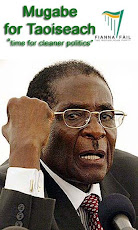
Mugabe’s Presence Hijacks European-African Meeting

LISBON, Dec. 8 — A summit meeting of leaders from Europe and Africa on Saturday was dominated by divisions between the two continents over trade and criticism from European leaders of human rights abuses in Zimbabwe. Col. Muammar el-Qaddafi of Libya was among the leaders of 80 European and African countries meeting in Lisbon Saturday. The first such European Union-African meeting in seven years began amid growing concern in Europe that its economic and political influence in Africa was being eclipsed by China’s growing economic influence there.

But the start of the two-day meeting was overshadowed by the presence of Robert G. Mugabe, Zimbabwe’s president, who remains a liberation hero in some African countries. His appearance, however, led Gordon Brown, Britain’s prime minister, to decline to attend. In her speech, Angela Merkel, the German chancellor, criticized Mr. Mugabe, who is accused of human rights abuses, vote rigging and substantially worsening the level of poverty in his country. “The whole European Union has the same view of what is happening there,” Mrs. Merkel said, according to a copy of her speech distributed at the meeting. “Zimbabwe concerns all of us, in Europe and in Africa.” After criticism of Zimbabwe from other European leaders, African countries appeared to close ranks around Mr. Mugabe. Senegal’s president, Abdoulaye Wade, said that the comments about Mr. Mugabe were “not true,” and that Mrs. Merkel was misinformed. “Zimbabwe is making progress toward democracy and should be helped, not sanctioned,” he said. President Thabo Mbeki of South Africa, also speaking about human rights, avoided criticizing Mr. Mugabe, according to Baroness Amos, a former deputy foreign minister representing Britain here in Mr. Brown’s place. In a briefing with reporters, Lady Amos cited Mr. Mbeki’s role as a negotiator between Mr. Mugabe’s ZANU-PF party and the opposition as a legitimate explanation for his reluctance to confront his fellow leader.

Sudan’s president, Omar Hassan al-Bashir, whose government is accused by many countries and aid groups of causing the humanitarian crisis in Darfur, was also at the meeting, as was Col. Muammar el-Qaddafi, Libya’s president. In all, 80 European and African governments were represented. A meeting between Mr. Bashir and senior European officials yielded no breakthrough over plans to send non-African peacekeepers to Darfur. Access to Mr. Mugabe was closely controlled. As he left his five-star hotel in Cascais, on the coast near Lisbon, on Saturday morning, he refused to answer questions from reporters as his security team jostled a camera crew from the BBC. In order for Mr. Mugabe to attend the meeting, his Portuguese hosts had to waive a European Union visa ban that normally prevents him and 130 other Zimbabwean officials from traveling to Europe. Mr. Mugabe was invited when southern African nations made it clear that they would not attend the meeting were he excluded. In 2003, a similar standoff prevented a summit meeting from taking place, but such is the concern over China’s growing economic influence in Africa that all but a handful of European leaders agreed to override their objections and sit down with Zimbabwe’s president.

Ireland’s prime minister, Bertie Ahern, said that he would have preferred Mr. Mugabe had stayed away and said human rights needed to be addressed at the meeting. “Any country that halves the life expectancy of its population speaks for itself,” Mr. Ahern told reporters. Though Europe remains Africa’s biggest trading partner, China’s investment ambitions were underlined recently when a Chinese bank bought 20 percent of Standard Bank, Africa’s largest lender, for $5.4 billion. According to the European Commission, 800 Chinese companies have invested $1 billion in Africa through 2006, the latest year for which figures are available. The country imports 32 percent of its oil from Africa, and oil-related investment in recent years amounts to $16 billion, the commission said.

Despite their historical ties to Africa, Europeans have found it difficult to compete with China, which finances giant infrastructure projects and offers investment without conditions related to human rights or government transparency. European leaders have called for a new partnership between the continents based on common interests, from trade to climate change, instead of the traditional relationship between donors and aid recipients. But the legacy of Europe’s colonial past is a source of continuing controversy. “Africa doesn’t want charity or paternalism,” said Alpha Oumar Konaré, the chairman of the African Union, at the opening session on Saturday. “We don’t want anyone doing things for us. We want to play in the global economy but with new rules.” Mr. Konaré also criticized the European Union’s strategy of pressing individual African regions and states to sign new trade deals, called economic partnership agreements. He said the practice was divisive and would hurt the continent’s industries and rural poor. Mr. Wade, of Senegal, accused Europe of trying to impose on Africa a “straitjacket that does not work.”
by Michel Euler/Associated Press
+++++++++++++++++++++++++++++++++++++++++++++++++++
Disclaimer
No responsibility or liability shall attach itself to either myself or to the blogspot ‘Mozlink’ for any or all of the articles/images placed here. The placing of an article does not necessarily imply that I agree or accept the contents of the article as being necessarily factual in theology, dogma or otherwise.
Mozlink

Christmas Celebration

Saturday, December 8, 2007

Immediate Action Urged for Combating Global Warming at UN Climate Change Conference

BALI, Indonesia, Dec. 8 (Xinhua) -- The atmosphere inside and outside the Bali International Convention Center is different as the ongoing conference is bringing together thousands of representative from over 180 countries, as well as observers from intergovernmental and nongovernmental organizations, who are intensively discussing and negotiating on ways and measures that should be adopted to combat climate change. Worldwide efforts on tackling the worsening global warming is gaining steam and momentum at the conference, which is tasked withdrawing up a "roadmap" for negotiations on a new deal before the first commitment period of the Kyoto Protocol expires by 2012. As numerous discussions, meetings and press conferences were going on inside the closed doors at the center, dozens of side events were being held by nongovernmental organizations, academics, the private sector and others. All were trying to sell their idea on how to save the planet.

Some organizations were sounding alarming bells about the climate change in their press releases and publications, and called for immediate actions in tackling the challenge of climate change. Others were trying to offer solutions to the problem. The United Nations Framework Convention on Climate Change (UNFCCC) Executive Secretary Yve de Boer said that the climate change being felt around the world has created a public awareness about the issue of global warming. This year's scientific report from the U.N. Intergovernmental Panel on Climate Change (IPCC) has made clear beyond doubt that climate change is a reality and can seriously harm the future development of the world's economies, societies and eco-systems. Human activities are blamed for the accelerating global warming.

On the conference's progress so far, Yve de Boer said that the meetings were "going well." He termed the fact that many countries have come prepared with their own proposals on how the process should move forward as "encouraging." The climate change is such a "big and complicated" issue. The problem can only be solved by working together, he said, adding that however, the Bali conference would not finalize a post-2012 climate deal, but could "put in place a two-year process to work towards such a deal." He also said that "I think it's clear to everyone that industrialized countries must continue to take the lead (in reducing emissions of greenhouse gases) and must reduce their emissions by 25 to 40 percent by 2020." The challenge for most of the developing countries in the world in tackling the climate change is how to achieve a balance in growing economy, while reducing the emission of greenhouse gases, he said. He hoped that modern clean technology can help developing countries grow economy in a clean way so as to reduce air pollution which leads to high public health costs and help them avoid making the same mistakes that were made in the West.

The main goal of the Bali Conference is to launch negotiations on a climate change deal for the post-2012 period, to set the agenda for these negotiations and to reach agreement on when these negotiations will have to be concluded, according to the UNFCCC. The U.N. climate change conference, which kicked off on Dec. 3 and will end on Dec. 14. At the end of the conference, a decision is expected to launch a new process to shape a deal on a post-2012 climate change regime, said the UNFCCC.
By Gao Li, Ren Haijun
+++++++++++++++++++++++++++++++++++++++++++++++++++
Disclaimer
No responsibility or liability shall attach itself to either myself or to the blogspot ‘Mozlink’ for any or all of the articles/images placed here. The placing of an article does not necessarily imply that I agree or accept the contents of the article as being necessarily factual in theology, dogma or otherwise.
Mozlink

Friday, December 7, 2007

Darfur and Mugabe Threaten to Eclipse Summit

Spiegel On-Line Dec. 7th. - This weekend's EU-Africa summit is supposed to be about tackling issues such as trade, immigration and climate change. But the ongoing conflict in Darfur and the presence of Zimbabwe's President Mugabe have led to calls for human rights to take center stage. European Union and African leaders are gathering in Lisbon Friday for their first summit in seven years to discuss a range of issues, including trade, climate change and immigration. But there has been criticism from a number of quarters that the issues of human rights and the continuing conflict in Darfur are not being given enough prominence at the event. In the run-up to the summit, activists, writers and politicians have slammed the organizers for not placing the Darfur conflict at the top of the agenda. There has also been criticism of the decision to invite Zimbabwe's President Robert Mugabe, who has been accused of corruption, economic mismanagement and human rights abuses.

On Friday, a group of 90 European and African parliamentarians and human rights activists appealed to their leaders to tackle the crisis in Darfur, the region of Sudan where more than 200,000 people have been killed and millions displaced. The United Nations approved a UN-African Union peacekeeping mission in July but there have been doubts cast about the mission's viability due to restrictions imposed by Sudan. Earlier in the week, leading writers from the two continents, including Vaclav Havel, Günter Grass, Ben Okri and J. M. Coetzee, accused the EU and African leaders of "political cowardice" for failing to put "two of the world's worst humanitarian crises" -- Zimbabwe and Darfur -- at the top of the summit's agenda. "We expect our leaders to lead, and lead with moral courage," the 14 authors said in an open letter published on Tuesday. "When they fail to do so, they leave all of us morally impoverished."

One leader, British Prime Minister Gordon Brown, did make a stand on the issue of Zimbabwe, deciding to boycott the weekend meeting because Mugabe was attending. The Zimbabwean president is normally banned from Europe for allegedly rigging his re-election in 2002. While still revered by many Africans as a liberation leader, his regime has become increasingly autocratic and unemployment and inflation are now rampant in the country. On Thursday, European Commission President Jose Manuel Barroso said that he didn't want the summit to be "taken hostage" by the Mugabe issue. He said he respected Brown's decision, but added: "Life has taught me that if you are in international politics sometimes you have to meet people your mother would not like to see you with." He also pointed out that the summit's first session will be on the issue of human rights. The EU president said the summit should be a "new departure" in relations between the continents, based on equal partnership and "moving away from the mere donor-beneficiary relationship to launch a true partnership between Africa and Europe, based on common interests and tackling other global challenges." The 48 leaders from Africa and 26 from Europe will be addressing the issues of immigration and climate change, as well as energy, trade and development, during the summit on Saturday and Sunday. Immigration is one of the most important issues affecting relations between the two continents. Every year hundreds of thousands of Africans embark on perilous journeys to try to reach the shores of Europe; thousands never make it. The EU has recently touted the idea of a "blue card" scheme to encourage the immigration of skilled migrants, but that may not do much to resolve the problem of the thousands of illegal migrants, many from Africa, living in poverty in Europe.

Trade will also be a key issue at the summit. With Europe dependent on Russia for a quarter of its energy supplies, many countries are looking for other more reliable sources -- and Africa is rich in natural resources. The EU is mindful that it may have missed the boat in availing itself of these resources, given that energy-hungry China has been dramatically increasing its investment in Africa since the 1990s. However, human rights may still end up dominating the conference. German Chancellor Angela Merkel is to give a keynote speech in Lisbon and Berlin has made it known that she will address the issue of human rights. Merkel has not shied away from tackling the issue in the past, for example during her visit to China this year. And as G-8 leader at the Heiligendamm summit in June of this year, Merkel chose to make Africa a central issue.
+++++++++++++++++++++++++++++++++++++++++++++++++++
Disclaimer
No responsibility or liability shall attach itself to either myself or to the blogspot ‘Mozlink’ for any or all of the articles/images placed here. The placing of an article does not necessarily imply that I agree or accept the contents of the article as being necessarily factual in theology, dogma or otherwise.
Mozlink

Thursday, December 6, 2007

Darfur Causing Chaos in Central African Republic

Spiegel Online, Dec. 5th. - The war in Sudan's Darfur region has spread to epidemic proportions and is now plunging the neighboring Central African Republic into chaos. This is just adding one more problem to a country that has been torn apart by its own internal divisions for decades.

The captain is in good spirits. "Look how beautiful my pistol is and how nicely it sits in my hand," he says. "I made it myself." Laurent Djim-Woei Bebiti swings his right arm around and aims the weapon -- in reality little more than a sawed-off shotgun -- at his men, then into the humid forest and finally into the air. He stands there, one arm stretched to the sky, the other holding up his trousers, a rebel wearing a dirty, green uniform, a knife and satellite telephone slung from his belt. His boyish face is half-covered by a floppy, oversized hat and thin stubble covers his chin. The captain is 35 years old. Suddenly Bebiti's mood changes without any apparent reason. His eyes flash wildly and his men anxiously huddle up, clutching weapons including rusted shotguns, spears, machetes and knives, Kalashnikovs and rifles. Bebiti's group calls itself the "People's Army for the Reestablishment of the Republic and Democracy," or APRD. Behind that grand title hides a bunch of desperados -- 10-year-old kids wielding World War II-era rifles, medicine men with their amulets and magic powders, and adolescents with pirate bandanas on their heads. The forests are home to this motley-looking militia opposed to the government in the capital Bangui. The inhabitants of the Central African Republic call their country "Bê-Afrîka" -- the heart of Africa -- in Sango, their native language. The country is halfway between the Mediterranean and South Africa, and it would take almost as long to drive to the Atlantic Ocean as it would to the Indian Ocean, if of course the roads were navigable.

The place that ship captain and writer Joseph Conrad wrote about in his famous novel "Heart of Darkness" more than 100 years ago couldn't have been far from the disease-ridden central African swamps and their native pygmy populations. The region also holds the dubious distinction of being the birthplace of the AIDS and Ebola viruses. In addition to being the continent's geographic center, the Central African Republic epitomizes Africa's many ills. The country is plagued by a number of interrelated wars. Across the Ubangi River in neighboring Congo, rebels led by ethnic Tutsi General Laurent Nkunda are embroiled in a bitter struggle with government troops dispatched from the capital Kinshasa. The northeastern part of the Central African Republic, which is about the size of Afghanistan, is home to a guerilla organization that calls itself the Union of Democratic Forces for Unity (UFDR) and is most likely supported by the Sudanese government. Forests in the northwestern part of the country have been the hideout for the APRD's would-be warriors since June 2005. There are also other rebel groups that tend to change sides as frequently as they change names, a number of which receive their weapons from neighboring countries.

The government in Bangui, for its part, receives support from neighboring Chad, from peacekeeping forces from Gabon and the Republic of Congo and from a few hundred French paratroopers. France, once the dominant colonial power in Central Africa, still feels responsible for maintaining stability in the region, though the "Grande Nation" has not been overly particular in its choice of allies in the region. For instance, Paris supports Chadian President Idriss Déby against Sudan-backed rebels. In the Central African Republic, the French are currently allied with President François Bozizé, a man who rode a military coup to power and is notorious for human rights violations. But Paris isn't overly concerned abut Bozizé's reputation because, without him, the country could easily slip into the same kind of civil war over power and natural resources that has plagued Congo for years. More than 200,000 refugees are wandering about in the Central African Republic. Most of them are internal refugees, but some are from neighboring countries that have been plagued by wars for years -- Chad, Congo and Sudan. About 80,000 Central Africans have fled to countries including neighboring Cameroon. A small contingent of European troops will soon be arriving in the northeastern part of the Central African Republic as part of a European Union mission to establish peace in Chad, where heavy fighting recently re-erupted. Whether the force, which will consist mainly of French soldiers, will succeed in establishing control over the murderous chaos there seems doubtful.

The human rights group Amnesty International calls the country "a hunting ground for armed rebel groups, government soldiers and bandits." On the list of the world's poorest nations, the Central African Republic ranks 172 out of 177. Only 30 percent of children attend school. The average life expectancy has been falling since 1970 and now stands at 39, which is even lower than that of war-torn Afghanistan. More than half of the country's four million inhabitants are illiterate. According to United Nations estimates, one in three Central Africans is in need of humanitarian assistance.
By Thilo Thielke
+++++++++++++++++++++++++++++++++++++++++++++++++++
Disclaimer
No responsibility or liability shall attach itself to either myself or to the blogspot ‘Mozlink’ for any or all of the articles/images placed here. The placing of an article does not necessarily imply that I agree or accept the contents of the article as being necessarily factual in theology, dogma or otherwise.
Mozlink