Thursday, October 4, 2007

Vatican Secret Archives: "Processus contra Templarios"

VATICAN CITY, OCT 4, 2007 (VIS) - On October 25 in the Vatican's Old Synod Hall, the presentation will take place of the "Processus contra Templarios," a book published by the Vatican Secret Archives on the subject of the Knights Templar, the medieval military-religious order founded in Jerusalem in 1118 and suppressed by Pope Clement V (1305-1314).

According to a communique made public yesterday afternoon, the new volume is "a previously unpublished and exclusive edition of the complete acts of the original hearing against the Knights Templar." The book, unique of its kind, will have a print run "rigorously limited to 799 copies" and contains the "faithful reproduction of the original parchments conserved in the Vatican Secret Archives." The project, the communique concludes, "is part of the series of 'Exemplaria Praetiosa,' ... the most elaborate and important publication yet undertaken by the Pontifical Archives."

The new volume will be presented by Archbishop Raffaele Farina S.D.B., archivist and librarian of Holy Roman Church; Bishop Sergio Pagano, prefect of the Vatican Secret Archives, and experts such as the historian Franco Cardini and the archaeologist and author Valerio Massimo Manfredi."

+++++++++++++++++++++++++++++++++++++++++++++++++++
Disclaimer
No responsibility or liability shall attach itself to either myself or to the blogspot ‘Mozlink’ for any or all of the articles/images placed here. The placing of an article does not necessarily imply that I agree or accept the contents of the article as being necessarily factual in theology, dogma or otherwise.
Mozlink
Collaboration between Church and State for Good of Man

VATICAN CITY, OCT 4, 2007 (VIS) - In the Vatican today, Feast of St. Francis of Assisi, patron saint of Italy, the Holy Father received the Letters of Credence of Antonio Zanardi Landi, Italy's new ambassador to the Holy See. In his talk to the diplomat, the Pope referred to the "mutual collaboration" between Church and State "for the promotion of mankind and the good of the entire national community. In pursuing this goal," he added, "the Church does not aim to acquire power nor does she seek privileges or positions of economic and social advantage.


"Her only aim," he went on, "is to serve mankind, drawing inspiration, as the supreme norm of behavior, from the words and example of Jesus Christ Who 'went about doing good and healing everyone.' Hence the Catholic Church asks to be considered for her specific nature, and to have the opportunity freely to carry out her special mission for the good, not only of her own faithful, but of all Italians." Benedict XVI expressed the hope that collaboration between all components of Italian society may contribute "not only to carefully guarding the cultural and spiritual heritage that distinguishes [Italy] and that is an integral part of its history," but even more so that it may be "a stimulus to seek new ways to face the great challenges that characterize the post-modern age." In this context the Pope mentioned "the defense of life, ... the protection of the rights of the individual and the family, the building of a united world, respect for creation and inter-religious and inter-cultural dialogue."


After recalling that the year 2008 marks the 60th anniversary of the Declaration of Human Rights, the Pope pointed out that this date "could constitute a useful occasion for Italy to offer its own contribution to the creation of a just order in the international arena, at the center of which is ... respect for mankind, for his dignity and for his inalienable rights." Quoting from his own Message for World Peace Day 2007, the Holy Father then went on to say that the Declaration of Human Rights "is regarded as a sort of moral commitment assumed by all mankind. There is a profound truth to this, especially if the rights described in the Declaration are held to be based not simply on the decisions of the assembly that approved them, but on man's very nature and his inalienable dignity as a person created by God." "Italy," Pope Benedict concluded, "by virtue of its recent election as a member of the Council for Human Rights, and even more so for its own particular tradition of humanity and generosity, cannot but feel committed to the tireless construction of peace and the defense of the dignity of human beings and all their inalienable rights, including the right to religious freedom."

+++++++++++++++++++++++++++++++++++++++++++++++++++
Disclaimer
No responsibility or liability shall attach itself to either myself or to the blogspot ‘Mozlink’ for any or all of the articles/images placed here. The placing of an article does not necessarily imply that I agree or accept the contents of the article as being necessarily factual in theology, dogma or otherwise.
Mozlink

Monday, October 1, 2007

God does not Forget Those who are Forgotten by Everyone

VATICAN CITY, SEP 30, 2007 (VIS) - At midday today, during his last Angelus at Castelgandolfo before returning to the Vatican, Benedict XVI commented on the parable of the rich man and Lazarus, as recounted in the Gospel according to Luke. "The rich man personifies the iniquitous use of wealth by one who uses his riches for unbridled and selfish luxury," the Pope explained, "while the poor man represents the individual whom only God cares for. ... God does not forget those who are forgotten by everyone. ... The story shows how earthly iniquity is overturned by divine justice. After death Lazarus is welcomed ... into eternal beatitude, while the rich man ends 'in agony in the flames'."

The Holy Father also pointed out how the parable can "be given a social meaning," and he recalled the "memorable" interpretation which Pope Paul VI gave it in his Encyclical "Populorum Progressio." Quoting the Encyclical, Pope Benedict said that combating hunger "involves building a human community where men can live truly human lives, ... where the needy Lazarus can sit down with the rich man at the same banquet table." As for the causes of poverty, they are, on the one hand, "servitude to other men" and, on the other, "natural forces which are not yet satisfactorily controlled." Pope Benedict continued: "Unfortunately, some people suffer from both these factors together. At this moment, how can we not think especially of sub-Saharan Africa struck by grave flooding in recent days? And nor can we forget many other humanitarian emergencies in various parts of the earth, where conflicts for political and economic power make serious environmental problems even worse."


"The appeal launched by Paul VI - 'The hungry nations of the world cry out to the peoples blessed with abundance' - still maintains all its validity today," the Holy Father added. "We cannot say that we do not know which path to follow. We have the Law and the Prophets, Jesus tells us in the Gospel. Those who do not wish to listen would not change even if someone returned from the dead to warn them." The Holy Father concluded his remarks by calling upon the Virgin Mary to help us "become more attentive to our brothers and sisters in need, to share with them the much or little we have and to contribute ... to spreading the logic and practice of true solidarity."

+++++++++++++++++++++++++++++++++++++++++++++++++++
Disclaimer
No responsibility or liability shall attach itself to either myself or to the blogspot ‘Mozlink’ for any or all of the articles/images placed here. The placing of an article does not necessarily imply that I agree or accept the contents of the article as being necessarily factual in theology, dogma or otherwise.
Mozlink

Attack Kills 10 AU Peacekeepers in Darfur

HASKANITA, Sudan Sept. 30th (AP) – Rebel forces stormed an African Union base in northern Darfur killing 10 peacekeepers from the beleaguered mission in an unprecedented attack that threatened key peace talks set for October. Several others were wounded and dozens were missing in action after the attack on the base in Haskanita just after sunset Saturday. AU officers told Associated Press in Haskanita that a force of about 1,000 rebels from the Sudan Liberation Army had attacked the small AU base just after the fast-breaking meal during the Muslim holy month of Ramadan. The AU troops said they initially repelled the assailants. But the rebels eventually overran the camp around 4 a.m. on Sunday, peacekeepers said as they recovered from the fighting. "This is a terrible incident, we're still trying to understand what happened," said Gen. Martin Agwai, the AU force commander, as he inspected the destroyed base.

Darfur rebels have grown increasingly hostile to the AU peacekeepers, saying the force is not neutral and favours the government side. Several ambushes of AU forces in the past year have been blamed on the rebels. The attack came as rebels appeared to flee the area around Haskanita because of a large government offensive there over the past two weeks, AU soldiers said. The announcement that new peace talks to solve Darfur's conflict will open on Oct. 27 in Libya has sparked a flurry of fighting between rebels and Sudanese government forces as each try to improve their position ahead of the conference. "There is a war going on between the rebels and the government, and the AU is crunched in the middle," said a senior AU officer who asked not to be named because of the sensitivity of the issue. Ten peacekeepers were killed in the attack, including a police officer from Senegal, two military observers from Botswana and Mali and seven soldiers from Nigeria, AU officers said, requesting anonymity because the casualty toll was not official. Eight peacekeepers were seriously wounded, they said. An AU statement said 10 were killed and seven wounded.

Some peacekeepers tried to leave the camp during the night, and more than 30 were missing in action late Sunday, though a dozen others called to say they evacuated, AU officers said. "This is the heaviest loss of life and the biggest attack on the African Union mission," said AU spokesman Noureddine Mezni. Peacekeepers said the rebels used armoured vehicles and rocket-propelled grenades, an indication that they have heavier armament than previously believed. "We battled for hours, but when we ran out of ammunition, we took refuge in this ditch," said a Nigerian peacekeeper who would only give his first name, Aboubakar, because he was not authorized to speak to the media under military regulations. He showed a corner of the camp – riddled with bullet marks and mortar holes – where the AU troops resisted. Rebels looted several AU armoured vehicles and jeeps and took a large amount of ammunition from the base before the Sudanese army routed them out early Sunday, the AU soldiers said.

As the last AU peacekeepers evacuated the camp late Sunday, Sudanese government troops and militias could be seen patrolling the area. Other government troops were sifting through the camp's debris amid the burning tents and a smouldering AU armoured vehicle. Some soldiers carried away mattresses, fans and other gear. "It may not be the right political thing to say, but the government forces saved us," said an AU officer, who also asked not to be named because of military regulations. About 150 peacekeepers had been stationed at the Haskanita base, but they had been grounded since June because of the insecurity in the area. Rebel commanders told AP a few days earlier that they were involved in heavy battles against government-allied forces around Haskanita. "The government has massed five or six janjaweed units who are converging on us," said Abdelaziz Ushar, a commander in the rebel Justice and Equality Movement, which fights alongside the SLA, referring to the militias of Arab nomads that fight alongside the Sudanese army.

Rebels from JEM strongly condemned the attack Sunday, and insisted they had left the area days before it occurred. "JEM is not certain about the exact culprits in this senseless attack," the group said. There was no comment from the rebel faction known as SLA-Unity, which peacekeepers in Haskanita alleged conducted the raid. The Sudanese army also deplored the attack, saying it offered protection to the evacuating peacekeepers. Despite a few sporadic gunshots, the army appeared in control of the area Sunday. Plumes of smokes from several burning villages could be seen rising into the air. Forces from the Arab-dominated government have been accused of indiscriminately targeting ethnic African Darfur villagers on suspicions they support the rebels.

The situation had been expected to improve after U.N. Secretary General Ban Ki-moon visited Sudan in early September, announcing new negotiations to settle four years of conflict that have killed at least 200,000 people and displaced another 2.5 million. Sudanese President Omar al-Bashir also announced a cease-fire in September, but violence has since increased. The attack was the first time since the 7,000-strong AU mission was deployed in June 2004 that one of its bases was overrun. The underfunded AU force has been unable to stem the fighting in the war-torn region and will soon be merged into a more powerful hybrid U.N. force. The first units of the 26,000-strong joint AU-U.N. force are due to be deployed in October. and the new mission is expected to assume responsibility for the area on Dec. 31. The U.N., AU, France and Britain all strongly condemned the attack Sunday.
+++++++++++++++++++++++++++++++++++++++++++++++++++
Disclaimer
No responsibility or liability shall attach itself to either myself or to the blogspot ‘Mozlink’ for any or all of the articles/images placed here. The placing of an article does not necessarily imply that I agree or accept the contents of the article as being necessarily factual in theology, dogma or otherwise.
Mozlink

Wednesday, September 26, 2007

The Despotism Formerly Known as Burma

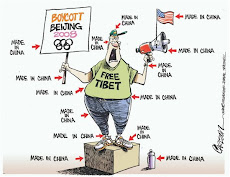
New York: Sept 26, 2007: By dispatching troops into the streets and imposing a curfew, Myanmar’s cruel military junta has set the stage for a serious clash with pro-democracy activists. A firm and united international response along the lines outlined by President Bush and the European Union at the United Nations yesterday offers the best hope of encouraging peaceful change in a nation that has endured a 19-year reign of fear. The question is whether the countries with the greatest influence on Myanmar’s generals — China, Russia and India, which all sell weapons to the army, as well as the members of the Association of Southeast Asian Nations that are Myanmar’s immediate neighbors — have the good sense to condemn the repression and exert the pressures only they can wield with any hope of positive effect. It is essential that they step up to the plate, and fast, before blood is spilled.

Peaceful protests that began last month over dramatically increased fuel prices became seriously threatening to the junta when Myanmar’s highly revered Buddhist monks joined in. The growing crowds gave voice to pent-up grievances — and the junta responded in a predictable, entirely wrongheaded way. It sent troops into the streets, and Daw Aung San Suu Kyi, the iconic democracy leader and Nobel Peace Prize winner, was reported to have been moved to prison from house arrest.

The United States, which has long had sanctions on Myanmar, including an import ban, will now expand a visa ban against regime leaders and tighten financial penalties, Mr. Bush told the United Nations. Although not spelled out, the plan is believed to include going after regime bank accounts in Singapore and other Southeast Asian countries, a tactic used by Washington with some effect against North Korea. The European Union also warned the junta that it faced tougher sanctions if it used force to crush the pro-democracy movement. These were good and necessary moves, but the greatest leverage to forestall disaster lies with China, Russia and India, who are making money off the junta and enabling it to stay in power. China, Myanmar’s chief trade partner and the host of the 2008 Olympic Games, has beefed up arms sales to Yangon, formerly Rangoon, prompting Russia and India to do likewise as a way of offsetting Beijing’s influence.

Moscow has discussed providing the junta with a nuclear research reactor, and India — the democracy on which the United States hopes to build a key security and economic relationship for the 21st century — had a senior minister in Myanmar for energy talks, even as the democracy protests were under way. There are some signs that China has urged restraint, but more must be done, including supporting U.N. sanctions on Myanmar that Beijing and Moscow have so far blocked. The U.N. envoy dealing with Myanmar, Ibrahmim Gambari, must aggressively rally these major countries, as well as the Asean nations, to persuade the generals to stand down.
The New York Times
+++++++++++++++++++++++++++++++++++++++++++++++++++
Disclaimer
No responsibility or liability shall attach itself to either myself or to the blogspot ‘Mozlink’ for any or all of the articles/images placed here. The placing of an article does not necessarily imply that I agree or accept the contents of the article as being necessarily factual in theology, dogma or otherwise.
Mozlink

Missionary's Murderer also Killed Catholic Priest

Bangalore Sept. 25th: (ENI). A Hindu activist convicted of murdering an Australian missionary and his two sons in India in 1999 has now been found guilty of killing an Indian Roman Catholic priest in the same year. "This verdict instils hope and courage for harassed minorities," said the spokesperson of the Catholic Bishops' Conference of India, the Rev. Babu Joseph, after a court in the state of Orissa found Dara Singh and three others guilty of the murder of Catholic priest Arul Doss in 1999. The court sentenced the four defendants to life in prison. Singh is already serving a life imprisonment term for the murder of Australian Baptist missionary Graham Stuart Staines and his two young sons, who all died after the vehicle in which they were sleeping was set on fire.
+++++++++++++++++++++++++++++++++++++++++++++++++++
Disclaimer
No responsibility or liability shall attach itself to either myself or to the blogspot ‘Mozlink’ for any or all of the articles/images placed here. The placing of an article does not necessarily imply that I agree or accept the contents of the article as being necessarily factual in theology, dogma or otherwise.
Mozlink

Tuesday, September 25, 2007

Environmental Protection is a Moral Imperative

VATICAN CITY, SEP 25, 2007 (VIS) - Made public today was the text of a speech delivered by Msgr. Pietro Parolin, under-secretary for Relations with States, before the 62nd session of the UN General Assembly which is meeting to deliberate on the theme of "the future is in our hands: addressing the leadership challenge of climate change." "Climate change is a serious concern and an inescapable responsibility," said Msgr. Parolin in his English-language talk. "My delegation wishes to stress the underlying moral imperative that everyone, without exception, has a grave responsibility to protect the environment," he added.


"The best scientific assessments available have established a link between human activity and climate change," he continued. "However, the results of these scientific assessments, and the remaining uncertainties, should neither be exaggerated nor minimized in the name of politics, ideologies or self-interest. Rather they now need to be studied closely in order to give a sound basis for raising awareness and making effective policy decisions.


"In recent times," he added, "it has been unsettling to note how some commentators have said that we should actually exploit our world to the full, with little or no heed to the consequences, using a world view supposedly based on faith." This, said Msgr. Parolin "is a fundamentally reckless approach." However "there are those who hold up the earth as the only good, and would characterize humanity as an irredeemable threat to the earth, whose population and activity need to be controlled by various drastic means." They, he stressed, "would place human beings and their needs at the service of an inhuman ecology."


"Since no country alone can solve the problems related to our common environment, we need to overcome self-interest through collective action. On the part of the international community, this presupposes the adoption of a coordinated, effective and prompt international political strategy" to "identify ways ... to enhance sustainable development and foster a healthy environment," while bearing in mind "that poor nations and sectors of society are particularly vulnerable to the adverse consequences of climate change, due to lesser resources and capacity to mitigate their effects and adapt to altered surroundings."


"The pace of achieving and codifying a new international consensus on climate change is not always matched by an equally expeditious and effective pace of implementation of such agreements. States are free to adopt international conventions and treaties, but unless our words are matched with effective action and accountability, we would do little to avert a bleak future and may find ourselves gathering again not too long from now to lament another collective failure."
+++++++++++++++++++++++++++++++++++++++++++++++++++
Disclaimer
No responsibility or liability shall attach itself to either myself or to the blogspot ‘Mozlink’ for any or all of the articles/images placed here. The placing of an article does not necessarily imply that I agree or accept the contents of the article as being necessarily factual in theology, dogma or otherwise.
Mozlink

Myanmar Junta's Secretive Supremo

Five facts about the Burmese military junta's most powerful figure, Than Shwe:

Born in British-controlled central Burma in February 1933. Than Shwe joined the army in 1953 and rose through the ranks to become military supremo with the official title "Senior General" in 1992.

On taking power, he said the junta that seized power in a 1962 coup would "not hold onto power for long," sparking hopes of civilian government. Since then, opposition leader Aung San Suu Kyi has spent most of her time either in prison or under house arrest.

Than Shwe is rarely seen in public or out of uniform. One notable exception was his appearance at a secretly leaked video of his daughter's wedding in 2006. The ceremony's lavishness sparked outrage among Burma's 53 million people, among the poorest in Asia.

He is known to have an intense personal dislike of Suu Kyi and is alleged to have walked out of a meeting with a foreign envoy when her name was mentioned.

Rumours about his failing health and imminent demise are common.
+++++++++++++++++++++++++++++++++++++++++++++++++++
Disclaimer
No responsibility or liability shall attach itself to either myself or to the blogspot ‘Mozlink’ for any or all of the articles/images placed here. The placing of an article does not necessarily imply that I agree or accept the contents of the article as being necessarily factual in theology, dogma or otherwise.
Mozlink

Poor Nations Need Incentives to Cut Emissions

New York Sept. 25th: Rich countries must cut their “unacceptably high” greenhouse gas emissions and provide incentives for poorer nations to follow suit, the United Nations secretary-general told a meeting of more than 80 heads of state and government on climate change on Monday. Ban Ki-moon said industrialised countries must show more leadership on the issue. “It has been 10 years since the Kyoto protocol was adopted. Yet most industrialised country emissions are still rising and their per capita emissions remain unacceptably high.” He said that poor countries, rather than being given the strict emissions reduction targets meted out to the developed world under the current Kyoto protocol, should be given “incentives to act without sacrificing economic growth or poverty eduction”.

Gordon Brown, prime minister, did not attend the meeting as it clashed with the Labour party conference. But Hilary Benn, secretary of state for the environment, used it to urge the US to reverse its opposition to binding targets to cut emissions. “[Tackling climate change] means all of us, including the largest economy in the world, the US, taking on binding emissions reduction targets. It is inconceivable that dangerous climate change can be avoided without this happening.” His words marked a change in tone for the UK in its approach towards the US on environmental issues. Tony Blair preferred to use his relationship with George W. Bush to press him privately to soften his stance on climate change.

Mr Bush was not at Monday’s meeting, but did attend a dinner that followed. He is holding a separate meeting on climate change with the world’s 16 biggest emitting countries later this week in Washington. The US is unlikely to commit to targets to reduce its emissions. Paula Dobriansky, undersecretary of state for democracy and global affairs, told the Financial Times the US supported a “long-term global goal” for reducing emissions, but that shorter-term goals should be set at a national level. The US has not proposed a specific target for emissions cuts. Ms Dobriansky said the White House would discuss in Washington later this week what such a goal should be.

Mr Ban called on Monday’s meeting, the biggest gathering of heads of state and government to talk about the problem, to agree the broad principles of tackling climate change ahead of a UN conference in Bali in December at which negotiations will begin on a successor to the Kyoto treaty, the main provisions of which expire in 2012. Although government representatives meet each year to discuss the Kyoto protocol, progress on agreeing to action on climate change has been slow. Many observers say part of the problem is that only environment ministers and their officials attend such meetings, rather than heads of government or more senior ministers. Mr Ban’s meeting was intended to break this deadlock by persuading heads of state and government of the need for international action in the hope that they would empower their environment ministers to make more progress in Bali.

Deal agreed to eliminate global warming gas

An environmental agreement was signed at the weekend by a host of the world’s biggest greenhouse gas emitters. The agreement was an extension to the Montreal Protocol, a landmark treaty signed 20 years ago that was intended to stem the destruction of the earth’s protective ozone layer by the use of certain chemicals. The agreement accelerated the phasing out of compounds known as HCFCs. These are used in refrigeration and other technologies as substitutes for other chemicals that destroy the ozone layer, but have the unfortunate side effect of warming the planet even more effectively than carbon dioxide. Phasing out HCFCs is much less controversial than cutting emissions of carbon dioxide because the technology to do so is readily available, whereas reducing carbon requires fundamental changes to the way we produce energy. HCFCs, though very potent greenhouse gases, make up only a small proportion of overall greenhouse gas emissions.
By Fiona Harvey Copyright The Financial Times Ltd. 2007
+++++++++++++++++++++++++++++++++++++++++++++++++++
Disclaimer
No responsibility or liability shall attach itself to either myself or to the blogspot ‘Mozlink’ for any or all of the articles/images placed here. The placing of an article does not necessarily imply that I agree or accept the contents of the article as being necessarily factual in theology, dogma or otherwise.
Mozlink

Monday, September 24, 2007

Logic of Sharing and Not of Profit is the Ultimate Good

Vatican City, Sep 23rd, 2007 (VIS) - This morning, the Holy Father made a pastoral visit to Velletri, south of Rome, where he presided at a Eucharistic celebration in the cathedral square. Benedict XVI held the title of the suburbicarian diocese of Velletri-Segni from the year 1993 until his election to the pontificate in April 2005. His successor as the titular holder of the diocese is Cardinal Francis Arinze, prefect of the Congregation for Divine Worship and the Discipline of the Sacraments, while the incumbent is Bishop Vincenzo Apicella.

In his homily the Pope commented on today's Gospel reading of the dishonest manager, and reflected on the danger of excessive attachment to money and material wealth. "In truth," he told the several thousand faithful who had gathered to hear him, "life is always a choice: between faithfulness and unfaithfulness, between selfishness and altruism, between good and evil. The end of this particular Gospel passage is incisive and peremptory: no servant can serve two masters," which in the final analysis means "you cannot serve God and wealth." "A fundamental decision is, then, necessary," Pope Benedict proceeded, "the choice between the logic of profit as the ultimate criteria for our actions and the logic of sharing and solidarity. If the logic of profit prevails, the imbalance between poor and rich increases, as does the ruinous exploitation of the planet. When, on the other hand, the logic of sharing and solidarity prevails it is possible to alter and redirect our course towards equal development and the common good of everyone. Ultimately it is a decision between selfishness and love, between justice and dishonesty, ... between God and Satan. "If loving Christ and our fellow man is not considered as a superficial accessory," he added, "but rather as the real and ultimate aim of our entire life, we must know how to take fundamental decisions, to be ready to make radical sacrifices, if necessary even unto martyrdom. Today, as yesterday, the life of Christians calls for the courage to swim against the tide, to love like Jesus Who went so far as to sacrifice Himself upon the cross."

After the Mass, the Pope blessed a bronze column given to him a year ago as a gift by 100 Bavarian cities to mark his apostolic trip to Germany and his 80th birthday. Two columns were made, one is in the Pope's home town of Marktl am Inn, the other has been donated by him to the diocese of Velletri-Segni. After bidding farewell to the civil and religious authorities of Velletri, the Holy Father returned to the Apostolic Palace at Castelgandolfo where he prayed the Angelus.

+++++++++++++++++++++++++++++++++++++++++++++++++++
Disclaimer
No responsibility or liability shall attach itself to either myself or to the blogspot ‘Mozlink’ for any or all of the articles/images placed here. The placing of an article does not necessarily imply that I agree or accept the contents of the article as being necessarily factual in theology, dogma or otherwise.
Mozlink

Myanmar Officials Threaten Clerics

YANGON, Myanmar (AP) Sept. 24th. — Myanmar's religious affairs minister warns the Buddhist clergy to restrain demonstrating monks, or else the government will act against protesting clerics. As many as 100,000 anti-government protesters led by a phalanx of Buddhist monks marched Monday through Yangon, the largest crowd to demonstrate in Myanmar's biggest city since a 1988 pro-democracy uprising that was brutally crushed by the military. From the front of the march, witnesses could see a 11/2 -kilometre stretch of eight-lane road was filled with people. Some participants said there were several hundred thousand marchers in their ranks, but an international aid agency official with employees monitoring the crowd estimated said the size was well over 50,000 and approaching 100,000.

It was the latest in a series of protests that began Aug. 19 as a movement against economic hardship in the Southeast Asian country after the government sharply raised fuel prices. But arrests and intimidation kept demonstrations small and scattered until the monks entered the fray. The usually iron-fisted junta has so far kept minimal security at the protests, and diplomats and analysts said Myanmar's military rulers were showing the unexpected restraint because of pressure from the country's key trading partner and diplomatic ally, China. The march kicked off, like the previous ones, at the Shwedagon pagoda, a historical centre for political movements as well as the country's most sacred religious shrine. Some 20,000 monks took the lead, with onlookers joining in on what had been billed as a day of general protest.

In the central city of Mandalay, meanwhile, 500 to 600 monks set off shortly after noon on their own protest march. The monks, who took over a faltering protest movement from political activists, already had managed to bring people into the streets in numbers not seen since the 1988 pro-democracy uprising snuffed out by the army at a cost of thousands of lives. On Sunday, about 20,000 people including thousands of monks filled the streets in Yangon, stepping up their confrontation with authorities by chanting support for detained democracy leader Aung San Suu Kyi. The increasingly confrontational tone of the anti-government protesters has raised both expectations of possible political change and fear that the military might forcefully stamp out the demonstrations, as it did in 1988. A Southeast Asian diplomat, speaking on condition of anonymity as a matter of protocol, said the regime is under pressure from China to avoid a crackdown just as its larger neighbour has pressured it to speed up other democratic changes. "The Myanmar government is tolerating the protesters and not taking any action against the monks because of pressure from China," the diplomat told the Associated Press. "Beijing is to host the next summer's Olympic Games. Everyone knows that China is the major supporter of the junta so if government takes any action it will affect the image of China." China, which is counting on Myanmar's vast oil and gas reserves to help fuel its booming economy, earlier this year blocked a UN Security Council criticizing Myanmar's rights record saying it was not the right forum. But at the same time, it has employed quiet diplomacy and subtle public pressure on the regime, urging it to move toward inclusive democracy and speed up the process of dialogue and reform.

Josef Silverstein, a political scientist and author of several books on Myanmar, said it would not be in China's interest to have civil unrest in Myanmar, also known as Burma. "China is very eager to have a peaceful Burma in order to complete roads and railroads, to develop mines and finish assimilating the country under its economic control," Mr. Silverstein said. The movement seemed to gain momentum Saturday, when more than 500 monks and sympathizers went past barricades to walk to the house where Suu Kyi is under house arrest. She greeted them from her gate in her first public appearance in more than four years. But access to her home was barred Sunday. The meeting symbolically linked the current protests to Nobel laureate's Suu Kyi's struggle for democracy, which has seen her detained for about 12 of the last 18 years.
+++++++++++++++++++++++++++++++++++++++++++++++++++
Disclaimer
No responsibility or liability shall attach itself to either myself or to the blogspot ‘Mozlink’ for any or all of the articles/images placed here. The placing of an article does not necessarily imply that I agree or accept the contents of the article as being necessarily factual in theology, dogma or otherwise.
Mozlink

Myanmar officials threaten clerics

YANGON, Myanmar (AP) Sept. 24th. — Myanmar's religious affairs minister warns the Buddhist clergy to restrain demonstrating monks, or else the government will act against protesting clerics. As many as 100,000 anti-government protesters led by a phalanx of Buddhist monks marched Monday through Yangon, the largest crowd to demonstrate in Myanmar's biggest city since a 1988 pro-democracy uprising that was brutally crushed by the military. From the front of the march, witnesses could see a 11/2 -kilometre stretch of eight-lane road was filled with people. Some participants said there were several hundred thousand marchers in their ranks, but an international aid agency official with employees monitoring the crowd estimated said the size was well over 50,000 and approaching 100,000.

It was the latest in a series of protests that began Aug. 19 as a movement against economic hardship in the Southeast Asian country after the government sharply raised fuel prices. But arrests and intimidation kept demonstrations small and scattered until the monks entered the fray. The usually iron-fisted junta has so far kept minimal security at the protests, and diplomats and analysts said Myanmar's military rulers were showing the unexpected restraint because of pressure from the country's key trading partner and diplomatic ally, China. The march kicked off, like the previous ones, at the Shwedagon pagoda, a historical centre for political movements as well as the country's most sacred religious shrine. Some 20,000 monks took the lead, with onlookers joining in on what had been billed as a day of general protest.

In the central city of Mandalay, meanwhile, 500 to 600 monks set off shortly after noon on their own protest march. The monks, who took over a faltering protest movement from political activists, already had managed to bring people into the streets in numbers not seen since the 1988 pro-democracy uprising snuffed out by the army at a cost of thousands of lives. On Sunday, about 20,000 people including thousands of monks filled the streets in Yangon, stepping up their confrontation with authorities by chanting support for detained democracy leader Aung San Suu Kyi. The increasingly confrontational tone of the anti-government protesters has raised both expectations of possible political change and fear that the military might forcefully stamp out the demonstrations, as it did in 1988. A Southeast Asian diplomat, speaking on condition of anonymity as a matter of protocol, said the regime is under pressure from China to avoid a crackdown just as its larger neighbour has pressured it to speed up other democratic changes. "The Myanmar government is tolerating the protesters and not taking any action against the monks because of pressure from China," the diplomat told the Associated Press. "Beijing is to host the next summer's Olympic Games. Everyone knows that China is the major supporter of the junta so if government takes any action it will affect the image of China." China, which is counting on Myanmar's vast oil and gas reserves to help fuel its booming economy, earlier this year blocked a UN Security Council criticizing Myanmar's rights record saying it was not the right forum. But at the same time, it has employed quiet diplomacy and subtle public pressure on the regime, urging it to move toward inclusive democracy and speed up the process of dialogue and reform.

Josef Silverstein, a political scientist and author of several books on Myanmar, said it would not be in China's interest to have civil unrest in Myanmar, also known as Burma. "China is very eager to have a peaceful Burma in order to complete roads and railroads, to develop mines and finish assimilating the country under its economic control," Mr. Silverstein said. The movement seemed to gain momentum Saturday, when more than 500 monks and sympathizers went past barricades to walk to the house where Suu Kyi is under house arrest. She greeted them from her gate in her first public appearance in more than four years. But access to her home was barred Sunday. The meeting symbolically linked the current protests to Nobel laureate's Suu Kyi's struggle for democracy, which has seen her detained for about 12 of the last 18 years.
+++++++++++++++++++++++++++++++++++++++++++++++++++
Disclaimer
No responsibility or liability shall attach itself to either myself or to the blogspot ‘Mozlink’ for any or all of the articles/images placed here. The placing of an article does not necessarily imply that I agree or accept the contents of the article as being necessarily factual in theology, dogma or otherwise.
Mozlink

Zimbabwe 'near collapse'

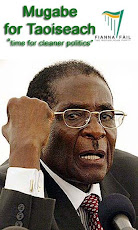
September 18th: Zimbabwe is "closer than ever to complete collapse" under the weight of a deepening economic crisis that threatens to destabilise southern Africa, an independent report said today. The International Crisis Group (ICG) called on the Southern African Development Community (SADC) group of nations to overcome internal divisions and focus on ways to persuade Zimbabwean President Robert Mugabe to step down. "SADC must resolve internal differences about how hard to press into retirement Robert Mugabe, Zimbabwe's 83-year-old president and liberation hero, and the wider international community needs to give it full support," the Brussels-based think tank said in a report.

SADC has launched an initiative led by South African President Thabo Mbeki aimed at mediating between Mugabe and Zimbabwe's opposition in the hope of reaching a political solution that would end the country's turmoil. SADC heads of state report "positive" mediation efforts but Western diplomats say little progress has been made as Mugabe tightens his grip on a once prosperous country suffering from the world's highest inflation rate and food and fuel shortages. "Four out of five of the country's twelve million people live below the poverty line and a quarter have fled, mainly to neighbouring countries," the ICG report said. "A military-led campaign to slash prices has produced acute food and fuel shortages, and conducting any business is becoming almost impossible."

Mugabe, in power since independence in 1980, accuses the main opposition Movement for Democratic Change (MDC) and Western foes of sabotaging Zimbabwe's economy and plotting to oust him. He denies accusations that he has hurt the economy with policies like seizing white-owned farms for landless blacks. Mugabe faces few political challenges. His opponents are weak and divided and international efforts to isolate him have had little impact, analysts say.

"Western sanctions - mainly targeting just over 200 members of the leadership with travel bans and asset freezes - have proven largely symbolic," said the ICG. "And general condemnations from the UK and US if anything (are) counterproductive because they help Mugabe claim he is the victim of neo-colonial ambitions." Mugabe has vowed to crush opponents in a presidential vote expected in 2008 and has manoeuvred to consolidate his control. His government has introduced a bill to give blacks majority ownership of foreign firms, including mines and banks, a move business leaders fear will further hurt the ailing economy. Zimbabwe's parliament was expected to start debating a constitutional bill today that would allow Mugabe to pick a successor if he chose to retire. "Some SADC leaders remain Mugabe supporters, and there is a risk the organisation will accept cosmetic changes that further entrench the status quo," the report said.
+++++++++++++++++++++++++++++++++++++++++++++++++++
Disclaimer
No responsibility or liability shall attach itself to either myself or to the blogspot ‘Mozlink’ for any or all of the articles/images placed here. The placing of an article does not necessarily imply that I agree or accept the contents of the article as being necessarily factual in theology, dogma or otherwise.
Mozlink

UN Chief Urges Immediate Climate Action

UNITED NATIONS(AP)Sept. 24th. — U.N. Secretary-General Ban Ki-moon told an unprecedented summit on climate change Monday that "the time for doubt has passed" and a breakthrough is needed in global talks to sharply reduce emissions of global-warming gases. "The U.N. climate process is the appropriate forum for negotiating global action," Ban told assembled presidents and premiers, an apparent caution against what some see as a U.S. effort to open a separate negotiating track. The U.N. chief also addressed a chief U.S. objection to negotiated limits on greenhouse-gas emissions, that it will be too damaging to the American economy. "Inaction now will prove the costliest action of all in the long term," Ban said.

California Gov. Arnold Schwarzenegger, in another summit-opening speech, told the international delegates U.S. states are taking action. While the Bush administration has resisted emissions caps, California's Republican governor and Democrat-led legislature have approved a law requiring the state's industries to reduce greenhouse gases by an estimated 25 percent by 2020. Other U.S. states, in various ways, are moving to follow California's lead. "California is moving the United States beyond debate and doubt to action," Schwarzenegger said. "What we are doing is changing the dynamic."

The one-day meeting, with more than 80 national leaders among some 150 participants, also was scheduled to hear from Al Gore, German Chancellor Angela Merkel and other international figures. U.N. chief Ban organized the summit to build political momentum toward launching negotiations later this year for deep cutbacks in emissions of carbon dioxide and other manmade gases blamed for global warming. President Bush, who has long opposed such negotiated limits on "greenhouse gases," wasn't participating in the day's meetings but was to attend a small dinner Monday evening, a gathering of key players hosted by Ban. Rather than accept treaty obligations, Bush has urged industry to cut emissions voluntarily, and emphasizes research on clean-energy technology as one answer.

On Thursday and Friday, Bush will host his own two-day climate meeting, limited to 16 "major emitter" countries. It's the first in a series of U.S.-sponsored climate gatherings. Many environmentalists fear the separate U.S. "track," which will involve China and India, may undercut the global U.N. negotiating process. But some hope it eventually helps draw those two big developing nations and others into a new, U.N.-negotiated emissions regime. Speaking to a technology session at Monday's U.N. conference, Secretary of State Condoleezza Rice said the administration views the Washington sessions "as the first in a series of meetings to support and help advance the ongoing U.N. discussion."

This first-ever U.N. climate summit looked ahead to December's annual climate treaty conference in Bali, Indonesia, when the Europeans, Japanese and others hope to initiate talks for an emissions-reduction agreement to succeed the Kyoto Protocol in 2012. The 1997 Kyoto pact, which the U.S. rejects, requires 36 industrial nations to reduce heat-trapping gases emitted by power plants and other industrial, agricultural and transportation sources by an average 5 percent below 1990 levels by 2012. Advocates say a breakthrough is needed at Bali — almost certainly requiring a change in the U.S. position — to ensure an uninterrupted transition from Kyoto to a new, deeper-cutting regime. To try to spur global negotiations, the European Union has committed to reduce emissions by at least an additional 20 percent by 2020.

In comments clearly directed at the U.S., long the biggest greenhouse-gas emitter, French President Nicolas Sarkozy told Monday's summit that "all the developed countries and the largest emitters" must commit to a 50 percent reduction by 2050. Sarkozy, speaking for the EU, also said the U.N. negotiating process is the only "efficient and legitimate framework."
Bush has objected that Kyoto-style mandates would damage the U.S. economy, and says they should have been imposed on fast-growing poorer countries, such as China and India, as well as on developed nations. The U.N. summit follows a series of reports by a U.N. scientific network that warned of temperatures rising by several degrees Fahrenheit by 2100 and of a drastically changed planet from rising seas, drought and other factors, unless nations rein in greenhouse gases. The U.N.-sponsored scientists reported global average temperatures over the past 100 years rose 1.3 degrees, and the planet's sea levels rose 6.6 inches, as oceans expanded from warmth and from the runoff of melting land ice. Just last week, U.S. scientists reported that warmer temperatures this summer had shrunk the Arctic Ocean's ice cap to a record-low size.
By CHARLES J. HANLEY
+++++++++++++++++++++++++++++++++++++++++++++++++++
Disclaimer
No responsibility or liability shall attach itself to either myself or to the blogspot ‘Mozlink’ for any or all of the articles/images placed here. The placing of an article does not necessarily imply that I agree or accept the contents of the article as being necessarily factual in theology, dogma or otherwise.
Mozlink

Thursday, September 20, 2007

It's Mugabe or me - Brown

LONDON (AFP) Sept 20th. - Prime Minister Gordon Brown proposed new sanctions against Zimbabwe on Thursday and threatened to boycott an African summit in December if its President Robert Mugabe attended. The government in Harare said Brown was "wasting his time" by warning he would stay away from the talks in Lisbon, insisting the 83-year-old president had been invited and was going, and the president of neighbouring Zambia said he would boycott the summit if Mugabe were excluded. Portuguese Foreign Minister Luis Amado later said he would prefer Brown to attend the meeting than Mugabe, but that no invitations had yet been sent out. He promised to work towards resolving the situation in the coming weeks.

Brown, whose comments were applauded by Zimbabwean activists and rights groups, said Mugabe's presence in the Portuguese capital would flout a European Union travel ban on him and his entourage. "President Mugabe is the only African leader to face an EU travel ban. There is a reason for this -- the abuse of his own people," he wrote in an article in The Independent newspaper. "There is no freedom in Zimbabwe; no freedom of association; no freedom of the press. And there is widespread torture and mass intimidation of the political opposition." As a result, Mugabe's presence would "undermine" the summit and divert attention from the issues in hand, Brown said, adding: "In those circumstances, my attendance would not be appropriate."

Brown later told British broadcaster ITV News that the existing travel ban should be widened.
His first policy statement on Zimbabwe goes further than his predecessor Tony Blair, who held off personally criticising Mugabe in favour of focusing on the plight of ordinary Zimbabweans and an "African solution" to the problem. The Independent said Brown was uncomfortable about attending a meeting with someone who is seen to have wrecked his country and brought it to the brink of collapse with hyper-inflation, mass unemployment and chronic food shortages. At an EU summit next month, he will urge others in the 27-member bloc to join him in the boycott, although he risked isolation if he could not get support, the newspaper added. Brown maintained Blair's line of supporting the humanitarian effort and made clear that Britain "will not shirk our responsibilities" to the Zimbabwean people. He said Britain was currently the second-largest donor to Zimbabwe, providing up to 40 million pounds (57 million euros, 80 million dollars) a year in aid and support for HIV/AIDS programmes. London was also to provide an additional eight million pounds of aid to its former colony through the World Food Programme; Brown also called for the UN Security Council to send a humanitarian mission to Zimbabwe. In addition, he called for EU sanctions against more than 100 individuals in Mugabe's regime to be more widely applied.

Mugabe, who is seeking a seventh term in office, has ruled the former Rhodesia since independence from Britain in 1980. He has blamed the country's economic woes on limited sanctions imposed by the EU and United States over claims that he rigged his 2002 re-election.
Mugabe still enjoys public support from neighbouring African countries, with Zambian President Levy Mwanawasa saying that he would refuse to attend the Lisbon summit if Mugabe were not allowed to go, a Zambia National Broadcasting Corporation news bulletin said Thursday. Nwanawasa, the current president of the Southern African Development Council, was the first African leader to threaten to boycott the summit, arguing that the travel ban on Mugabe did not solve the problems facing Zambia's southern neighbour. Brown's comments came three days after the second-highest ranking cleric in the Church of England, Archbishop of York John Sentamu, called on him to take action against Mugabe. Sentamu said Thursday the threat did not go far enough, telling ITV News that all Zimbabwean embassies in the EU should be downgraded and the African Union should put pressure on Mugabe to quit immediately.
By Phil Hazlewood
+++++++++++++++++++++++++++++++++++++++++++++++++++
Disclaimer
No responsibility or liability shall attach itself to either myself or to the blogspot ‘Mozlink’ for any or all of the articles/images placed here. The placing of an article does not necessarily imply that I agree or accept the contents of the article as being necessarily factual in theology, dogma or otherwise. Mozlink

Monday, September 10, 2007

MOZLINK ON HOLIDAY UNTIL AROUND SEPTEMBER 22nd.

Volunteer Work is a Valuable Service to Mankind

VATICAN CITY, SEP 9, 2007 (VIS) - This evening in the "Wiener Konzerthaus," the Viennese concert hall inaugurated in 1913 in the presence of the emperor Francis Joseph I, the Pope met with civil and ecclesial voluntary groups active in Austria. Greetings from the young volunteer workers and talks by the president of the Republic of Austria and by the Pope were interspersed with brief musical interludes.

At the beginning of his talk, the Pope expressed "gratitude and heartfelt thanks for the remarkable 'culture of volunteerism' existing in Austria. ... Love of neighbor is not something that can be delegated; the State and the political order, properly concerned with the relief of the needy and the provision of social services, cannot take the place of volunteer work. Love of neighbor always demands a voluntary personal commitment, and the State, of course, should provide the conditions which make this possible. To say 'yes' to volunteering to help others is a decision which is liberating; it opens our hearts to the needs of others, to the requirements of justice, to the defense of life and the protection of creation. Volunteer work is really about the heart of the Christian image of God and man: love of God and love of neighbor."

Volunteer work is characterized by its "gratuitousness" said the Pope, affirming that "a readiness to be at the service of others is something which surpasses calculations of outlay and return: it shatters the rules of market economy. The value of human beings cannot be judged by purely economic criteria. In the gaze of others, and particularly of the person who needs our help, we experience the concrete demands of Christian love. Jesus Christ does not teach us a spirituality 'of closed eyes,' but one of 'alertness,' one which entails an absolute duty to take notice of the needs of others." The Holy Father dwelt on the importance of prayer for people involved in charitable enterprises. "Praying to God sets us free from ideologies and from a sense of hopelessness in the face of endless needs," he said. "Whenever people do more than their simple duty in professional life and in the family - and even doing this well calls for great strength and much love - and whenever they commit themselves to helping others, putting their precious free time at the service of man and his dignity, their hearts expand." Benedict XVI concluded his address by affirming that "anyone who takes seriously the 'priority' of his neighbor lives and acts in accordance with the Gospel and shares in the mission of the Church, which always looks at the whole person and wants everyone to experience the love of God. The Church fully supports this valuable service that you offer."
+++++++++++++++++++++++++++++++++++++++++++++++++++
Disclaimer
No responsibility or liability shall attach itself to either myself or to the blogspot ‘Mozlink’ for any or all of the articles/images placed here. The placing of an article does not necessarily imply that I agree or accept the contents of the article as being necessarily factual in theology, dogma or otherwise.
Mozlink

Zimbabwe - Illegal Immigrants Flee Hunger & Chaos

MUSINA, SOUTH AFRICA: Sept 9th. (Los Angeles Times) -- The two men stared at each other for a long moment, captor and captive: a white game farmer named Andre Nienaber, with mirrored sunglasses, neatly pressed khaki clothes and an aura of military precision; and a 16-year-old Zimbabwean orphan named Peter Jell, wearing a cap marked "Jesus" and the desperate look of someone who knew he was headed back to the country he had risked his life to escape. Moments earlier, the South African farmer had arrested Peter and four other Zimbabwean border jumpers where they sat, exhausted, hungry and demoralized, hoping to hitch a ride 300 miles south to Johannesburg. He cuffed the five to the back of his truck with plastic ties and called the police. "We're so frightened to go back to that hunger country, where there's nothing," Peter said as he waited.

His parents died in a bus crash two years ago, Peter said, and he has five younger siblings and no hope of feeding them. Before he left Zimbabwe last month, he and the other children, ages 2 to 12, were eating two or three times a week. In between, he said, the children scoured the bush for any wild fruit they could find. "It's terrible. You feel sorry for them," Nienaber said before buying some bread and milk for the five illegal immigrants and handing them over to the police. Yet he sees the Zimbabweans who cross his land, cutting his fences and destroying his water pipes, as a threat to his survival.

The tide of Zimbabweans arriving in South Africa, driven by extreme shortages of food and basic goods, has grown into a flood as strong as the nearby Limpopo River in the rainy season. Zimbabwe used to be one of Africa's most prosperous countries. Its slide into economic chaos under President Robert Mugabe's regime has forced people to make heart-wrenching decisions -- taking their children out of schools because they can't pay the fees, or even leaving them behind while they try to find work in South Africa. The government of South Africa rejects the view of some activists that hunger and social upheaval in Zimbabwe are so severe that most border jumpers should be classified as refugees. The migrants are sent back to the chaos and poverty they fled. The countryside around the Limpopo, which forms the border between the two nations, is a stunning canvas of red earth and green bush, but at times it is like stepping into a bygone era. Walk into some bars around here, and you're plunged into the reflexive racial hostility of apartheid.You might hear someone express the view that there is no such thing as a good black; another says that "it just doesn't look right" when you see black people driving BMWs around Johannesburg. Not everyone puts it so bluntly, but you occasionally run into whites who, like the Leonardo DiCaprio character in the film "Blood Diamond," still refer to Zimbabwe by its colonial-era name, Rhodesia. Some people profess pity for the Zimbabweans, but many farmers have run out of compassion. They go on regular patrols, rounding up Zimbabweans and handing them to the police, and some of the farmers say they are so angry that they sometimes feel like shooting the trespassers on their land.

Police have stopped releasing statistics on immigrant arrests. The latest police data available indicate that here in Limpopo province, police arrested 5,000 Zimbabwean border jumpers in January. But the army alone has arrested almost 42,000 Zimbabweans this year, and expects the total to reach 100,000 by year's end, compared with about 72,000 last year, according to figures provided at a military briefing to businessmen and farmers last month in this border town. The majestic baobab trees that loom tall in Limpopo's scrubby acacia bush are of little scenic interest to hungry, footsore travelers from Zimbabwe, who care only for the shelter and shade they offer. The spectacular rocky outcrops are just barriers to walk around. To landowners, the stony, dry soil is of little value except for game farming. The landscape draws hunters from all over the world to kill kudu, eland, impala -- all antelope -- and other game. It's not hard to pick out the ragged, dirty border jumpers who venture onto Limpopo's roads looking for a lift. They radiate fear and vulnerability.

Akimu Tafire, 17, and Sheron Chimbuya, 20, had been wandering for five days without food or water after crossing the border with a group of 100 people. "There's no food. There's no clothes. Education is poor and life is bad" in Zimbabwe, said Akimu, an orphan who supports five siblings. Zimbabweans speak of a disintegrating society, a place so desperate that mothers of young children leave them behind to make the terrifying journey south.
By Robyn Dixon
+++++++++++++++++++++++++++++++++++++++++++++++++++
Disclaimer
No responsibility or liability shall attach itself to either myself or to the blogspot ‘Mozlink’ for any or all of the articles/images placed here. The placing of an article does not necessarily imply that I agree or accept the contents of the article as being necessarily factual in theology, dogma or otherwise.
Mozlink

Rape in E. Congo - Worst in the World

NAIROBI, Sept. 8 (Washington Post Foreign Service) The prevalence and intensity of sexual violence against women in eastern Congo are "almost unimaginable," the top U.N. humanitarian official said Saturday after visiting the country's most fragile region, where militia groups have preyed on the civilian population for years. John Holmes, who coordinates U.N. emergency relief operations, said 4,500 cases of sexual violence have been reported in just one eastern province since January, though the actual number is surely much higher. Rape has become "almost a cultural phenomenon," he said. "Violence and rape at the hands of these armed groups has become all too common," said Holmes, who spent four days in eastern Congo. "The intensity and frequency is worse than anywhere else in the world."

The chronic sexual violence is just one facet of a broader environment of insecurity that still defines eastern Congo after a decade-long war that killed an estimated 4 million people, mostly from hunger and other effects of being driven from their homes. Tensions have risen in the east following recent clashes between government soldiers and forces loyal to a renegade general, Laurent Nkunda. Nearly 300,000 people have been displaced since December, including tens of thousands in the past several weeks, according to the United Nations. Nkunda says he is protecting eastern Congo's Tutsi minority from Hutu militias that fled Rwanda after committing the genocide there in 1994. The Hutu militias -- along with others, including Nkunda's -- have never been disarmed and have menaced the civilian population for years. With camps for displaced people sprawling across the east, Holmes said, basic humanitarian needs such as food and clean water are "enormous." Donor nations are providing only about half the needed funding, he said.

Holmes emphasized the need for a political solution to the underlying problems left over from the Rwandan genocide: namely, the Hutu militias. Their continued presence in the forests of eastern Congo is a point of tension between the Congolese government and Rwanda, which says Congo has not done enough to disarm them. The Hutu militias also provide Nkunda with a reason to fight, contributing to overall insecurity, Holmes said. "There needs to be a political solution to the problems there, which are connected to the past, to the genocide in Rwanda," he said. "There needs to be a major political effort locally, regionally and internationally."

Holmes spoke at length about the stories he heard from women who had been raped by members of various armed groups, including the Congolese army. The degree of the brutality and humiliation involved -- women being gang-raped in front of crowds including their husbands, for instance -- were particularly disturbing, Holmes said. "It's the scale and brutality of it," he said, grasping for words. "It's the use of it as a weapon of terror. It's the way it's done publicly, for maximum humiliation. It's hard to understand."
By Stephanie McCrummen
+++++++++++++++++++++++++++++++++++++++++++++++++++
Disclaimer
No responsibility or liability shall attach itself to either myself or to the blogspot ‘Mozlink’ for any or all of the articles/images placed here. The placing of an article does not necessarily imply that I agree or accept the contents of the article as being necessarily factual in theology, dogma or otherwise.
Mozlink

Sunday, September 9, 2007

Top Vatican Official Appeals for Life of Texas Death-Row Inmate

VATICAN CITY (CNS) Fri. Sept 7th – A top Vatican official appealed for the life of a death-row inmate whose execution was scheduled for Sept. 13 in Texas. Cardinal Renato Martino, president of the Pontifical Council for Justice and Peace, urged Texas government authorities Sept. 7 to commute the death sentence of Joseph Lave. Lave, 42, has been on death row for 13 years. He was convicted of the brutal murders in 1992 of two 18-year-old store clerks, Frederick Banzhaf and Justin Marquart. During a Sept. 5-12 international meeting in Rome on the pastoral care of prisoners, Cardinal Martino asked for Lave's life "to be saved or at least for a stay of execution," said a release from the justice and peace council. The cardinal called the death penalty an inhumane and ineffective form of punishment that also "impoverishes the society that legitimizes and practices it," the release said.

It said Cardinal Martino had been following Lave's situation through a campaign by the Rome-based Sant'Egidio Community, which is lobbying for a worldwide moratorium on the use of the death penalty.
+++++++++++++++++++++++++++++++++++++++++++++++++++
Disclaimer
No responsibility or liability shall attach itself to either myself or to the blogspot ‘Mozlink’ for any or all of the articles/images placed here. The placing of an article does not necessarily imply that I agree or accept the contents of the article as being necessarily factual in theology, dogma or otherwise.
Mozlink